CANTABRIA
Protected Area
Start Point to Plymouth Sound & Eddystone
Why dive here
With 176+ marine species recorded in the area - including blue sharks, dolphins, dwarf minke whales, humpback whales and ocean sunfish (mola mola) - CANTABRIA offers some of Cornwall & Devon's richest wreck diving. Water ranges 10-18°C, warmest July, August, September.
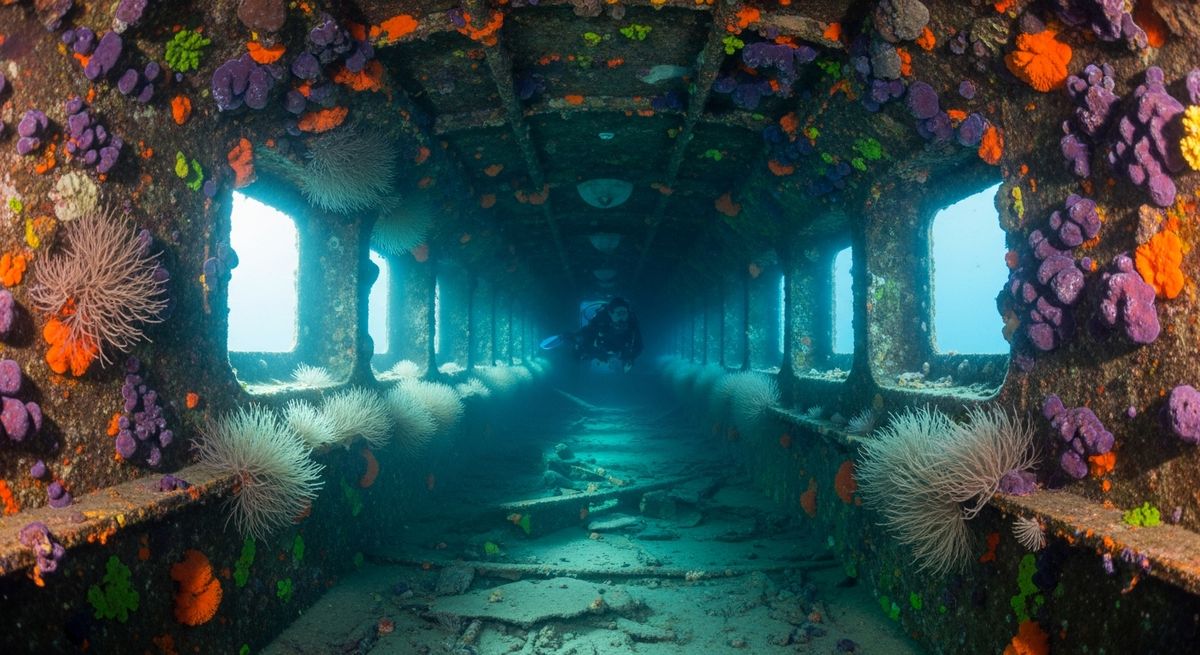
The Cantabria sits just off Bolt Tail, a relatively shallow wreck that we think offers a surprisingly engaging dive for its depth. Dropping onto her bow, you immediately feel the scale of the 80-metre steamer, even if she's broken up a fair bit since running aground in the fog back in '32. We love how the hull plates have twisted and warped, creating little caves and overhangs that are just begging to be explored. Visibility here can swing a bit, but on a good day, the light streaming through the gaps in the wreckage is quite something. Look closely among the twisted metal; you’ll often spot feathery Devonshire cup corals, little pockets of jewel anemones, and a surprising number of wrasse darting between the ribs. Our favourite tip for the Cantabria is to really take your time, poke into every nook. It's a proper rummage dive, and it’s ideal for newer wreck divers or those looking for a relaxed second dive.
Typical CANTABRIA Dive Profile
Illustrative profile based on site depth and type. Actual dive profiles vary - always follow your dive computer and training.
Safety Notes
Wreck site - avoid penetration without wreck diving certification. Watch for sharp metal and entanglement hazards.
CANTABRIA Wreck History
Year Sunk
1932
Vessel Type
cargo ship
Cause
grounding
The SS Cantabria was a Spanish steamship named after the historic maritime region of northern Spain. Measuring over 80 meters in length, she was a workhorse of the European cargo trade, regularly plying the route between industrial ports like Bilbao and Newcastle.
On December 13, 1932, her final voyage turned to disaster. While en route to Newcastle carrying a cargo of iron ore, the Cantabria sailed into a dense fog that shrouded the Cornish coast. Blinded by the poor visibility and navigating treacherous waters, the vessel ran hard aground. The relentless swell and unforgiving rocks sealed her fate, and the ship was declared a total loss.
Resting in just 10 meters of water, the remains of the Cantabria are now a fantastic and popular dive site, often accessible from the shore. Decades of exposure to the powerful surf have broken the wreck apart, scattering her boilers, hull plates, and machinery across the seabed. This wreckage has created a perfect habitat for local marine life, and divers can spend hours exploring the twisted metal, now home to crabs, lobsters, and colourful wrasse.
Nearest Dive Centres to CANTABRIA
Dive shops near CANTABRIA
Sound Diving Limited
Plymouth Diving Centre
Teign Diving Centre
Dive Looe
Reviews for CANTABRIA
Conditions
Ocean conditions, forecast and tides for CANTABRIA
CANTABRIA Ocean Conditions
Monthly averages for CANTABRIA, sourced from Open-Meteo marine data - nearest station: Open-Meteo marine grid (50.44, -2.73) (3km away)
October Averages
Sea Temperature
17°C
62°F · Range: 15.1–17.5°C
Air Temperature
13°C
56°F
Wind Speed
8.14 m/s
15.8 knots
Atmospheric Pressure
1011 hPa
Based on 4 years of monitoring data · Data sources: Open-Meteo marine data
Plan & book
Ways to dive Cornwall & Devon, from day trips to liveaboards.
Day trips & courses
via GetYourGuideGuided dives, courses and snorkel trips with instant booking.
Find dive trips in Cornwall & DevonPlaces to stay
via Booking.comHotels and dive resorts near Cornwall & Devon.
Search stays in Cornwall & DevonDive insurance
Most travel insurance excludes or limits scuba. Check what you need before you go.
Dive insurance explainedPartner links: we may earn a commission if you book, at no extra cost to you. How we make money
Where to Stay near CANTABRIA
Prices from Booking.com. We may earn a commission at no extra cost to you.