CAPABLE
Protected Area
Whitecliff Bay and Bembridge Ledges
Why dive here
With 176+ marine species recorded in the area - including blue sharks, dolphins, dwarf minke whales, humpback whales and ocean sunfish (mola mola) - CAPABLE offers some of Cornwall & Devon's richest wreck diving. Water ranges 10-18°C, warmest July, August, September.
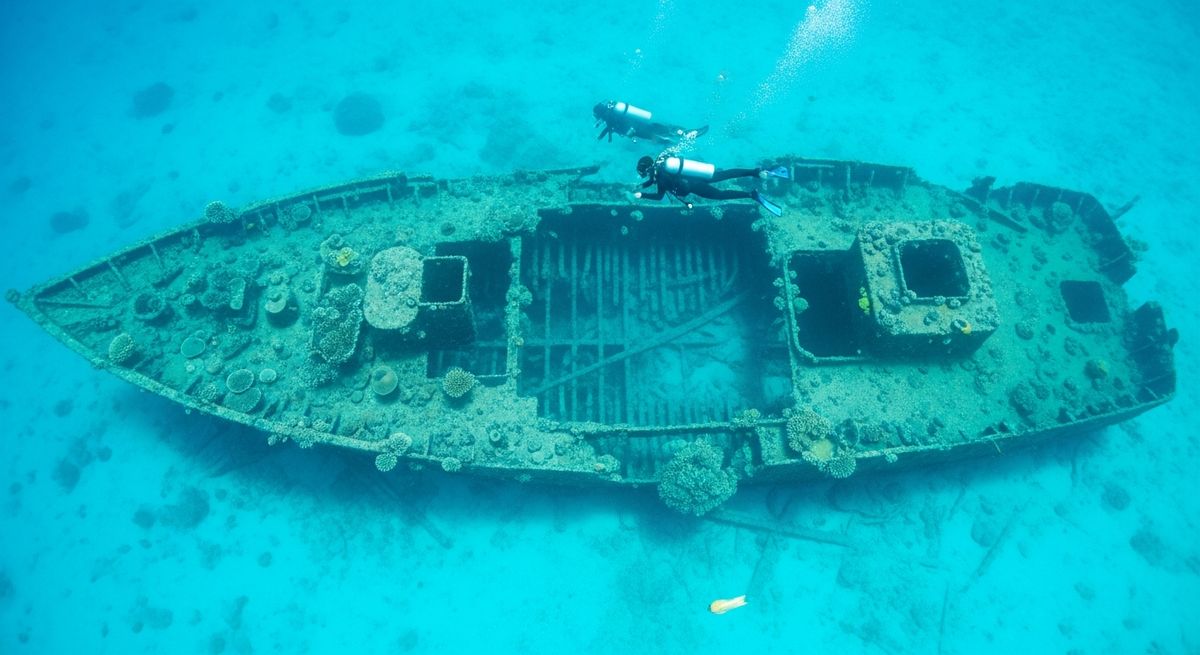
The Capable, sunk by a mine in 1940, offers a proper slice of history right here off the UK coast. Lying in just 11 metres, she’s a perfect dive for those wanting to spend some real time exploring a wreck without worrying about deep stops. We love how intact she is for a wreck of her age; you can still make out the bow and stern, and the engine room is often accessible, offering a great swim-through if conditions are calm. Our favourite part is the resident wrasse population, always darting amongst the twisted metal, and the occasional dogfish tucked into a crevice. The visibility can be a bit variable, typical for the Channel, but on a good day, the light filters down beautifully, illuminating the rusty structure and the green fronds of kelp that have taken root. We’d suggest timing your dive for slack water; the currents here can pick up, making the exploration a lot less comfortable. This is a brilliant site for newer wreck divers or those looking for a relaxed, atmospheric dive with a tangible link to the past.
Typical CAPABLE Dive Profile
Illustrative profile based on site depth and type. Actual dive profiles vary - always follow your dive computer and training.
Safety Notes
Wreck site - avoid penetration without wreck diving certification. Watch for sharp metal and entanglement hazards.
Always perform a 3-minute safety stop at 5m before surfacing.
CAPABLE Wreck History
Year Sunk
1940
Vessel Type
cargo ship
Cause
mine
Tonnage
173 GRT
The MV Capable was a small Dutch motor coaster built in 1918. With the outbreak of the Second World War, she was requisitioned for service by the British Ministry of War Transport. In early June 1940, in the chaotic days following the Dunkirk evacuation, the Capable was on a passage from Alderney to Portsmouth. The English Channel had become a treacherous battleground, not just from direct attack but also from hidden dangers laid beneath the surface.
On June 5th, 1940, as she steamed near Penlee Point off the coast of Cornwall, the Capable struck a magnetic mine that had been laid by German aircraft. The resulting explosion was catastrophic, and the small vessel sank quickly, tragically taking two of her crew with her. Today, the wreck of the Capable lies in just 11 meters of water in Plymouth Sound. The force of the explosion left her heavily broken, with wreckage scattered across the seabed. This shallow depth and easy access make her a very popular dive, especially for trainees. The wreckage has become a thriving artificial reef, home to a dense covering of marine life and a haven for fish, crabs, and lobsters.
Nearest Dive Centres to CAPABLE
Dive shops near CAPABLE
In2 Diving
Sussex Diving & Leisure
Mulberry Marine Experiences CIC
Andark Diving
Abyss Scuba School
Sunken Dreams Scuba Diving Academy
Reviews for CAPABLE
Conditions
Ocean conditions, forecast and tides for CAPABLE
CAPABLE Ocean Conditions
Monthly averages for CAPABLE, sourced from Open-Meteo marine data - nearest station: Open-Meteo marine grid (50.44, -2.73) (3km away)
October Averages
Sea Temperature
17°C
62°F · Range: 15.1–17.5°C
Air Temperature
13°C
56°F
Wind Speed
8.14 m/s
15.8 knots
Atmospheric Pressure
1011 hPa
Based on 4 years of monitoring data · Data sources: Open-Meteo marine data
Plan & book
Ways to dive Cornwall & Devon, from day trips to liveaboards.
Day trips & courses
via GetYourGuideGuided dives, courses and snorkel trips with instant booking.
Find dive trips in Cornwall & DevonPlaces to stay
via Booking.comHotels and dive resorts near Cornwall & Devon.
Search stays in Cornwall & DevonDive insurance
Most travel insurance excludes or limits scuba. Check what you need before you go.
Dive insurance explainedPartner links: we may earn a commission if you book, at no extra cost to you. How we make money
Where to Stay near CAPABLE
Prices from Booking.com. We may earn a commission at no extra cost to you.