CAPITAINE COOK
Why dive here
With 176+ marine species recorded in the area - including blue sharks, dolphins, dwarf minke whales, humpback whales and ocean sunfish (mola mola) - CAPITAINE COOK offers some of Cornwall & Devon's richest wreck diving. Water ranges 10-18°C, warmest July, August, September.
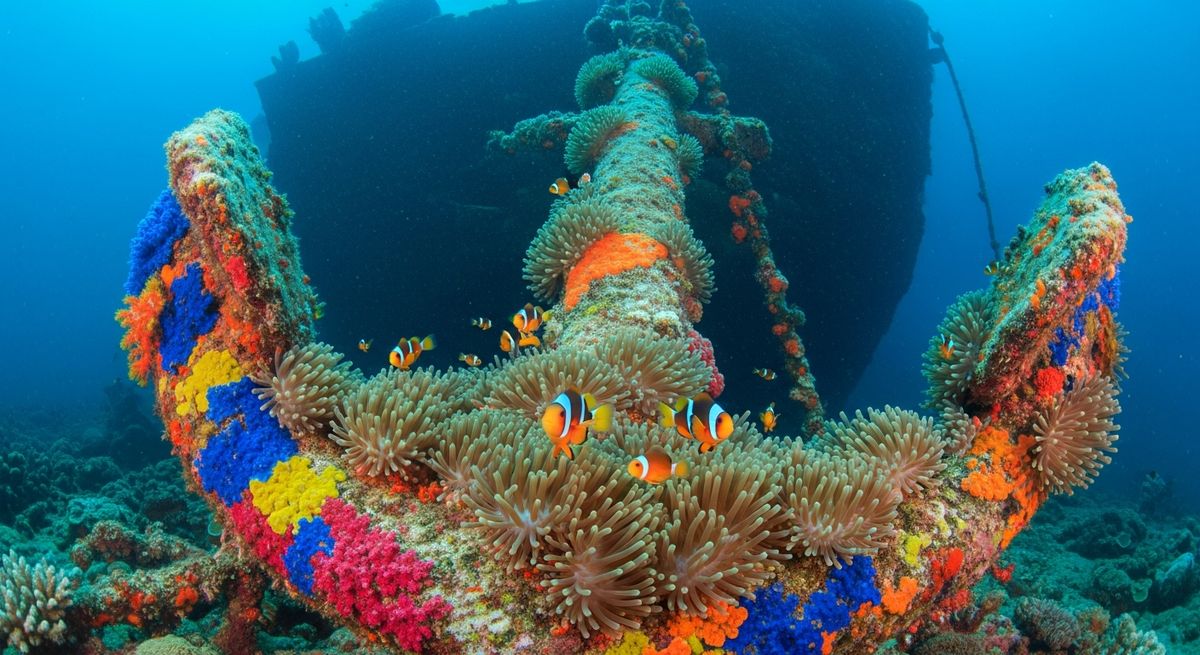
The *Capitaine Cook* is one of those wrecks that just delivers. We dive a lot of wrecks, and this fishing vessel, sitting upright in 27 metres, has a real presence. She went down in 1978 after a collision and still looks like a working boat, just… resting. You can poke around the superstructure, peer into the holds, and imagine the crew’s last moments on deck. The real magic here, though, is the life that’s claimed her. Conger eels are a given, often just peeking out from a pipe or under a deck plate, thick as your arm. We’ve had fantastic encounters with spider crabs clambering over the bow, and the jewel anemones paint the metalwork in brilliant oranges and purples, a stark contrast to the often-grey Atlantic. Visibility can swing dramatically, but on a good day, when the sun filters down, the atmosphere is simply incredible. Our pick for an early morning dive, before the currents really pick up.
Typical CAPITAINE COOK Dive Profile
Illustrative profile based on site depth and type. Actual dive profiles vary - always follow your dive computer and training.
Safety Notes
Depth of 27m - Advanced Open Water certification recommended.
Wreck site - avoid penetration without wreck diving certification. Watch for sharp metal and entanglement hazards.
Always perform a 3-minute safety stop at 5m before surfacing.
CAPITAINE COOK Wreck History
Vessel Type
fishing vessel
Cause
unknown
The "Capitaine Cook" is a fishing vessel that found its final resting place in the busy waters of the English Channel, somewhere between the storied coasts of Cornwall and Devon. The specific details of its sinking have faded over time, but its remains now serve as a permanent feature of the seabed, attracting both marine life and curious divers.
Lying at a depth of 27 meters, this wreck is an ideal dive for advanced recreational divers. As a typical fishing trawler, its structure offers interesting features to explore, such as the wheelhouse, winches, and open deck spaces. Over the years, it has become a haven for marine life, with schools of bib, pollack, and conger eels making their homes within the decaying steel. The classification as a 'dangerous wreck' warrants caution, as nets and sharp, collapsing structures can pose hazards, but for the prepared diver, it's a fantastic window into the rich maritime ecosystem of the UK's south coast.
Reviews for CAPITAINE COOK
Conditions
Ocean conditions, forecast and tides for CAPITAINE COOK
CAPITAINE COOK Ocean Conditions
Monthly averages for CAPITAINE COOK, sourced from Open-Meteo marine data - nearest station: Open-Meteo marine grid (50.44, -2.73) (3km away)
October Averages
Sea Temperature
17°C
62°F · Range: 15.1–17.5°C
Air Temperature
13°C
56°F
Wind Speed
8.14 m/s
15.8 knots
Atmospheric Pressure
1011 hPa
Based on 4 years of monitoring data · Data sources: Open-Meteo marine data
Plan & book
Ways to dive Cornwall & Devon, from day trips to liveaboards.
Day trips & courses
via GetYourGuideGuided dives, courses and snorkel trips with instant booking.
Find dive trips in Cornwall & DevonPlaces to stay
via Booking.comHotels and dive resorts near Cornwall & Devon.
Search stays in Cornwall & DevonDive insurance
Most travel insurance excludes or limits scuba. Check what you need before you go.
Dive insurance explainedPartner links: we may earn a commission if you book, at no extra cost to you. How we make money
Where to Stay near CAPITAINE COOK
Prices from Booking.com. We may earn a commission at no extra cost to you.