CAPTAIN NIKO
Protected Area
Gouliot Caves and Headland, Sark
Why dive here
With 176+ marine species recorded in the area - including blue sharks, dolphins, dwarf minke whales, humpback whales and ocean sunfish (mola mola) - CAPTAIN NIKO offers some of Cornwall & Devon's richest wreck diving. Water ranges 10-18°C, warmest July, August, September.
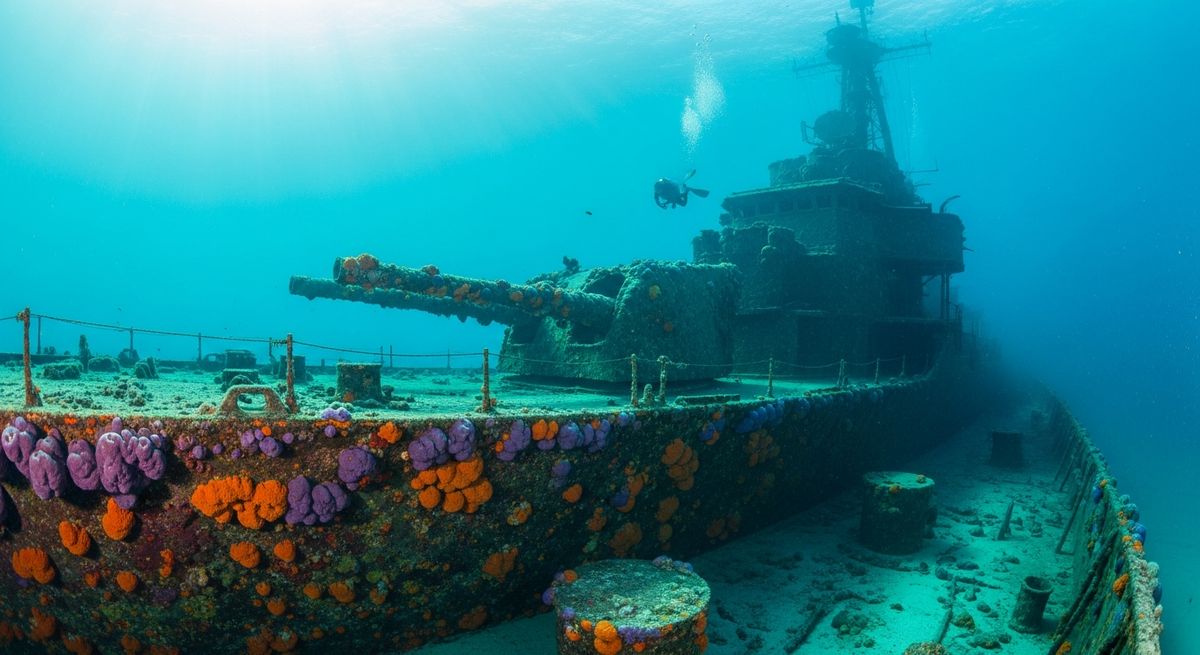
The Captain Niko, oh, she’s a proper dive, a deep one at 40m, but absolutely worth the gas. This isn't just a sunken ship; it’s a colossal, broken beast from 1973, swallowed by the Channel. We love how the hull plates peel away like torn metal flowers, revealing glimpses into her cavernous holds. You’ll be finning past towering sections of deckhouse, seeing massive winches still bolted down, and imagining the gale that finally claimed her. The visibility here can be classic UK green, but when it clears, the scale of the Niko is just something else. Our favourite part is dropping into the engine room, or what’s left of it. It’s a bit of a squeeze and definitely one for experienced divers, but the sheer size of the machinery, now completely encased in plumose anemones, is incredible. Look out for conger eels too, big ones, lurking in every shadowed corner. This wreck is a truly atmospheric dive for those who appreciate history and a bit of a challenge.
Typical CAPTAIN NIKO Dive Profile
Illustrative profile based on site depth and type. Actual dive profiles vary - always follow your dive computer and training.
Safety Notes
Deep dive (40m) - monitor air consumption closely. Advanced certification recommended.
Wreck site - avoid penetration without wreck diving certification. Watch for sharp metal and entanglement hazards.
Always perform a 3-minute safety stop at 5m before surfacing.
CAPTAIN NIKO Wreck History
Year Sunk
1973
Vessel Type
cargo ship
Cause
storm
The MV Captain Niko was a motor vessel built in Belgium in 1948, part of the post-war rebuilding of Europe's merchant fleets. For 25 years, it plied the seas, transporting goods between ports. Its final voyage began in May 1973, when it left Rotterdam with a destination of Alexandria, Egypt. During the journey, the ship encountered heavy weather, causing its cargo to shift violently. This catastrophic event destabilized the vessel beyond recovery, and it sank off the coast of Southwest England.
Today, the Captain Niko lies at a depth of 40 meters, placing it in the realm of technical or deep air diving. It is a challenging but rewarding dive for the properly trained and equipped. As a relatively modern wreck, it is more intact than many of its older counterparts in the English Channel. Divers can explore its superstructure and cargo holds, now patrolled by large pollack and bass. The wreck is covered in a thick carpet of marine life, including jewel anemones and dead man's fingers, a testament to the rich, nutrient-filled UK waters.
Nearest Dive Centres to CAPTAIN NIKO
Dive shops near CAPTAIN NIKO
View all dive centres in Cornwall & DevonReviews for CAPTAIN NIKO
Conditions
Ocean conditions, forecast and tides for CAPTAIN NIKO
CAPTAIN NIKO Ocean Conditions
Monthly averages for CAPTAIN NIKO, sourced from Open-Meteo marine data - nearest station: Open-Meteo marine grid (50.44, -2.73) (3km away)
October Averages
Sea Temperature
17°C
62°F · Range: 15.1–17.5°C
Air Temperature
13°C
56°F
Wind Speed
8.14 m/s
15.8 knots
Atmospheric Pressure
1011 hPa
Based on 4 years of monitoring data · Data sources: Open-Meteo marine data
Plan & book
Ways to dive Cornwall & Devon, from day trips to liveaboards.
Day trips & courses
via GetYourGuideGuided dives, courses and snorkel trips with instant booking.
Find dive trips in Cornwall & DevonPlaces to stay
via Booking.comHotels and dive resorts near Cornwall & Devon.
Search stays in Cornwall & DevonDive insurance
Most travel insurance excludes or limits scuba. Check what you need before you go.
Dive insurance explainedPartner links: we may earn a commission if you book, at no extra cost to you. How we make money
Where to Stay near CAPTAIN NIKO
Prices from Booking.com. We may earn a commission at no extra cost to you.