CARARE
Protected Area
Glenthorne
Why dive here
With 176+ marine species recorded in the area - including blue sharks, dolphins, dwarf minke whales, humpback whales and ocean sunfish (mola mola) - CARARE offers some of Cornwall & Devon's richest wreck diving. Water ranges 10-18°C, warmest July, August, September.
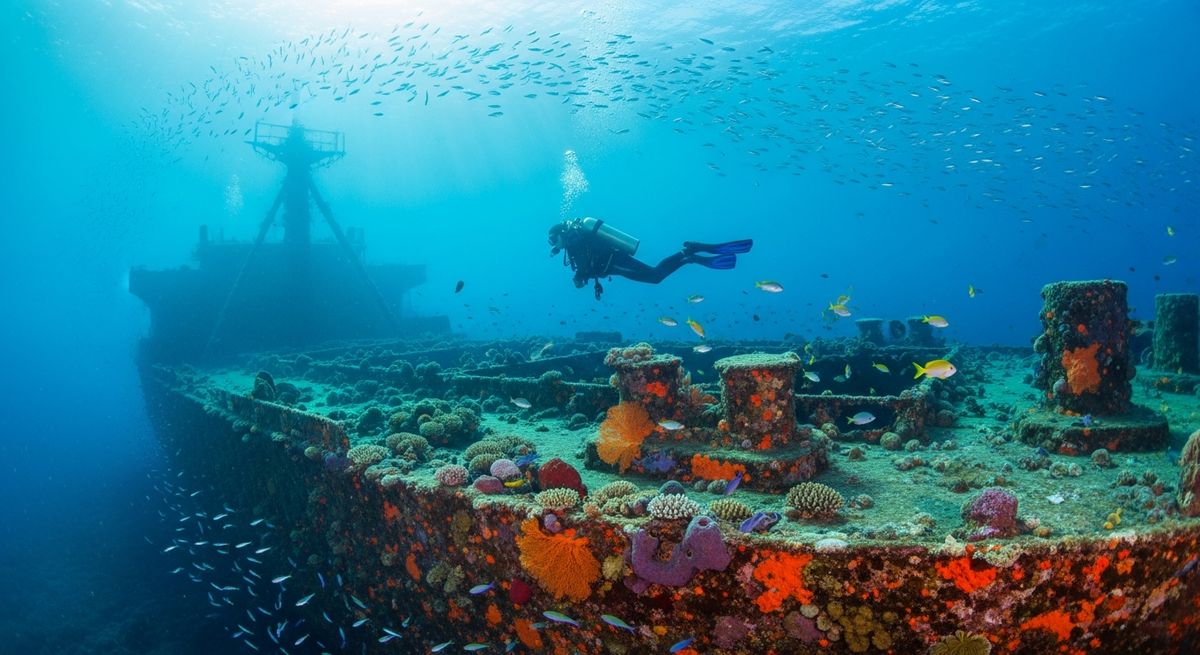
The *Carare* is a big one. Seriously big. This banana boat, sunk in 1940, now sits upright and relatively intact at 24 metres, which we love for its accessibility. You drop down, and suddenly, you’re looking at a huge hull stretching into the murk, the sheer scale of it always a surprise. We’ve spent whole dives just finning along her length, peering into cargo holds that once carried fruit, now home to clouds of pollack and blennies tucked into every crevice. Our favourite part has to be the twin propellers; they’re enormous, still perfectly aligned, drawing you in for a closer look. Visibility can be hit or miss, typical for the English Channel, but when it’s good, the light filtering through the superstructure is something else. You’ll definitely want a torch to poke around the darker corners and spot the lobsters lurking. It’s a proper wreck dive, best suited for those comfortable with deeper sites and keen on exploring history beneath the waves. The *Carare* offers that fantastic combination of substantial structure and an abundance of marine life.
Typical CARARE Dive Profile
Illustrative profile based on site depth and type. Actual dive profiles vary - always follow your dive computer and training.
Safety Notes
Depth of 24m - Advanced Open Water certification recommended.
Wreck site - avoid penetration without wreck diving certification. Watch for sharp metal and entanglement hazards.
Always perform a 3-minute safety stop at 5m before surfacing.
CARARE Wreck History
Year Sunk
1940
Vessel Type
cargo ship
Cause
torpedo
Tonnage
5,880 GRT
The SS Carare was a fast, modern refrigerated cargo ship built in 1925 for the Elders & Fyffes line, famous for its fleet of "banana boats." These vessels were vital for transporting fruit from the Caribbean and Central America to the UK, and the Carare spent her pre-war years on this tropical route. With the outbreak of the Second World War, she continued her essential service, braving the perilous waters of the Atlantic. On May 28, 1940, while sailing unescorted from Avonmouth to Jamaica, her luck ran out. She was spotted by the German submarine U-101 and struck by a single torpedo, sinking within minutes with the loss of four crew members.
Today, the Carare rests upright at a depth of 24 meters off the coast of Cornwall. While the passage of time and the force of the torpedo have caused some collapse around the engine room, she remains a substantial and impressive wreck. Divers can explore her largely intact bow and stern sections, peer into her cargo holds, and observe the abundant marine life that has colonized her steel structure. The wreck serves as a poignant memorial to the merchant sailors of the Battle of the Atlantic and offers a compelling dive into a significant piece of wartime history.
Nearest Dive Centres to CARARE
Dive shops near CARARE
View all dive centres in Cornwall & DevonReviews for CARARE
Conditions
Ocean conditions, forecast and tides for CARARE
CARARE Ocean Conditions
Monthly averages for CARARE, sourced from Open-Meteo marine data - nearest station: Open-Meteo marine grid (50.44, -2.73) (3km away)
October Averages
Sea Temperature
17°C
62°F · Range: 15.1–17.5°C
Air Temperature
13°C
56°F
Wind Speed
8.14 m/s
15.8 knots
Atmospheric Pressure
1011 hPa
Based on 4 years of monitoring data · Data sources: Open-Meteo marine data
Plan & book
Ways to dive Cornwall & Devon, from day trips to liveaboards.
Day trips & courses
via GetYourGuideGuided dives, courses and snorkel trips with instant booking.
Find dive trips in Cornwall & DevonPlaces to stay
via Booking.comHotels and dive resorts near Cornwall & Devon.
Search stays in Cornwall & DevonDive insurance
Most travel insurance excludes or limits scuba. Check what you need before you go.
Dive insurance explainedPartner links: we may earn a commission if you book, at no extra cost to you. How we make money
Where to Stay near CARARE
Prices from Booking.com. We may earn a commission at no extra cost to you.