CAREW CASTLE
Protected Area
Gower
Why dive here
With 176+ marine species recorded in the area - including blue sharks, dolphins, dwarf minke whales, humpback whales and ocean sunfish (mola mola) - CAREW CASTLE offers some of Cornwall & Devon's richest wreck diving. Water ranges 10-18°C, warmest July, August, September.
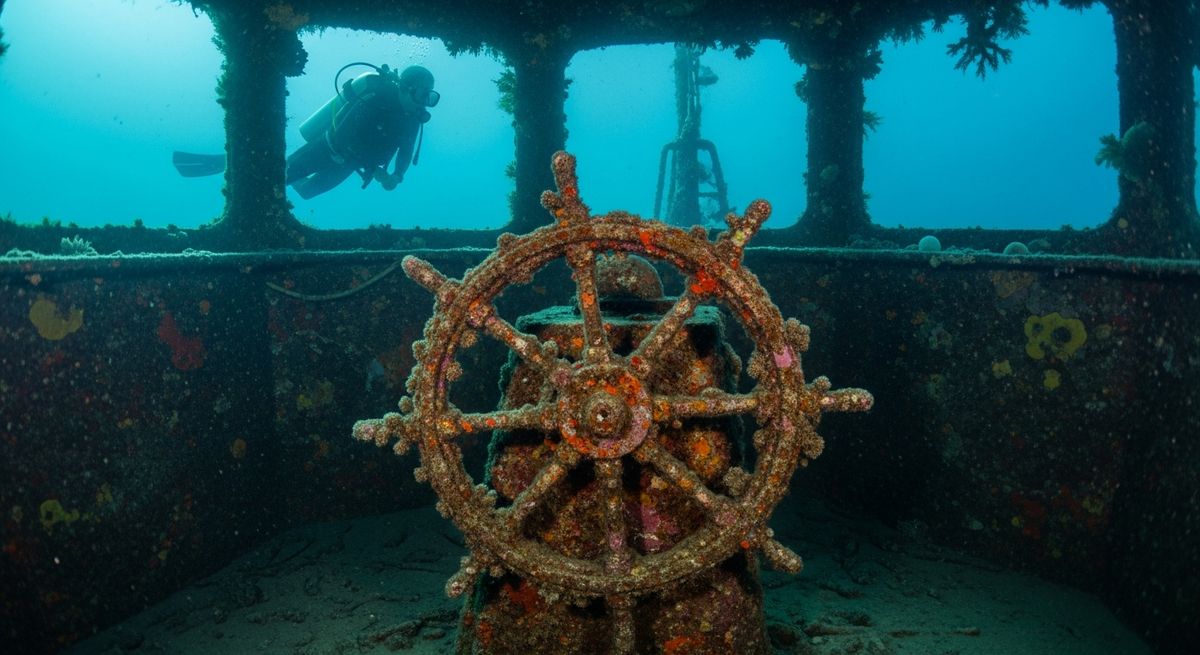
Carew Castle isn’t one of those wrecks that requires a deep technical dive, which we love. It’s right there, practically a shore dive near Porthkerris, meaning it’s accessible and still manages to feel like a proper adventure. The SS Carew Castle was a small steamer, gone down in 1932, and what remains isn't a massive hull to penetrate, but more a scattering of intriguing metalwork across the seabed. Think twisted girders, boiler sections, and plates that have settled into the sand, making for a fantastic rummage. It’s the sheer amount of life that has taken hold here that really sells it for us. You’ll find plumose anemones, often in bright white drifts, waving from every surface. We’ve seen good-sized wrasse darting through the wreckage and conger eels peeking from beneath plates. Visibility here can be a bit variable, typical for Cornwall, but even on an average day, the sheer density of colour from the anemones and sponges makes it special. Best dived at slack water to appreciate the smaller details without battling any surge. It’s a site that rewards a slow, careful exploration, perfect for photographers or anyone who enjoys seeing nature reclaim something man-made.
Safety Notes
Wreck site - avoid penetration without wreck diving certification. Watch for sharp metal and entanglement hazards.
CAREW CASTLE Wreck History
Year Sunk
1932
Vessel Type
cargo ship
Cause
grounding
Tonnage
2,333 GRT
The SS Carew Castle was a 2,333-ton steam collier, a typical workhorse of the British coastal trade in the early 20th century. These ships were the lifeblood of the industrial nation, tirelessly transporting coal from the mines of the North and Wales to power stations, factories, and homes across the country.
In 1932, the Carew Castle's routine service was cut short by one of the mariner's oldest foes: fog. While navigating the treacherous waters off North Devon, the vessel became disoriented in the thick haze and ran aground near the notorious Hartland Point. Stuck fast on the rocks and at the mercy of the powerful Atlantic swell, the ship was declared a total loss and began to break apart where she lay.
As an intertidal wreck marked at 0 metres, the remains of the Carew Castle are a dramatic landmark on the coastline, accessible at low tide. Over the decades, the sea has salvaged and twisted much of its structure, but large sections of the hull, boilers, and heavy machinery are still clearly visible. It's a powerful and photogenic reminder of the dangers of this rugged coast, easily explored by curious beach walkers and snorkelers.
Nearest Dive Centres to CAREW CASTLE
Dive shops near CAREW CASTLE
View all dive centres in Cornwall & DevonReviews for CAREW CASTLE
Conditions
Ocean conditions, forecast and tides for CAREW CASTLE
CAREW CASTLE Ocean Conditions
Monthly averages for CAREW CASTLE, sourced from Open-Meteo marine data - nearest station: Open-Meteo marine grid (50.44, -2.73) (3km away)
October Averages
Sea Temperature
17°C
62°F · Range: 15.1–17.5°C
Air Temperature
13°C
56°F
Wind Speed
8.14 m/s
15.8 knots
Atmospheric Pressure
1011 hPa
Based on 4 years of monitoring data · Data sources: Open-Meteo marine data
Plan & book
Ways to dive Cornwall & Devon, from day trips to liveaboards.
Day trips & courses
via GetYourGuideGuided dives, courses and snorkel trips with instant booking.
Find dive trips in Cornwall & DevonPlaces to stay
via Booking.comHotels and dive resorts near Cornwall & Devon.
Search stays in Cornwall & DevonDive insurance
Most travel insurance excludes or limits scuba. Check what you need before you go.
Dive insurance explainedPartner links: we may earn a commission if you book, at no extra cost to you. How we make money
Where to Stay near CAREW CASTLE
Prices from Booking.com. We may earn a commission at no extra cost to you.