CARMARTHEN
Protected Area
Coverack Cove & Dolor Point
Why dive here
With 176+ marine species recorded in the area - including blue sharks, dolphins, dwarf minke whales, humpback whales and ocean sunfish (mola mola) - CARMARTHEN offers some of Cornwall & Devon's richest wreck diving. Water ranges 10-18°C, warmest July, August, September.
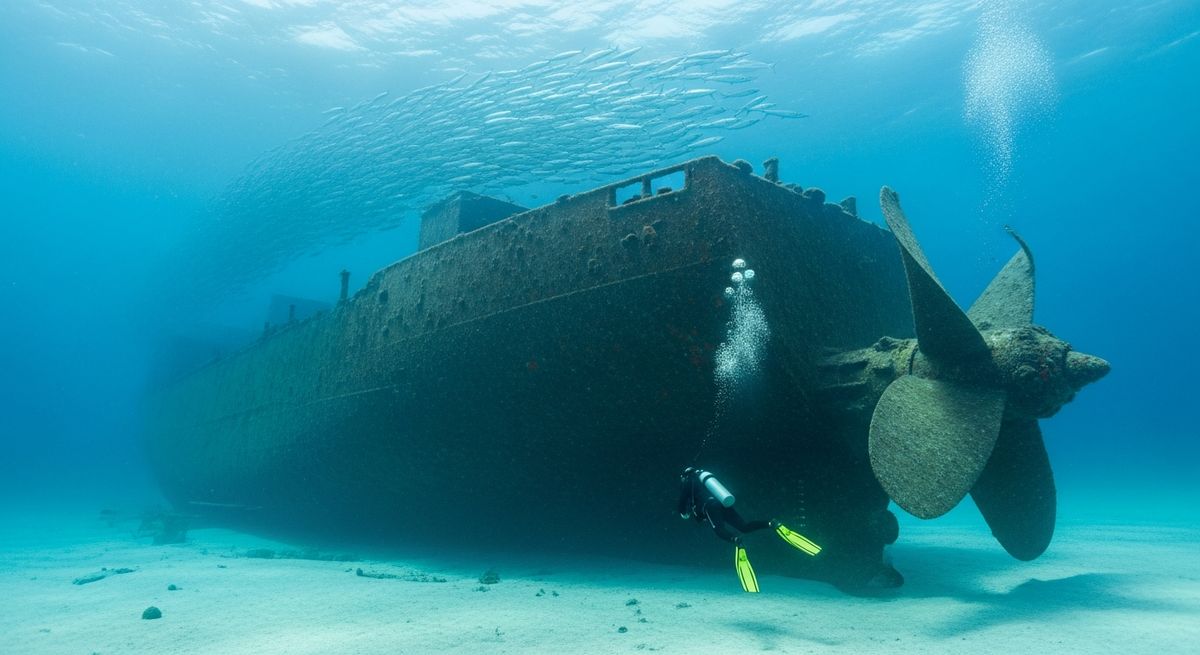
The *Carmarthen* sits upright, a proper wreck dive at 18 metres. We love how intact she feels, even after a century on the seabed. This isn't just a pile of twisted metal; you can still make out the bow, the stern, and a lot of her midsection, which really gives you a sense of her scale, 115 metres is a big ship. Drop down onto the deck and push through the slight gloom – that’s part of the charm here, a proper British wreck dive feel. Look for the triple-expansion engine, a real highlight, and we always find some good-sized conger eels tucked away in the darker recesses. Visibility can be a bit of a gamble, but when it’s good, the sheer volume of schooling fish, particularly pollack, around the superstructure is impressive. This is a dive for those who appreciate maritime history and don’t mind a bit of a current.
Typical CARMARTHEN Dive Profile
Illustrative profile based on site depth and type. Actual dive profiles vary - always follow your dive computer and training.
Safety Notes
Wreck site - avoid penetration without wreck diving certification. Watch for sharp metal and entanglement hazards.
Always perform a 3-minute safety stop at 5m before surfacing.
CARMARTHEN Wreck History
Year Sunk
1917
Vessel Type
cargo ship
Cause
torpedo
Tonnage
4,262 GRT
The SS Carmarthen had a brief but eventful life, born in the midst of the First World War. Launched in 1916 by W. Gray & Co Ltd, the steamship was operated by James Jenkins of Cardiff. With the war raging, merchant vessels like the Carmarthen were the lifelines of Britain, but they were also prime targets for Germany's U-boat fleet. Her service would last just over a year.
On July 26, 1917, while on a passage from Genoa bound for the River Tees with a cargo of iron ore, the Carmarthen was intercepted by the German submarine UC-47. Without warning, a torpedo struck the vessel, sealing her fate. The ship sank quickly, becoming another casualty of the unrestricted submarine warfare that defined the conflict at sea. The loss was a stark reminder of the constant danger faced by civilian sailors in wartime.
Lying at a depth of just 18 meters, the wreck of the Carmarthen is now a superb and highly accessible dive site for all qualified divers. Over a century on the seabed has left the wreck well broken up, with boilers, engine components, and sections of the hull scattered across the seafloor. This structure has created a thriving artificial reef, attracting a huge amount of marine life. Divers can explore the wreckage while spotting wrasse, pollack, and crustaceans that have taken up residence in the remains of this WWI steamship.
Nearest Dive Centres to CARMARTHEN
Dive shops near CARMARTHEN
Porthkerris Divers
DiveUK
Seaways Diving
Karleyth Diving Ltd.
Wavecrest Scuba
Viewpoint Diving Centre
Reviews for CARMARTHEN
Conditions
Ocean conditions, forecast and tides for CARMARTHEN
CARMARTHEN Ocean Conditions
Monthly averages for CARMARTHEN, sourced from Open-Meteo marine data - nearest station: Open-Meteo marine grid (50.44, -2.73) (3km away)
October Averages
Sea Temperature
17°C
62°F · Range: 15.1–17.5°C
Air Temperature
13°C
56°F
Wind Speed
8.14 m/s
15.8 knots
Atmospheric Pressure
1011 hPa
Based on 4 years of monitoring data · Data sources: Open-Meteo marine data
Plan & book
Ways to dive Cornwall & Devon, from day trips to liveaboards.
Day trips & courses
via GetYourGuideGuided dives, courses and snorkel trips with instant booking.
Find dive trips in Cornwall & DevonPlaces to stay
via Booking.comHotels and dive resorts near Cornwall & Devon.
Search stays in Cornwall & DevonDive insurance
Most travel insurance excludes or limits scuba. Check what you need before you go.
Dive insurance explainedPartner links: we may earn a commission if you book, at no extra cost to you. How we make money
Where to Stay near CARMARTHEN
Prices from Booking.com. We may earn a commission at no extra cost to you.