CAROLINE SUSAN
Protected Area
Highcliffe to Milford Cliffs
Why dive here
With 176+ marine species recorded in the area - including blue sharks, dolphins, dwarf minke whales, humpback whales and ocean sunfish (mola mola) - CAROLINE SUSAN offers some of Cornwall & Devon's richest wreck diving. Water ranges 10-18°C, warmest July, August, September.
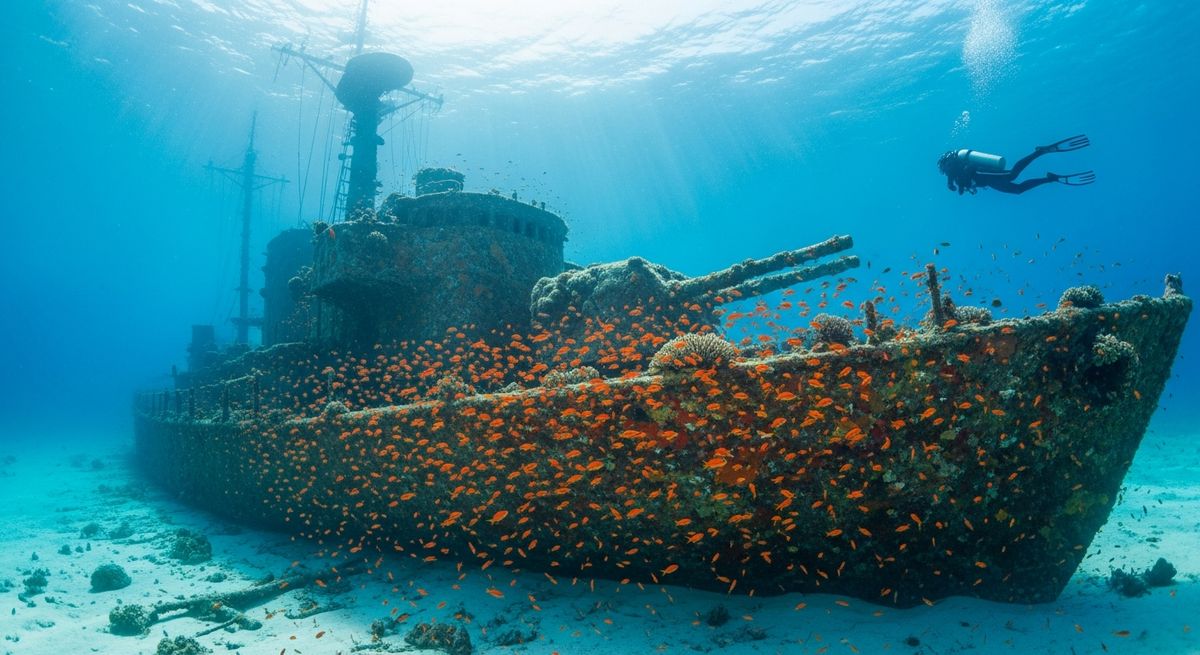
The Caroline Susan is one of those wrecks we keep coming back to. She’s not massive, a wooden yacht, but her story, sunk just after Dunkirk in 1940, gives you pause. Dropping down, you’ll find her largely intact, sitting upright at 22 metres. We love finning along her deck, imagining her peacetime cruises before the war. The twin paraffin engines are still prominent, and the exposed ribs of her wooden hull feel almost skeletal. What makes her a standout for us isn’t just the history, it’s the way the local marine life has utterly taken over. Conger eels peer out from every crevice, sometimes three or four in a single inspection hole. The deck planks are carpeted in jewel anemones, sparkling purple and orange under your torch beam. Look closely for nudibranchs, especially on the more sheltered parts of the wreck. It’s a manageable dive, suitable for Open Water divers comfortable with depth and navigating a wreck. Our favourite time to dive her is on a slack tide, gives you plenty of time to explore without battling a push.
Typical CAROLINE SUSAN Dive Profile
Illustrative profile based on site depth and type. Actual dive profiles vary - always follow your dive computer and training.
Safety Notes
Depth of 22m - Advanced Open Water certification recommended.
Wreck site - avoid penetration without wreck diving certification. Watch for sharp metal and entanglement hazards.
Always perform a 3-minute safety stop at 5m before surfacing.
CAROLINE SUSAN Wreck History
Year Sunk
1940
Vessel Type
yacht
Cause
unknown
The CAROLINE SUSAN had a short but eventful life. Originally built as a naval pinnace, this sturdy wooden vessel was converted into a comfortable motor yacht in Southampton in 1938, fitted with modern twin paraffin engines. Her new life of leisure, however, was cut short by the outbreak of the Second World War. Just two years after her conversion, she was lost off the English coast on June 13, 1940, a time of intense naval activity following the Dunkirk evacuation.
The exact cause of her sinking remains unconfirmed, but it was almost certainly a casualty of the conflict, whether from a mine, aircraft, or surface action. Today, she rests in 22 metres of water, making her an excellent wreck dive for advanced open water divers. The wooden structure has deteriorated over the decades, but divers can still identify features of this ex-naval craft and ponder its brief, dramatic history caught between peacetime luxury and wartime service.
Nearest Dive Centres to CAROLINE SUSAN
Dive shops near CAROLINE SUSAN
TAL Scuba Ltd.
Mayim Mermaid Academy
Divers Down
Dorset Diving Services
Andark Diving
In2 Diving
Reviews for CAROLINE SUSAN
Conditions
Ocean conditions, forecast and tides for CAROLINE SUSAN
CAROLINE SUSAN Ocean Conditions
Monthly averages for CAROLINE SUSAN, sourced from Open-Meteo marine data - nearest station: Open-Meteo marine grid (50.44, -2.73) (3km away)
October Averages
Sea Temperature
17°C
62°F · Range: 15.1–17.5°C
Air Temperature
13°C
56°F
Wind Speed
8.14 m/s
15.8 knots
Atmospheric Pressure
1011 hPa
Based on 4 years of monitoring data · Data sources: Open-Meteo marine data
Plan & book
Ways to dive Cornwall & Devon, from day trips to liveaboards.
Day trips & courses
via GetYourGuideGuided dives, courses and snorkel trips with instant booking.
Find dive trips in Cornwall & DevonPlaces to stay
via Booking.comHotels and dive resorts near Cornwall & Devon.
Search stays in Cornwall & DevonDive insurance
Most travel insurance excludes or limits scuba. Check what you need before you go.
Dive insurance explainedPartner links: we may earn a commission if you book, at no extra cost to you. How we make money
Where to Stay near CAROLINE SUSAN
Prices from Booking.com. We may earn a commission at no extra cost to you.