CARPETBAGGERS
Protected Area
Tennyson
Why dive here
With 176+ marine species recorded in the area - including blue sharks, dolphins, dwarf minke whales, humpback whales and ocean sunfish (mola mola) - CARPETBAGGERS offers some of Cornwall & Devon's richest wreck diving. Water ranges 10-18°C, warmest July, August, September.
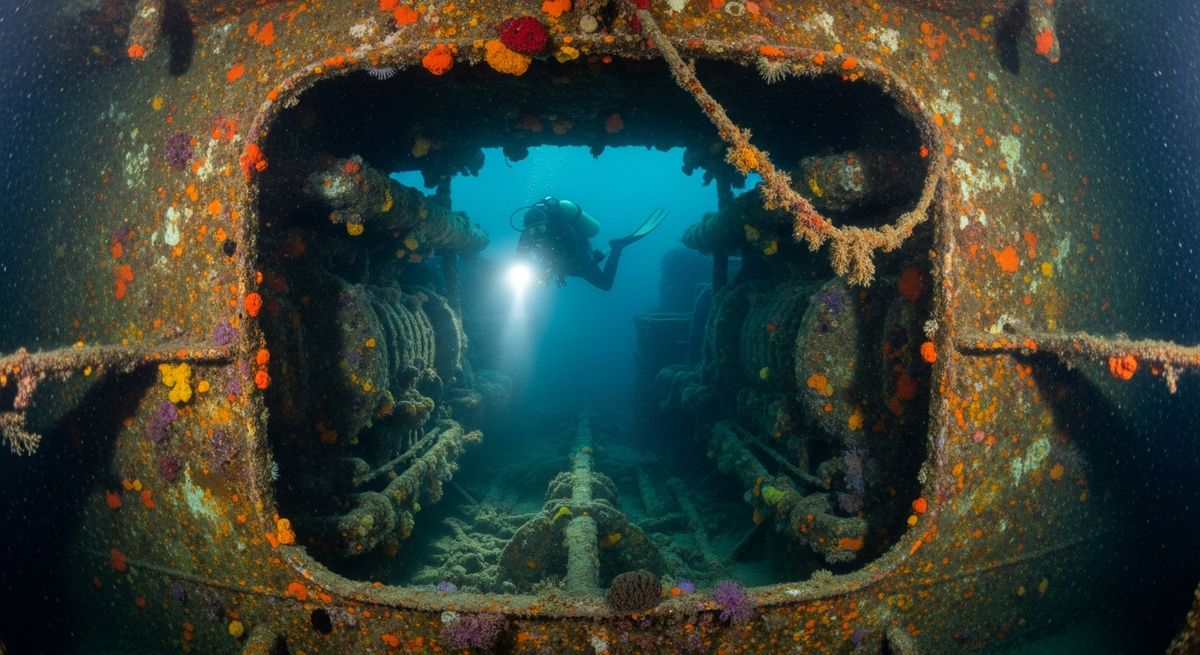
Carpetbaggers. What a name for a wreck, eh? This little yacht, only 8.8 metres, went down in 1976 after a run-in with a dredger, then caught fire, which sounds like an absolutely rubbish day for its master. Today, it’s a delightful, straightforward dive in the shallows off Cornwall. We love Carpetbaggers because it’s so accessible, sitting at a maximum depth of 10 metres. You can really take your time here. The wreck itself is pretty broken up, but you can clearly make out the hull structure, draped in dead man’s fingers and sponges. Look closely, and you’ll spot velvet swimming crabs scuttling over the timbers, and often, we’ll see juvenile pollack darting through the interior. It’s not a site for grand penetration, but more a gentle exploration of marine growth reclaiming metal. Visibility here can be a bit variable, as is typical for the UK, but on a good day, with a bit of sunlight filtering through, it’s a really peaceful dive. Our top tip? Go at slack tide to avoid any current and give yourself the best chance to poke around the wreckage. It's a perfect site for newer wreck divers or those just wanting a relaxed bimble, with plenty of life tucked into every nook.
Typical CARPETBAGGERS Dive Profile
Illustrative profile based on site depth and type. Actual dive profiles vary - always follow your dive computer and training.
Safety Notes
Wreck site - avoid penetration without wreck diving certification. Watch for sharp metal and entanglement hazards.
CARPETBAGGERS Wreck History
Year Sunk
1976
Vessel Type
yacht
Cause
collision
The sinking of the yacht Carpetbaggers was a dramatic event that unfolded on a leap day, February 29, 1976. While navigating near the iconic Needles off the Isle of Wight, the vessel was involved in a serious collision with the dredger 'Kingsdale'. The impact sparked a fire onboard the yacht, forcing its master to abandon the ship as it began to sink. He was successfully rescued, but the Carpetbaggers was lost to the sea.
Resting at a depth of only 10 meters, the Carpetbaggers is now a highly accessible wreck for novice and experienced divers alike. Its shallow location allows for plenty of bottom time and good light penetration on clear days. The wreck itself is a compact site, perfect for a single-tank dive. Divers can explore the remains of this modern yacht, piecing together the story of its final moments while observing the marine life that has since claimed it as home. It serves as an excellent introduction to the rich wreck diving history of the Cornwall and Devon coastline.
Nearest Dive Centres to CARPETBAGGERS
Dive shops near CARPETBAGGERS
TAL Scuba Ltd.
Andark Diving
Mayim Mermaid Academy
Divers Down
Dorset Diving Services
In2 Diving
Reviews for CARPETBAGGERS
Conditions
Ocean conditions, forecast and tides for CARPETBAGGERS
CARPETBAGGERS Ocean Conditions
Monthly averages for CARPETBAGGERS, sourced from Open-Meteo marine data - nearest station: Open-Meteo marine grid (50.44, -2.73) (3km away)
October Averages
Sea Temperature
17°C
62°F · Range: 15.1–17.5°C
Air Temperature
13°C
56°F
Wind Speed
8.14 m/s
15.8 knots
Atmospheric Pressure
1011 hPa
Based on 4 years of monitoring data · Data sources: Open-Meteo marine data
Plan & book
Ways to dive Cornwall & Devon, from day trips to liveaboards.
Day trips & courses
via GetYourGuideGuided dives, courses and snorkel trips with instant booking.
Find dive trips in Cornwall & DevonPlaces to stay
via Booking.comHotels and dive resorts near Cornwall & Devon.
Search stays in Cornwall & DevonDive insurance
Most travel insurance excludes or limits scuba. Check what you need before you go.
Dive insurance explainedPartner links: we may earn a commission if you book, at no extra cost to you. How we make money
Where to Stay near CARPETBAGGERS
Prices from Booking.com. We may earn a commission at no extra cost to you.