CARRIER
Protected Area
Castlemartin Coast
Why dive here
With 176+ marine species recorded in the area - including blue sharks, dolphins, dwarf minke whales, humpback whales and ocean sunfish (mola mola) - CARRIER offers some of Cornwall & Devon's richest wreck diving. Water ranges 10-18°C, warmest July, August, September.
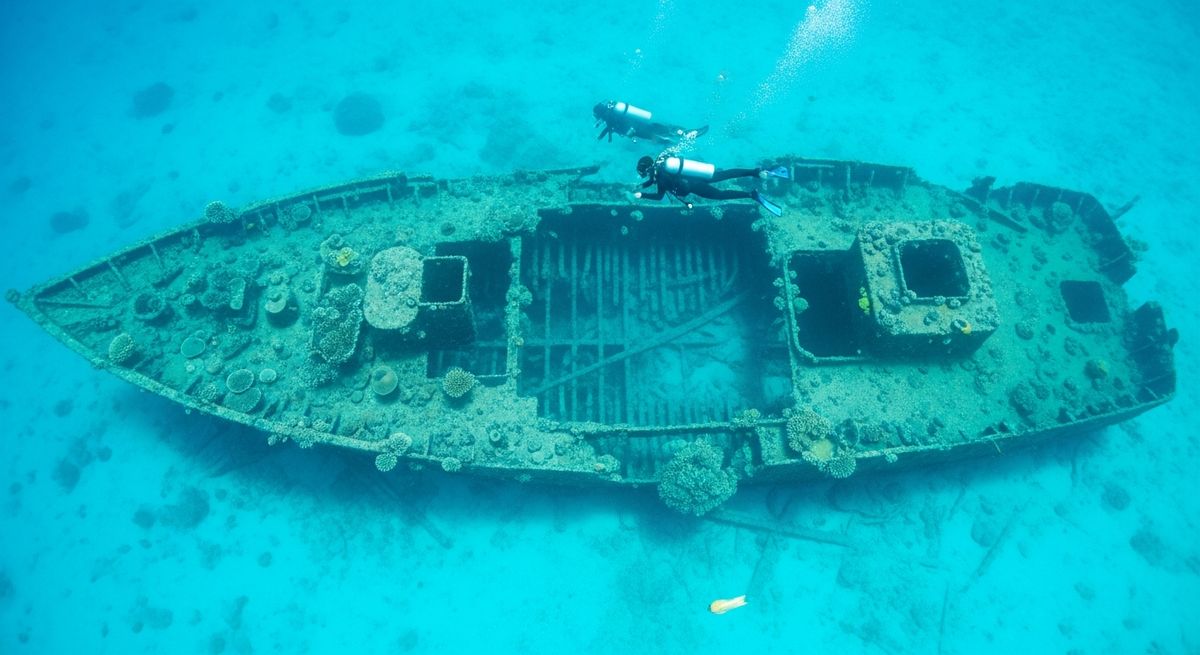
Okay, so you’re looking at the Carrier, huh? We absolutely love this one for something a bit different, a proper glimpse into maritime history right off the coast. This old steamship, built way back in 1892, got herself into trouble in 1906, and now she sits in ridiculously shallow water, a ghost of her former self. Forget deep dives here. The Carrier is practically a snorkel site, topping out at a metre, sometimes less depending on the tide. This makes her incredibly accessible, and we think that’s a huge part of her charm. You’ll find her bones spread across the seabed, the ribs of her hull slowly being reclaimed by the Cornish rock. It’s a fantastic spot for photography, especially on a bright day when the sunlight filters down and illuminates the twisted metal. We often spot schools of sandeels darting through the gaps, and the crabs here are quite brazen, scuttling over the rusted plates. If you’re into exploring history without the faff of full scuba gear, or just fancy a relaxed dip with a story, the Carrier is our pick. Just be mindful of the currents, they can get a bit frisky, so check the tide tables before you head out.
Typical CARRIER Dive Profile
Illustrative profile based on site depth and type. Actual dive profiles vary - always follow your dive computer and training.
Safety Notes
Wreck site - avoid penetration without wreck diving certification. Watch for sharp metal and entanglement hazards.
CARRIER Wreck History
Year Sunk
1906
Vessel Type
cargo ship
Cause
grounding
With a history stretching back to the late Victorian era, the steamship Carrier had lived a full life under several different names. Built in 1892 as the Henri Teissier, she was later known as the Baltic and the Guyane before her final incarnation. At the time of her loss, she was owned by the Rival Granite Quarries Ltd. of London, likely used to transport stone from the rugged coasts of Cornwall and Devon.
In June 1906, her long career came to an abrupt end when she sank. Lying at a depth of just one meter, the Carrier is now a fascinating dive into the past, accessible to snorkelers and divers alike. The wreck is heavily broken up after more than a century of exposure to the relentless coastal tides and storms. Divers can explore the scattered remains, with the most prominent feature being her single boiler, a testament to the age of steam. It's a dive site where the focus is on historical archaeology, searching the shallow seabed for clues to the ship's final moments.
Nearest Dive Centres to CARRIER
Dive shops near CARRIER
View all dive centres in Cornwall & DevonReviews for CARRIER
Conditions
Ocean conditions, forecast and tides for CARRIER
CARRIER Ocean Conditions
Monthly averages for CARRIER, sourced from Open-Meteo marine data - nearest station: Open-Meteo marine grid (50.44, -2.73) (3km away)
October Averages
Sea Temperature
17°C
62°F · Range: 15.1–17.5°C
Air Temperature
13°C
56°F
Wind Speed
8.14 m/s
15.8 knots
Atmospheric Pressure
1011 hPa
Based on 4 years of monitoring data · Data sources: Open-Meteo marine data
Plan & book
Ways to dive Cornwall & Devon, from day trips to liveaboards.
Day trips & courses
via GetYourGuideGuided dives, courses and snorkel trips with instant booking.
Find dive trips in Cornwall & DevonPlaces to stay
via Booking.comHotels and dive resorts near Cornwall & Devon.
Search stays in Cornwall & DevonDive insurance
Most travel insurance excludes or limits scuba. Check what you need before you go.
Dive insurance explainedPartner links: we may earn a commission if you book, at no extra cost to you. How we make money
Where to Stay near CARRIER
Prices from Booking.com. We may earn a commission at no extra cost to you.