GUYONA
Protected Area
Gouliot Caves and Headland, Sark
Why dive here
With 176+ marine species recorded in the area - including blue sharks, dolphins, dwarf minke whales, humpback whales and ocean sunfish (mola mola) - GUYONA offers some of Cornwall & Devon's richest wreck diving. Water ranges 10-18°C, warmest July, August, September.
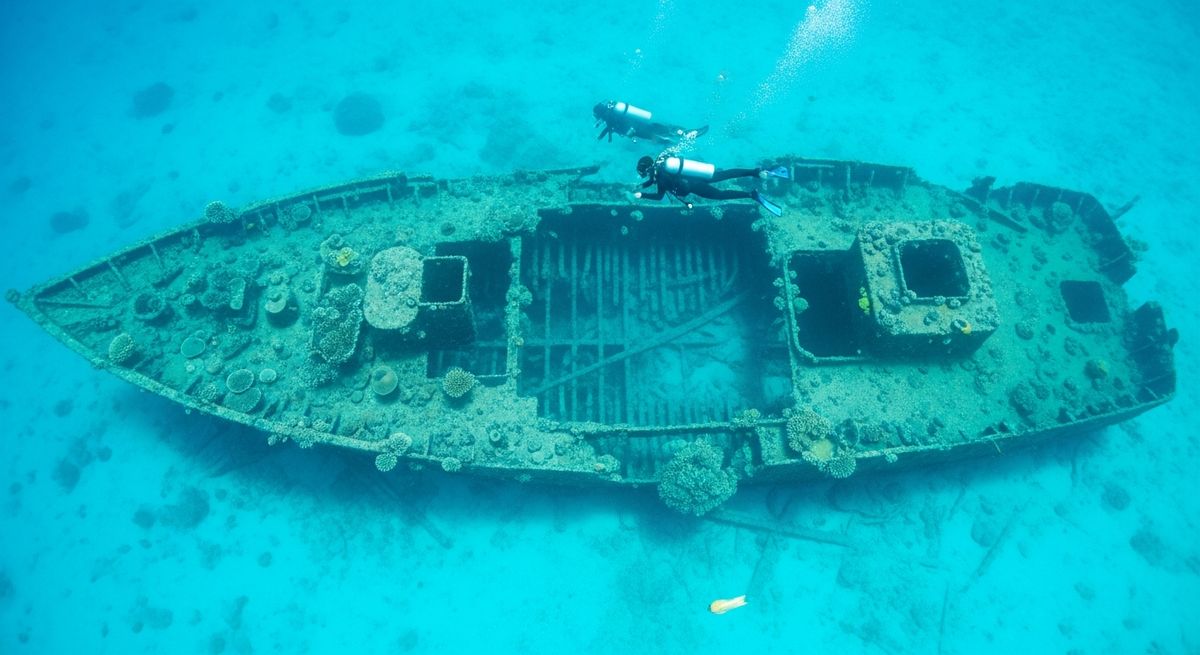
The *Guyona*, a compact fishing vessel resting at 51 metres, is one of our favourite deep wrecks off the Cornish coast. Dropping down, you hit the bow first, often with a bit of a current pushing you along the deck. The wheelhouse is still intact, though a bit squashed, and it’s always interesting to peek inside, imagining the last moments. What we really love about the *Guyona* is how quickly it’s become home to so much life. You'll find good-sized conger eels tucked into any available hole, and often a decent number of lobsters marching across the deck. Keep an eye out for dogfish resting on the sand nearby too. Visibility can be a real lottery out here; we've had days of 20 metres and others where it's a murky five. Best to go on a slack tide, otherwise, you're looking at a serious workout. This isn't a wreck for beginners; the depth and potential for current mean you need your wits about you, but for experienced tech divers, it’s a rewarding dive.
Typical GUYONA Dive Profile
Illustrative profile based on site depth and type. Actual dive profiles vary - always follow your dive computer and training.
Safety Notes
Maximum depth 51m exceeds recreational limits (40m). Technical diving certification and equipment required.
Wreck site - avoid penetration without wreck diving certification. Watch for sharp metal and entanglement hazards.
Always perform a 3-minute safety stop at 5m before surfacing.
Nearest Dive Centres to GUYONA
Dive shops near GUYONA
View all dive centres in Cornwall & DevonReviews for GUYONA
Conditions
Ocean conditions, forecast and tides for GUYONA
GUYONA Ocean Conditions
Monthly averages for GUYONA, sourced from Open-Meteo marine data - nearest station: Open-Meteo marine grid (50.44, -2.73) (3km away)
October Averages
Sea Temperature
17°C
62°F · Range: 15.1–17.5°C
Air Temperature
13°C
56°F
Wind Speed
8.14 m/s
15.8 knots
Atmospheric Pressure
1011 hPa
Based on 4 years of monitoring data · Data sources: Open-Meteo marine data
Plan & book
Ways to dive Cornwall & Devon, from day trips to liveaboards.
Day trips & courses
via GetYourGuideGuided dives, courses and snorkel trips with instant booking.
Find dive trips in Cornwall & DevonPlaces to stay
via Booking.comHotels and dive resorts near Cornwall & Devon.
Search stays in Cornwall & DevonDive insurance
Most travel insurance excludes or limits scuba. Check what you need before you go.
Dive insurance explainedPartner links: we may earn a commission if you book, at no extra cost to you. How we make money
Where to Stay near GUYONA
Prices from Booking.com. We may earn a commission at no extra cost to you.