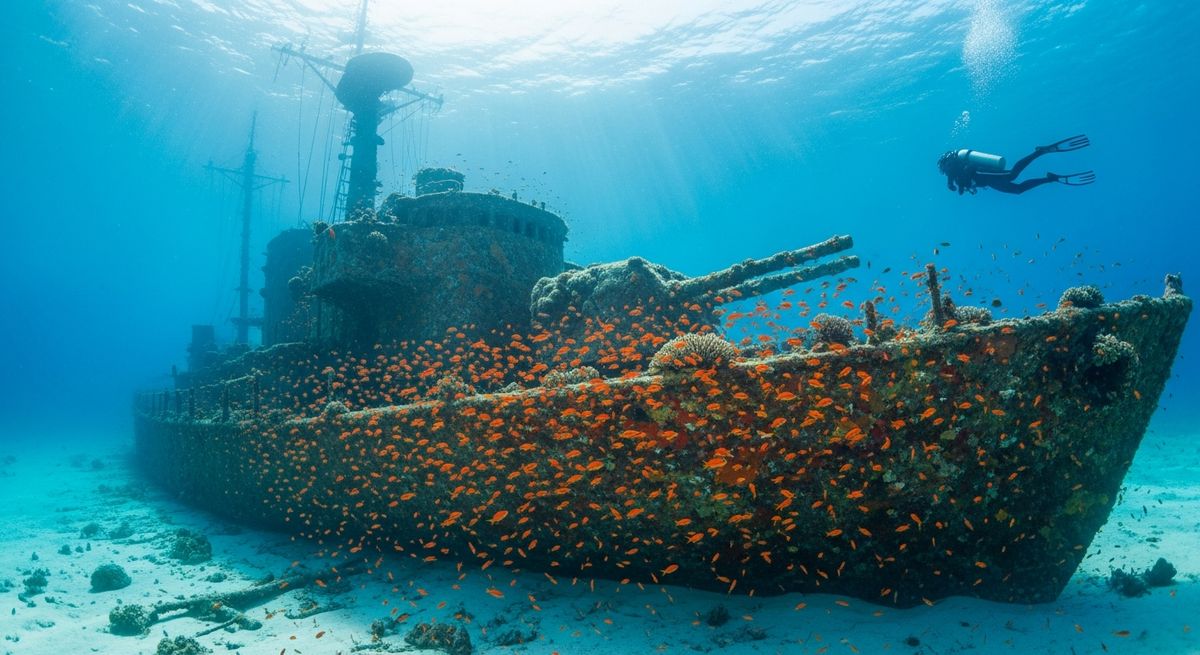
HMS HAZARDOUS
Protected Area
Bracklesham Bay
Why dive here
With 176+ marine species recorded in the area - including blue sharks, dolphins, dwarf minke whales, humpback whales and ocean sunfish (mola mola) - HMS HAZARDOUS offers some of Cornwall & Devon's richest wreck diving. Water ranges 10-18°C, warmest July, August, September.
The HMS Hazardous is a proper piece of history, just poking out of the water at Bracklesham Bay. She’s shallow, obviously, with a maximum depth of 3m, so we’re talking snorkel or very easy dive territory here, but don’t let that fool you into thinking it's boring. This isn't about huge pelagics or dramatic drop-offs; it’s about touching a fragment of the past. We love seeing the timbers still holding their own after all these centuries. You can make out the ribs of the hull, encrusted with barnacles and seaweeds that wave gently with the tide. It feels less like a wreck and more like an archaeological dig, exposed by the sea. Our favourite time to visit is on a calm, sunny day, when the light penetrates right down, illuminating the rusty anchor chains and what we think might be some old cannonballs. It’s perfect for those days when you want a relaxed dip, maybe with the kids, or if you're just keen to see something genuinely old and a little bit haunting without needing to gear up for a technical dive. You'll find blennies darting between the timbers and tiny crabs scuttling over the wood, a little ecosystem thriving on a 300-year-old warship.
Typical HMS HAZARDOUS Dive Profile
Illustrative profile based on site depth and type. Actual dive profiles vary - always follow your dive computer and training.
Safety Notes
Wreck site - avoid penetration without wreck diving certification. Watch for sharp metal and entanglement hazards.
Nearest Dive Centres to HMS HAZARDOUS
Dive shops near HMS HAZARDOUS
Sussex Diving & Leisure
Mulberry Marine Experiences CIC
In2 Diving
Abyss Scuba School
Andark Diving
Ocean View
Reviews for HMS HAZARDOUS
Conditions
Ocean conditions, forecast and tides for HMS HAZARDOUS
HMS HAZARDOUS Ocean Conditions
Monthly averages for HMS HAZARDOUS, sourced from Open-Meteo marine data - nearest station: Open-Meteo marine grid (50.44, -2.73) (3km away)
October Averages
Sea Temperature
17°C
62°F · Range: 15.1–17.5°C
Air Temperature
13°C
56°F
Wind Speed
8.14 m/s
15.8 knots
Atmospheric Pressure
1011 hPa
Based on 4 years of monitoring data · Data sources: Open-Meteo marine data
Plan & book
Ways to dive Cornwall & Devon, from day trips to liveaboards.
Day trips & courses
via GetYourGuideGuided dives, courses and snorkel trips with instant booking.
Find dive trips in Cornwall & DevonPlaces to stay
via Booking.comHotels and dive resorts near Cornwall & Devon.
Search stays in Cornwall & DevonDive insurance
Most travel insurance excludes or limits scuba. Check what you need before you go.
Dive insurance explainedPartner links: we may earn a commission if you book, at no extra cost to you. How we make money
Where to Stay near HMS HAZARDOUS
Prices from Booking.com. We may earn a commission at no extra cost to you.