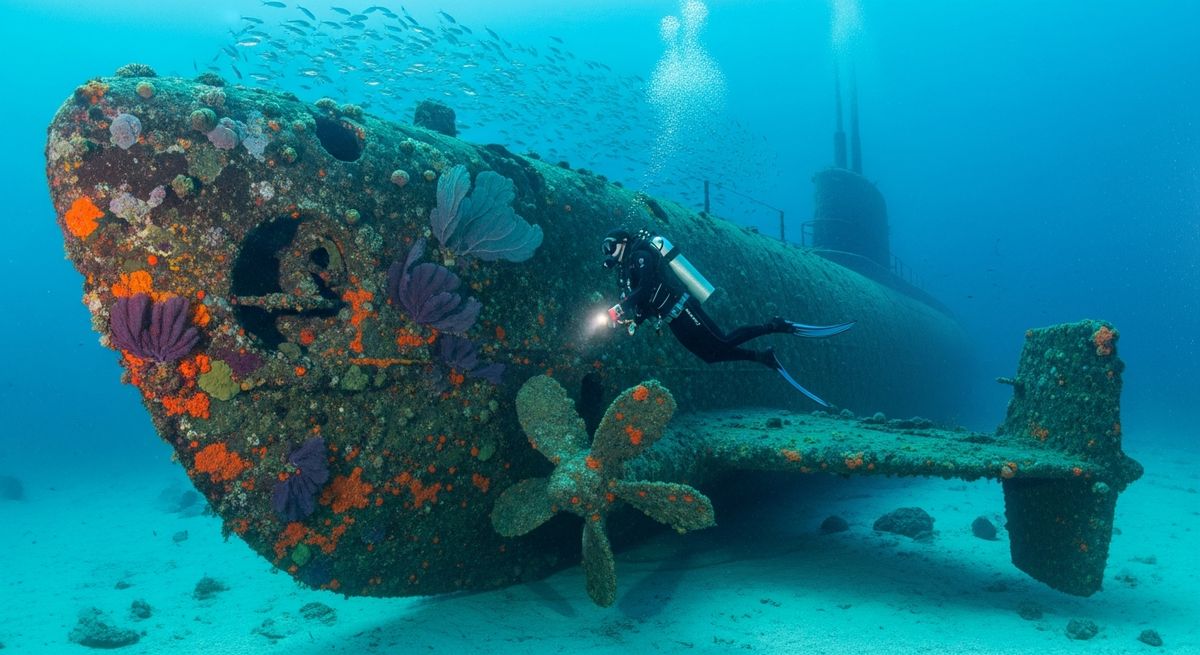
HMS SAPPER
Protected Area
Offshore Overfalls
Why dive here
With 176+ marine species recorded in the area - including blue sharks, dolphins, dwarf minke whales, humpback whales and ocean sunfish (mola mola) - HMS SAPPER offers some of Cornwall & Devon's richest wreck diving. Water ranges 10-18°C, warmest July, August, September.
The HMS Sapper, a former trawler turned WWI minesweeper, sits upright at 29 metres, making her a genuinely compelling dive off the Cornish coast. We love wrecks with a bit of history, and this one certainly delivers – sunk by a mine in 1917, she’s a tangible piece of naval past. Dropping down, you'll feel the colder water, but it's worth it for the visibility, which can push past 15 metres on a good day. The wreck itself is remarkably intact. Her bow points east, and you can still pick out the triple expansion engine, a real highlight for us. The single boiler is also quite prominent, providing a great reference point. Schools of pollack dart through the structure, and the occasional conger eel peeks out from beneath plating. Our favourite part? The way the light filters through the broken deck beams, illuminating patches of jewel anemones that have colonised the metalwork. This dive suits those comfortable with deeper wrecks and temperate water conditions. The strong tides here mean slack water is crucial for an enjoyable dive, so plan your descent carefully. It’s not about huge pelagics, but about the atmosphere and the details of a century-old war grave.
Typical HMS SAPPER Dive Profile
Illustrative profile based on site depth and type. Actual dive profiles vary - always follow your dive computer and training.
Safety Notes
Depth of 29m - Advanced Open Water certification recommended.
Wreck site - avoid penetration without wreck diving certification. Watch for sharp metal and entanglement hazards.
Always perform a 3-minute safety stop at 5m before surfacing.
Nearest Dive Centres to HMS SAPPER
Dive shops near HMS SAPPER
Sussex Diving & Leisure
Mulberry Marine Experiences CIC
Abyss Scuba School
In2 Diving
Ocean View
Reviews for HMS SAPPER
Conditions
Ocean conditions, forecast and tides for HMS SAPPER
HMS SAPPER Ocean Conditions
Monthly averages for HMS SAPPER, sourced from Open-Meteo marine data - nearest station: Open-Meteo marine grid (50.44, -2.73) (3km away)
October Averages
Sea Temperature
17°C
62°F · Range: 15.1–17.5°C
Air Temperature
13°C
56°F
Wind Speed
8.14 m/s
15.8 knots
Atmospheric Pressure
1011 hPa
Based on 4 years of monitoring data · Data sources: Open-Meteo marine data
Plan & book
Ways to dive Cornwall & Devon, from day trips to liveaboards.
Day trips & courses
via GetYourGuideGuided dives, courses and snorkel trips with instant booking.
Find dive trips in Cornwall & DevonPlaces to stay
via Booking.comHotels and dive resorts near Cornwall & Devon.
Search stays in Cornwall & DevonDive insurance
Most travel insurance excludes or limits scuba. Check what you need before you go.
Dive insurance explainedPartner links: we may earn a commission if you book, at no extra cost to you. How we make money
Where to Stay near HMS SAPPER
Prices from Booking.com. We may earn a commission at no extra cost to you.