MARI CHANDRIS - Cornwall & Devon

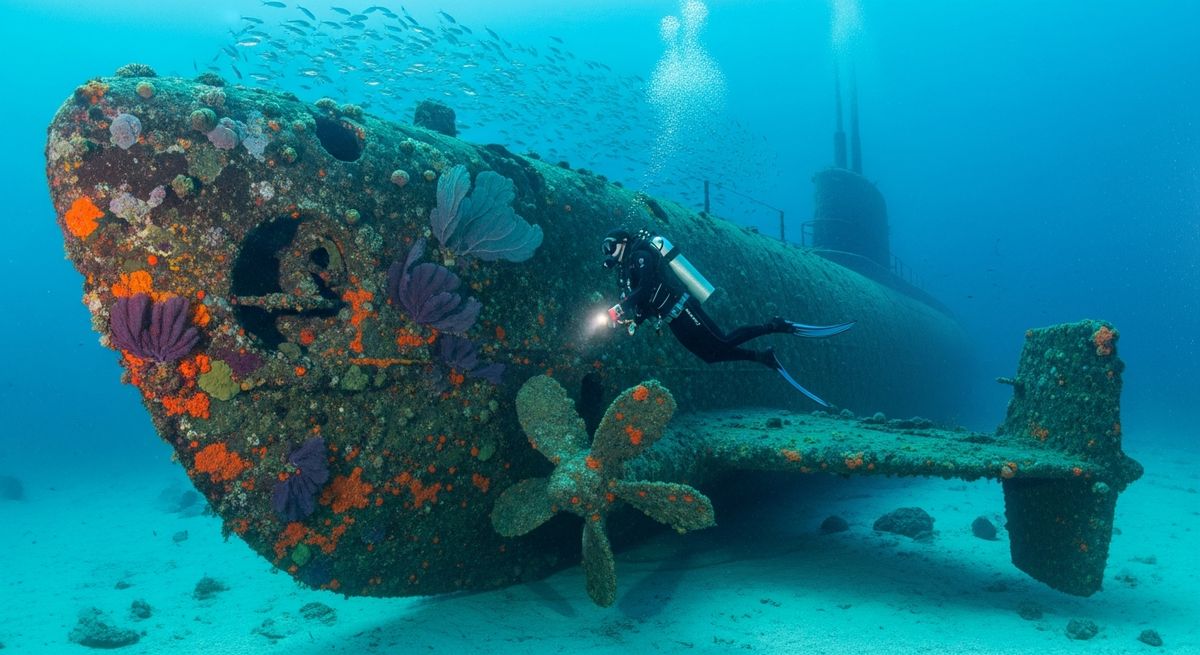
The Mari Chandris is a proper piece of history, and we love how accessible she is for divers around Falmouth. She’s a steamship, sunk in 1940 after being set alight by another burning vessel, the Tascaclusa. You’re not dropping onto a deep, dark wreck here; instead, what’s left of her hull and superstructure creates a fantastic playground for those looking for a shallower wreck dive. Dive down and you’ll find the metalwork completely covered in plumose anemones, often swaying gently with the surge. There are crevices everywhere to poke a torch into, looking for the crabs and blennies that have made it home. We often see dogfish settled on the sand nearby, and sometimes a curious grey seal will pop by to check you out. It’s an ideal spot for newer wreck divers or photographers wanting to spend some good bottom time exploring without the pressure of depth.

Location
Cornwall & Devon, United Kingdom, Mediterranean & Europe
Coordinates
50.158920, -5.013547
Type
wreck
Maximum Depth
0m

Marine Protected Area: Carricknath Point to Porthbean Beach

Best Time to Dive in Cornwall & Devon

The warmest water temperatures in Cornwall & Devon occur in January, averaging 9.6°C. The coolest conditions are in December at 9.6°C.

Monthly Water Temperatures

  • January: 9.6°C (air: 7.3°C)
  • February: 9.6°C (air: 8.4°C)
  • March: 9.6°C (air: 8.6°C)
  • April: 9.6°C (air: 10.1°C)
  • May: 9.6°C (air: 12.6°C)
  • June: 9.6°C (air: 15.2°C)
  • July: 9.6°C (air: 16.6°C)
  • August: 9.6°C (air: 17.1°C)
  • September: 9.6°C (air: 15.9°C)
  • October: 9.6°C (air: 13.5°C)
  • November: 9.6°C (air: 10.7°C)
  • December: 9.6°C (air: 8.7°C)

Nearby Dive Sites in Cornwall & Devon

Nearest Dive Centres to MARI CHANDRIS

Marine Life in Cornwall & Devon

Home to 192 recorded species including 93 reef fish, 18 sharks & rays, 13 whales & dolphins, 11 crabs & lobsters, 11 other, 10 seagrass & algae.

Notable Species

Recommended Packing List for MARI CHANDRIS

Based on average water temperature of 9.6°C.

  • Drysuit - water at 10°C demands a drysuit with thermal undergarments
  • Hood & Gloves (7mm+) - critical to prevent heat loss
  • Mask - essential for every dive
  • Fins
  • BCD - buoyancy compensator
  • Regulator - your most safety-critical piece of gear
  • Dive Computer - tracks depth, time, and NDL
  • Surface Marker Buoy (SMB) - essential for boat pickups
  • Dive Torch - useful for crevices and colour at depth
  • Underwater Camera - capture your diving memories

Frequently Asked Questions

What is the current depth of the SS Mari Chandris wreck for diving?
The SS Mari Chandris wreck is listed with a depth of 0m. This suggests it is either very shallow, possibly intertidal, or that the listed depth refers to the shallowest part of the wreck, with deeper sections potentially available. Divers should consult local dive operators for the most accurate and up-to-date depth information for this dive site.
What kind of marine life and artifacts can divers expect to see at the Mari Chandris dive site?
The provided data specifically identifies the Mari Chandris as a steam ship wreck, sunk on July 10, 1940, and notes it is a "Wreck showing any portion of hull or superstructure." While the data does not detail specific marine life or artifacts, divers can generally expect to explore the structural remains of a historic vessel. For more information on potential marine life in the region, you might explore our wildlife database.
How difficult is the Mari Chandris wreck dive, and is it suitable for advanced open water divers?
The Mari Chandris wreck dive is classified as intermediate difficulty. This suggests it is suitable for divers with some experience beyond basic open water certification, making it a good option for advanced open water divers. Always assess your personal skill level and consult with local dive centers before undertaking any wreck dive.
What is the best time of year to dive the Mari Chandris wreck for optimal conditions?
The provided data does not specify the best time of year to dive the Mari Chandris wreck for optimal conditions. Conditions in Cornwall & Devon can vary significantly with seasons. For detailed information on seasonal conditions and the best times to dive, we recommend checking our When to Dive section or consulting local dive operators.
What diving certifications are required to dive the SS Mari Chandris wreck?
Given that the Mari Chandris wreck dive is rated as intermediate difficulty, divers would typically need at least an Advanced Open Water certification or equivalent experience. While specific certification requirements are not detailed in the provided data, an intermediate rating implies a need for skills beyond basic open water. Always confirm with a local dive center in Cornwall & Devon regarding their specific requirements for this wreck dive.
What are the typical currents and underwater conditions like at the Mari Chandris dive site?
The provided data does not include specific information on typical currents or general underwater conditions at the Mari Chandris dive site. Conditions can vary greatly depending on weather and tides in the Cornwall & Devon area. For the most accurate and up-to-date information on currents and other underwater conditions, it is always best to consult with local dive operators.