OCKLINGE - Cornwall & Devon

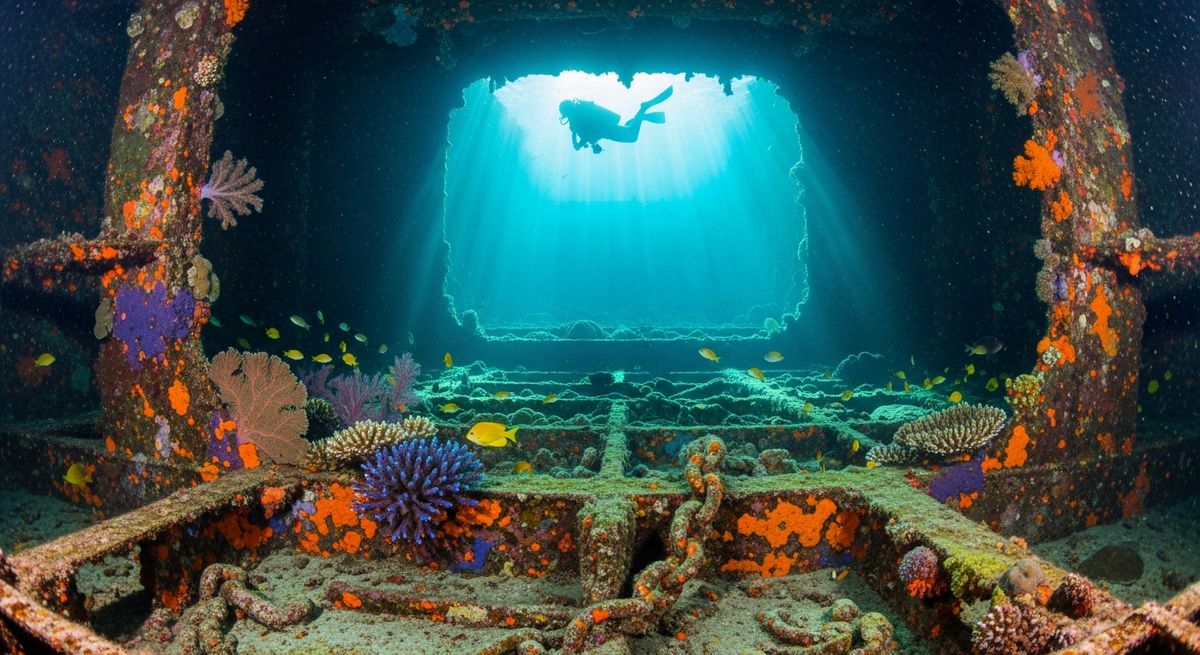
The Ocklinge, lost to the Manacles in 1932, is one of those Cornish wrecks that always gives us something new. We love dropping onto her on a calm day, when the light pushes down through the green water and really brings out the scale of her remains. She’s pretty broken up now, an 82-metre steamship, but the scattered plates and twisted girders have formed an incredible landscape for marine life. You’ll find walls of plumose anemones, their white tentacles catching the current, and lobsters peering out from every crevice. Our favourite spot is usually around the bow section, where the structure is still quite defined and conger eels are often lurking in the gloom. It’s a site that rewards multiple visits and a slow pace, letting your eyes adjust to the details. We’d suggest diving her on a neap tide for the best visibility and a more relaxed exploration.

Location
Cornwall & Devon, United Kingdom, Mediterranean & Europe
Coordinates
50.033783, -5.067517
Type
wreck
Maximum Depth
0m

Marine Protected Area: The Manacles

Best Time to Dive in Cornwall & Devon

The warmest water temperatures in Cornwall & Devon occur in January, averaging 9.6°C. The coolest conditions are in December at 9.6°C.

Monthly Water Temperatures

  • January: 9.6°C (air: 7.3°C)
  • February: 9.6°C (air: 8.4°C)
  • March: 9.6°C (air: 8.6°C)
  • April: 9.6°C (air: 10.1°C)
  • May: 9.6°C (air: 12.6°C)
  • June: 9.6°C (air: 15.2°C)
  • July: 9.6°C (air: 16.6°C)
  • August: 9.6°C (air: 17.1°C)
  • September: 9.6°C (air: 15.9°C)
  • October: 9.6°C (air: 13.5°C)
  • November: 9.6°C (air: 10.7°C)
  • December: 9.6°C (air: 8.7°C)

Nearby Dive Sites in Cornwall & Devon

Nearest Dive Centres to OCKLINGE

Marine Life in Cornwall & Devon

Home to 192 recorded species including 93 reef fish, 18 sharks & rays, 13 whales & dolphins, 11 crabs & lobsters, 11 other, 10 seagrass & algae.

Notable Species

Recommended Packing List for OCKLINGE

Based on average water temperature of 9.6°C.

  • Drysuit - water at 10°C demands a drysuit with thermal undergarments
  • Hood & Gloves (7mm+) - critical to prevent heat loss
  • Mask - essential for every dive
  • Fins
  • BCD - buoyancy compensator
  • Regulator - your most safety-critical piece of gear
  • Dive Computer - tracks depth, time, and NDL
  • Surface Marker Buoy (SMB) - essential for boat pickups
  • Dive Torch - useful for crevices and colour at depth
  • Underwater Camera - capture your diving memories

Frequently Asked Questions

What are the typical depths for diving at OCKLINGE?
The OCKLINGE dive site is noted for a depth of 0m, indicating that portions of this historic steam ship wreck are extremely shallow, potentially even breaking the surface. This allows for accessible exploration of the vessel, which was sunk in 1932. Divers can investigate this fascinating wreck site, classified as showing any portion of hull or superstructure.
What kind of marine life and underwater features can divers expect to see at OCKLINGE?
Divers at OCKLINGE will primarily encounter the significant underwater features of a historic steam ship wreck. This vessel, built in 1923 and sunk in 1932, measures 82.6m x 12.8m and is classified as a wreck showing any portion of hull or superstructure. While specific marine life is not detailed in our records, wrecks typically serve as vibrant artificial reefs, attracting diverse local species.
How challenging is diving at OCKLINGE, and is it suitable for beginner divers?
Diving at OCKLINGE is classified as having an intermediate difficulty level. This means it is generally not recommended for absolute beginner divers without proper supervision or additional training beyond entry-level certification. Divers should possess adequate experience and skills to safely explore this historic wreck site.
What is the best time of year to dive at OCKLINGE for optimal conditions and marine encounters?
Our current data for the OCKLINGE dive site does not specify the best time of year for optimal diving conditions or marine encounters. We recommend consulting local dive operators and checking current weather patterns for the Cornwall & Devon sub-region closer to your planned dive date. For general guidance on seasonal diving, you can visit our When to Dive section.
What scuba diving certifications are required or recommended to dive at OCKLINGE?
Given the intermediate difficulty rating for OCKLINGE, divers are typically recommended to hold at least an Advanced Open Water certification or equivalent. This ensures they possess the necessary skills and experience for exploring wreck sites and handling varying conditions. Always consult with a local dive center in Cornwall & Devon for their specific requirements and recommendations.
What are the typical current conditions and visibility like at the OCKLINGE dive site?
Our available data for the OCKLINGE dive site does not include specific information regarding typical current conditions or visibility. As this is an intermediate-level wreck dive, conditions can vary significantly. We strongly advise checking with local dive operators in Cornwall & Devon for up-to-date reports on currents and visibility before planning your dive.