PARMELIA
Protected Area
Western King
Why dive here
With 176+ marine species recorded in the area - including blue sharks, dolphins, dwarf minke whales, humpback whales and ocean sunfish (mola mola) - PARMELIA offers some of Cornwall & Devon's richest wreck diving. Water ranges 10-18°C, warmest July, August, September.
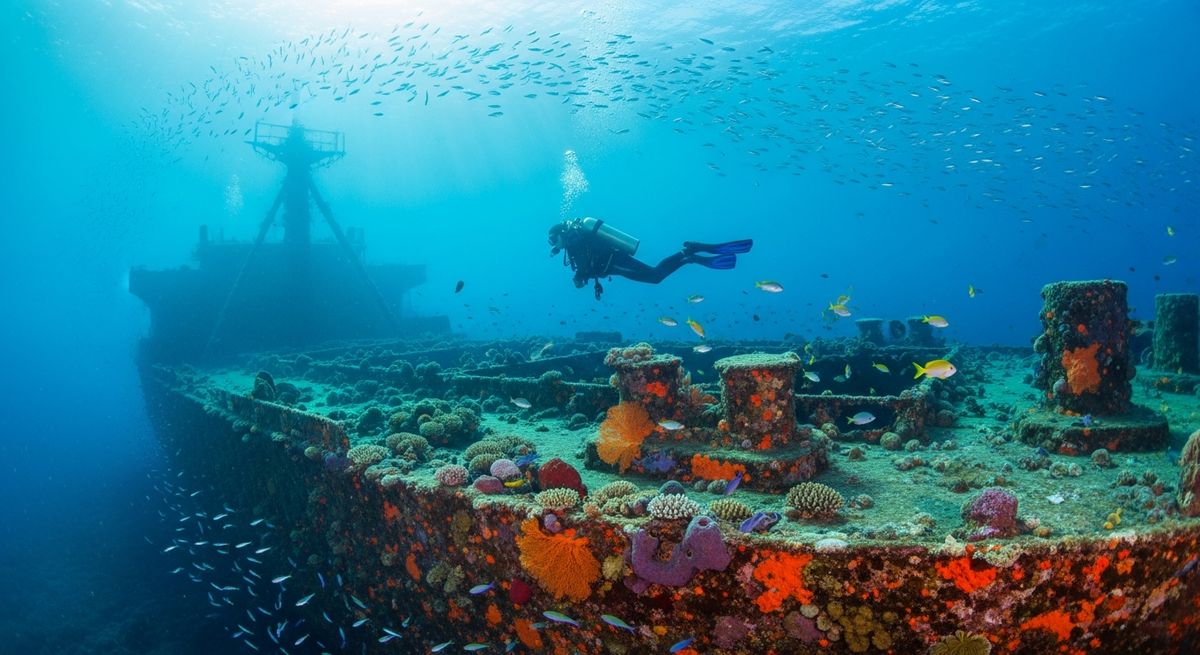
The Parmelia is a cracking little site, tucked away near Cremyll Point in Devonport, not far from Plymouth. This isn’t your deep, dramatic wreck dive; it’s shallow, accessible, and honestly, a lot of fun. What we love about the Parmelia is its history – she was a ship instrumental in establishing Western Australia, then tragically caught fire and sank in 1839. You won’t find towering superstructures here, but rather the beautiful, scattered remains of a wooden sailing vessel, now completely colonised by the local sea life. Diving the Parmelia feels like uncovering a secret. We’ve spent many a slack water dive here, poking around the ribs and timbers, imagining the ship's past. Look closely, and you’ll spot colourful jewel anemones clinging to the wood, vibrant against the dark timbers. Dogfish often rest in the sand nearby, and if you’re patient, small wrasse flit in and out of the crevices. Our favourite time to dive it is on a sunny day with good visibility, often an hour either side of slack high tide, when the light penetrates the water and really brings the wreck to life. It’s perfect for newer divers looking for a rewarding wreck experience without the intimidation of depth or strong currents, or for experienced divers just wanting a relaxed potter amongst history.
Safety Notes
Wreck site - avoid penetration without wreck diving certification. Watch for sharp metal and entanglement hazards.
Nearest Dive Centres to PARMELIA
Dive shops near PARMELIA
Plymouth Diving Centre
Sound Diving Limited
Dive Looe
Scuba 2000
Viewpoint Diving Centre
Reviews for PARMELIA
Conditions
Ocean conditions, forecast and tides for PARMELIA
PARMELIA Ocean Conditions
Monthly averages for PARMELIA, sourced from Open-Meteo marine data - nearest station: Open-Meteo marine grid (50.44, -2.73) (3km away)
October Averages
Sea Temperature
17°C
62°F · Range: 15.1–17.5°C
Air Temperature
13°C
56°F
Wind Speed
8.14 m/s
15.8 knots
Atmospheric Pressure
1011 hPa
Based on 4 years of monitoring data · Data sources: Open-Meteo marine data
Plan & book
Ways to dive Cornwall & Devon, from day trips to liveaboards.
Day trips & courses
via GetYourGuideGuided dives, courses and snorkel trips with instant booking.
Find dive trips in Cornwall & DevonPlaces to stay
via Booking.comHotels and dive resorts near Cornwall & Devon.
Search stays in Cornwall & DevonDive insurance
Most travel insurance excludes or limits scuba. Check what you need before you go.
Dive insurance explainedPartner links: we may earn a commission if you book, at no extra cost to you. How we make money
Where to Stay near PARMELIA
Prices from Booking.com. We may earn a commission at no extra cost to you.