VENEZUELA
Protected Area
Southbourne Rough
Why dive here
With 176+ marine species recorded in the area - including blue sharks, dolphins, dwarf minke whales, humpback whales and ocean sunfish (mola mola) - VENEZUELA offers some of Cornwall & Devon's richest wreck diving. Water ranges 10-18°C, warmest July, August, September.
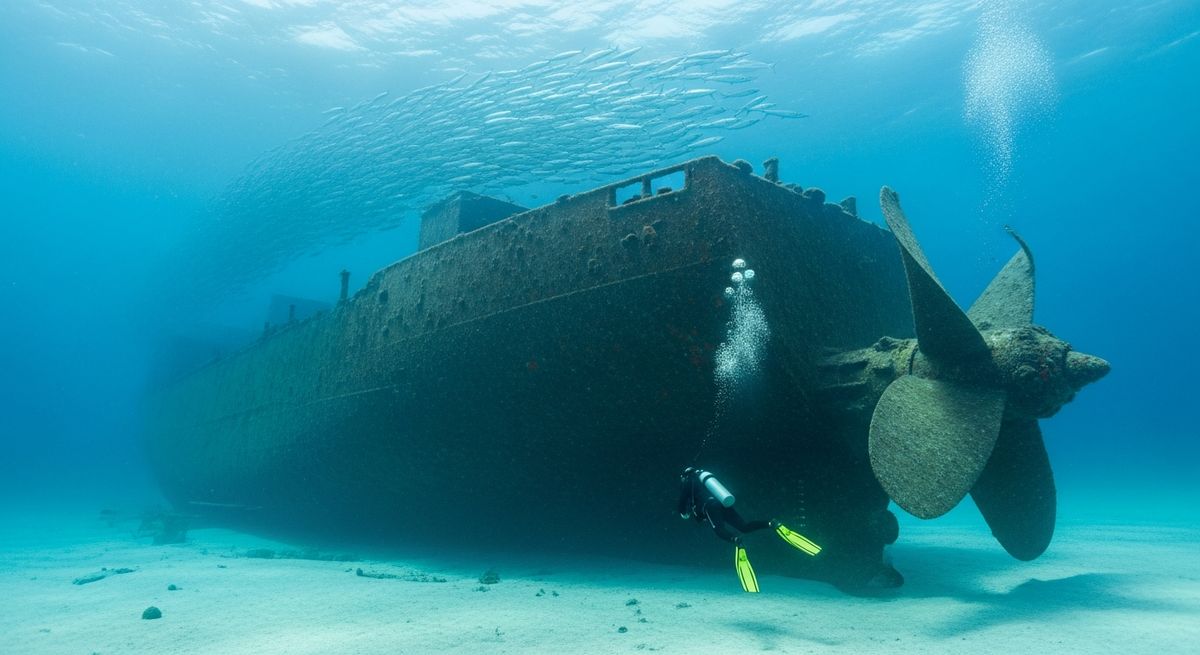
The Venezuela, a steamer built in 1907, met its end off the Cornish coast in 1918. It’s a solid wreck at 26 metres, offering a proper sense of history down there. You often find the visibility is good, especially through late spring into early autumn, which really lets you appreciate the scale of it. We love dropping onto the bow and working our way back. The two large boilers are a real focal point, now covered in plumose anemones and dead man’s fingers. There’s usually a resident conger eel or two poking out from the bigger holes, and schools of bib dart around the superstructure. Our favourite part is exploring the deeper sections where the engine room once was; it's a bit more broken up but you get a real sense of the ship’s guts. It’s a dive that suits those comfortable with deeper wrecks and a bit of current, which can sometimes pick up here. A good dive for seeing how the ocean reclaims steel.
Typical VENEZUELA Dive Profile
Illustrative profile based on site depth and type. Actual dive profiles vary - always follow your dive computer and training.
Safety Notes
Depth of 26m - Advanced Open Water certification recommended.
Wreck site - avoid penetration without wreck diving certification. Watch for sharp metal and entanglement hazards.
Always perform a 3-minute safety stop at 5m before surfacing.
Nearest Dive Centres to VENEZUELA
Dive shops near VENEZUELA
Divers Down
TAL Scuba Ltd.
Mayim Mermaid Academy
Dorset Diving Services
Andark Diving
Reviews for VENEZUELA
Conditions
Ocean conditions, forecast and tides for VENEZUELA
VENEZUELA Ocean Conditions
Monthly averages for VENEZUELA, sourced from Open-Meteo marine data - nearest station: Open-Meteo marine grid (50.44, -2.73) (3km away)
October Averages
Sea Temperature
17°C
62°F · Range: 15.1–17.5°C
Air Temperature
13°C
56°F
Wind Speed
8.14 m/s
15.8 knots
Atmospheric Pressure
1011 hPa
Based on 4 years of monitoring data · Data sources: Open-Meteo marine data
Plan & book
Ways to dive Cornwall & Devon, from day trips to liveaboards.
Day trips & courses
via GetYourGuideGuided dives, courses and snorkel trips with instant booking.
Find dive trips in Cornwall & DevonPlaces to stay
via Booking.comHotels and dive resorts near Cornwall & Devon.
Search stays in Cornwall & DevonDive insurance
Most travel insurance excludes or limits scuba. Check what you need before you go.
Dive insurance explainedPartner links: we may earn a commission if you book, at no extra cost to you. How we make money
Where to Stay near VENEZUELA
Prices from Booking.com. We may earn a commission at no extra cost to you.