YARMOUTH ROADS
Protected Area
Bouldnor and Hamstead Cliffs
Why dive here
With 176+ marine species recorded in the area - including blue sharks, dolphins, dwarf minke whales, humpback whales and ocean sunfish (mola mola) - YARMOUTH ROADS offers some of Cornwall & Devon's richest wreck diving. Water ranges 10-18°C, warmest July, August, September.
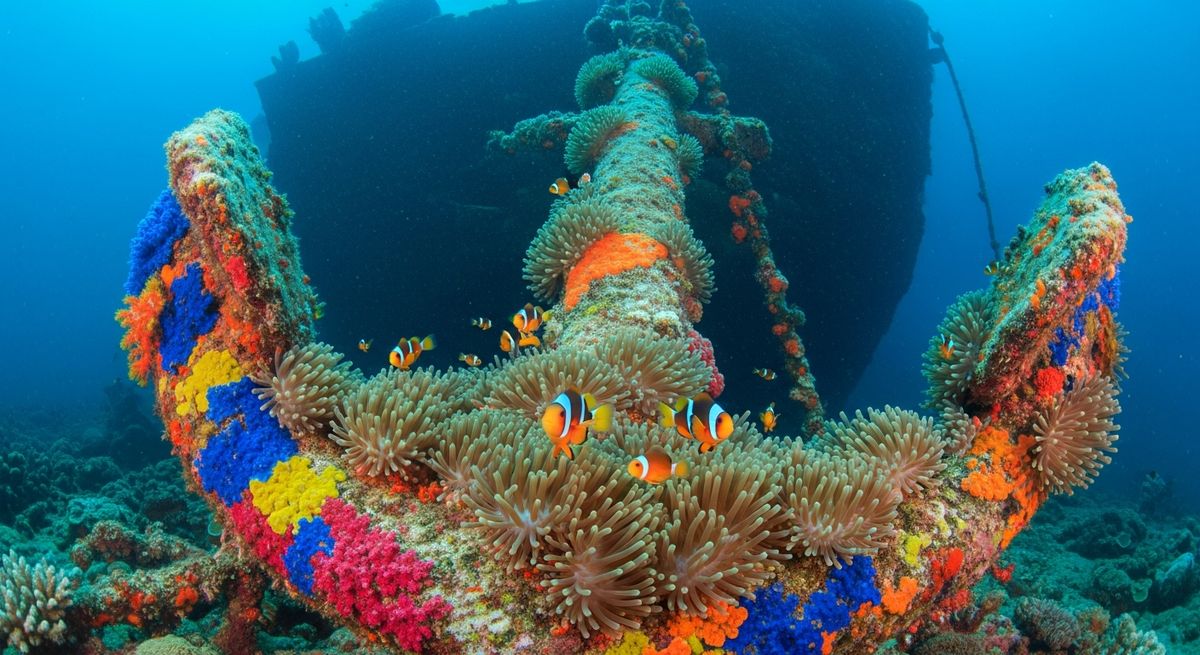
Yarmouth Roads isn’t about huge pelagics or dizzying coral. This is a journey into history, plain and simple, and we absolutely love it for that. At a mere 5 metres, it’s ridiculously shallow, meaning even on a gloomy British day, light penetrates right to the seabed. You’ll be finning over what’s left of a mid-16th-century carrack, most likely a Mediterranean merchant vessel. Think about that for a second – a ship from the age of sail, trading between England and the Low Countries, now lying scattered on the sand. What you see today are the ghostly remains of carvel planking and iron fastenings, spread out like archaeological clues. It’s not a towering structure, more a low-profile scatter, but the context is immense. We’ve spent whole dives just trying to piece together the ship’s outline, imagining the cargo it once carried. Because it’s so shallow and protected, it’s a brilliant site for newer divers looking for something beyond a rocky reef, or for anyone who appreciates the sheer history of a place. Look closely amongst the timbers; small crabs scuttle, and we’ve spotted blennies peeking from crevices. Our top tip? Go on a calm day with good sun, then take your time. Let your imagination do the heavy lifting.
Typical YARMOUTH ROADS Dive Profile
Illustrative profile based on site depth and type. Actual dive profiles vary - always follow your dive computer and training.
Safety Notes
Wreck site - avoid penetration without wreck diving certification. Watch for sharp metal and entanglement hazards.
Nearest Dive Centres to YARMOUTH ROADS
Dive shops near YARMOUTH ROADS
TAL Scuba Ltd.
Andark Diving
Mayim Mermaid Academy
In2 Diving
Dorset Diving Services
Divers Down
Reviews for YARMOUTH ROADS
Conditions
Ocean conditions, forecast and tides for YARMOUTH ROADS
YARMOUTH ROADS Ocean Conditions
Monthly averages for YARMOUTH ROADS, sourced from Open-Meteo marine data - nearest station: Open-Meteo marine grid (50.44, -2.73) (3km away)
October Averages
Sea Temperature
17°C
62°F · Range: 15.1–17.5°C
Air Temperature
13°C
56°F
Wind Speed
8.14 m/s
15.8 knots
Atmospheric Pressure
1011 hPa
Based on 4 years of monitoring data · Data sources: Open-Meteo marine data
Plan & book
Ways to dive Cornwall & Devon, from day trips to liveaboards.
Day trips & courses
via GetYourGuideGuided dives, courses and snorkel trips with instant booking.
Find dive trips in Cornwall & DevonPlaces to stay
via Booking.comHotels and dive resorts near Cornwall & Devon.
Search stays in Cornwall & DevonDive insurance
Most travel insurance excludes or limits scuba. Check what you need before you go.
Dive insurance explainedPartner links: we may earn a commission if you book, at no extra cost to you. How we make money
Where to Stay near YARMOUTH ROADS
Prices from Booking.com. We may earn a commission at no extra cost to you.