ARNOLD (PROBABLY)
Protected Area
Coll Machair
Why dive here
With 112+ marine species recorded in the area - including blue whales, dolphins, dwarf minke whales, humpback whales and ocean sunfish (mola mola) - ARNOLD (PROBABLY) offers some of Scottish West Coast's richest wreck diving.
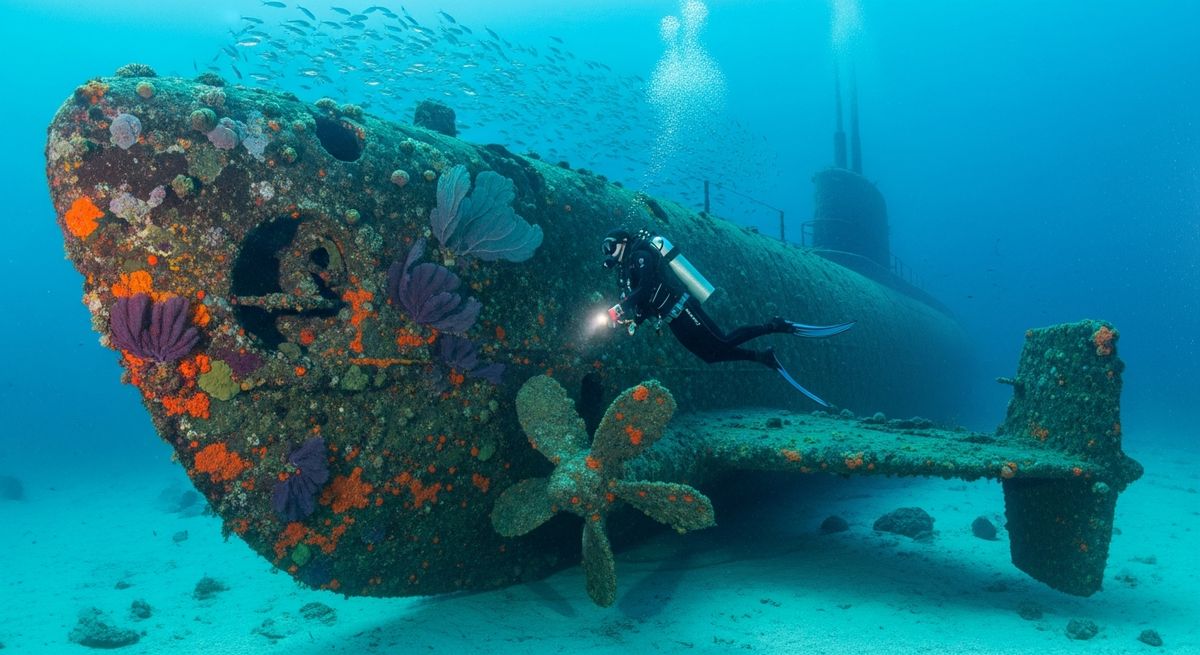
There’s a reason we keep coming back to the Arnold (Probably) on the Scottish West Coast. It’s not about tropical colours; it’s about atmosphere and history, a proper dive into the past. This isn't a deep dive, sitting at a maximum of 10 metres, which makes it perfect for longer bottom times and really soaking in the details. The wreck itself, a 70-metre steamship that went down in 1925, is surprisingly intact in places for its age, especially with those two massive boilers standing proud. Swimming through what’s left of the hull, you can almost hear the echoes of its working life. We love pushing into the darker, more sheltered sections where schools of coalfish dart around like liquid silver, and the skeletal remains of the deck plating are draped in vibrant plumose anemones. It’s a dive that rewards slow exploration, letting your eyes adjust to the green light filtering down, spotting crabs scuttling in crevices. If you appreciate a wreck with a story, and aren’t afraid of a bit of chill in the water, this site is a truly special experience.
Typical ARNOLD (PROBABLY) Dive Profile
Illustrative profile based on site depth and type. Actual dive profiles vary - always follow your dive computer and training.
Safety Notes
Wreck site - avoid penetration without wreck diving certification. Watch for sharp metal and entanglement hazards.
ARNOLD (PROBABLY) Wreck History
Year Sunk
1925
Vessel Type
cargo ship
Cause
unknown
The steamship known as the Arnold had a long and well-travelled career before sinking off the Scottish West Coast in January 1925. Built in Sunderland in 1881, she sailed under at least two other names, Capri and Tyri, suggesting a history of changing owners and routes that spanned over four decades. The mystery of its final voyage adds to the allure of this historic wreck.
Lying at a comfortable depth of 10 metres, the Arnold is an ideal shallow dive. The clear, nutrient-rich waters of the West Coast have transformed the wreck into a vibrant artificial reef. Divers can explore the remains of this venerable steamship, seeking out its two boilers and the remnants of its powerful compound engine. The hull structure, though collapsed in places, provides shelter for a variety of fish, crabs, and lobsters, making it a rewarding dive for both wreck enthusiasts and underwater photographers.
Reviews for ARNOLD (PROBABLY)
Conditions
Ocean conditions, forecast and tides for ARNOLD (PROBABLY)
Plan & book
Ways to dive Scottish West Coast, from day trips to liveaboards.
Day trips & courses
via GetYourGuideGuided dives, courses and snorkel trips with instant booking.
Find dive trips in Scottish West CoastPlaces to stay
via Booking.comHotels and dive resorts near Scottish West Coast.
Search stays in Scottish West CoastDive insurance
Most travel insurance excludes or limits scuba. Check what you need before you go.
Dive insurance explainedPartner links: we may earn a commission if you book, at no extra cost to you. How we make money
Where to Stay near ARNOLD (PROBABLY)
Prices from Booking.com. We may earn a commission at no extra cost to you.