ATHENIA
Protected Area
Magilligan Point
Why dive here
With 112+ marine species recorded in the area - including blue whales, dolphins, dwarf minke whales, humpback whales and ocean sunfish (mola mola) - ATHENIA offers some of Scottish West Coast's richest wreck diving.
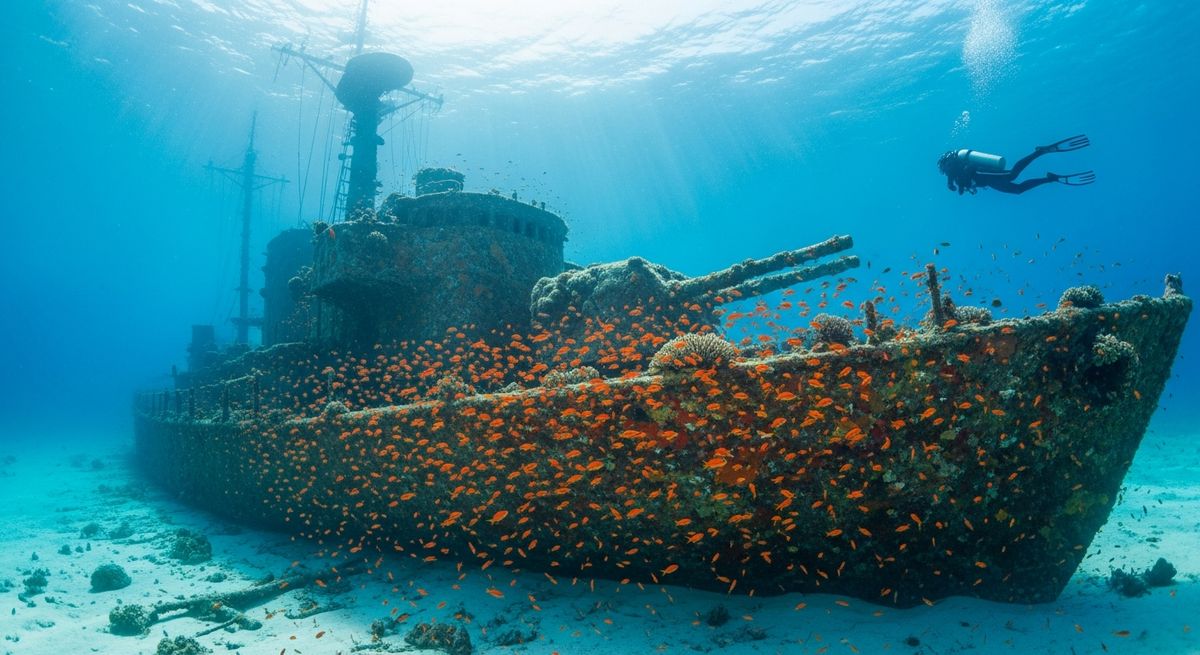
The Athenia. Now here’s a wreck that really gets us talking. Lying deep at 54 metres in the Firth of Clyde, this isn’t a dive for the inexperienced, but for technical divers, it’s an absolute standout. Dropping down, the sheer scale of the Athenia hits you – 145 metres long, broken but still impressively intact in parts. We love the way the light filters down, even at this depth, catching on the skeletal remains of her superstructure. Our favourite part has to be exploring the stern section; you can picture her twin screws and rudder, even if the visibility isn’t always what you’d call ‘Caribbean’. What really brings it to life are the anemones, in colours you wouldn’t expect to see off the Scottish coast, clinging to every rivet and plate. Look closely, and you’ll spot plumose anemones waving in the gentle current, and the occasional ling or conger eel peering out from a dark corner. It’s a proper expedition, a genuine deep wreck experience, and a real privilege to spend time on her.
Typical ATHENIA Dive Profile
Illustrative profile based on site depth and type. Actual dive profiles vary - always follow your dive computer and training.
Safety Notes
Maximum depth 54m exceeds recreational limits (40m). Technical diving certification and equipment required.
Wreck site - avoid penetration without wreck diving certification. Watch for sharp metal and entanglement hazards.
Always perform a 3-minute safety stop at 5m before surfacing.
ATHENIA Wreck History
Year Sunk
1917
Vessel Type
passenger ship
Cause
torpedo
Tonnage
8,668 GRT
Not to be confused with her more famous World War II namesake, this is the original SS Athenia, a handsome passenger liner built in 1904 for the Donaldson Line. For over a decade, she plied the route between Glasgow and Canadian ports, carrying thousands of passengers, including many immigrants starting new lives in North America. When World War I broke out, she was fitted with a defensive gun and continued her transatlantic service.
On August 16, 1917, her service came to an abrupt end. While sailing west of Inishtrahull, Ireland, she was torpedoed without warning by the German submarine U-53. Fifteen crew and passengers were lost in the sinking. This Athenia became a forgotten predecessor to the second ship of the same name, which would become the first British vessel sunk in the next world war.
Lying at 54 metres, the wreck of the first Athenia is a challenging but rewarding dive. She rests on her port side, largely intact for a vessel of her age. Divers can explore the liner's classic lines, her promenade decks, and the remains of her superstructure, a haunting memorial to the forgotten casualties of the Great War.
Reviews for ATHENIA
Conditions
Ocean conditions, forecast and tides for ATHENIA
Plan & book
Ways to dive Scottish West Coast, from day trips to liveaboards.
Day trips & courses
via GetYourGuideGuided dives, courses and snorkel trips with instant booking.
Find dive trips in Scottish West CoastPlaces to stay
via Booking.comHotels and dive resorts near Scottish West Coast.
Search stays in Scottish West CoastDive insurance
Most travel insurance excludes or limits scuba. Check what you need before you go.
Dive insurance explainedPartner links: we may earn a commission if you book, at no extra cost to you. How we make money
Where to Stay near ATHENIA
Prices from Booking.com. We may earn a commission at no extra cost to you.