BALLISTA
Protected Area
Glas Eileanan
Why dive here
With 112+ marine species recorded in the area - including blue whales, dolphins, dwarf minke whales, humpback whales and ocean sunfish (mola mola) - BALLISTA offers some of Scottish West Coast's richest wreck diving.
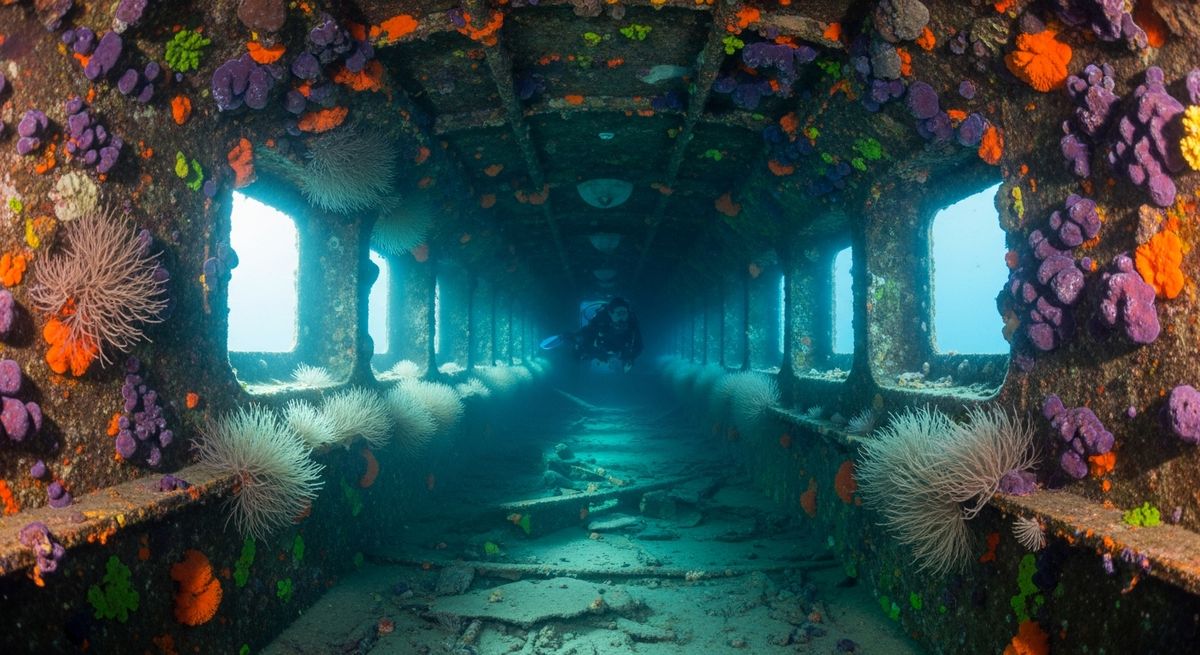
The Ballista, sitting shallow on the Scottish West Coast, is a proper cold-water treat. This steamship, built in '39, went down in '73, leaving us a surprisingly intact wreck at just 6m. We love how accessible she is, making for a relaxed dive where you can really take your time poking around. She’s broken midships, but the bow and stern sections are still clearly defined. Our favourite part is nosing around the engine room, where you can still make out the compound expansion engine and that single boiler – a real ghost of industry. Visibility can swing, but on a good day, the light filtering down gives the whole site a moody, ethereal glow. Shoals of saithe often hang around the superstructure, and we’ve seen some decent-sized conger eels tucked into various nooks. It’s a fantastic site for newer wreck divers or anyone who appreciates history without the depth-related fuss. Just remember your drysuit; it’s Scotland, after all.
Typical BALLISTA Dive Profile
Illustrative profile based on site depth and type. Actual dive profiles vary - always follow your dive computer and training.
Safety Notes
Wreck site - avoid penetration without wreck diving certification. Watch for sharp metal and entanglement hazards.
BALLISTA Wreck History
Year Sunk
1973
Vessel Type
tugboat
Cause
unknown
The Ballista offers one of the most accessible wreck diving experiences on the Scottish West Coast, lying in just 6 metres of water. Built in 1939, this steamship had a long working life before its loss in 1973. In an ironic twist of fate, at the time of her sinking, the Ballista was owned by the Elliot Diving Company. The exact cause of her foundering is not widely documented, but her shallow grave makes her a fantastic site for novice divers, underwater photographers, and even snorkelers on a clear day.
Divers can expect an easy and relaxed exploration of a small, compact wreck. The shallow depth allows for long bottom times and excellent light penetration, illuminating the boiler and engine components that remain. Over the decades, the Ballista has transformed into a vibrant artificial reef, teeming with crustaceans hiding in its crevices and patrolled by schools of small fish. It's an ideal location for a second dive of the day or for those taking their first fin-kicks into the world of wreck diving.
Nearest Dive Centres to BALLISTA
Dive shops near BALLISTA
View all dive centres in Scottish West CoastReviews for BALLISTA
Conditions
Ocean conditions, forecast and tides for BALLISTA
Plan & book
Ways to dive Scottish West Coast, from day trips to liveaboards.
Day trips & courses
via GetYourGuideGuided dives, courses and snorkel trips with instant booking.
Find dive trips in Scottish West CoastPlaces to stay
via Booking.comHotels and dive resorts near Scottish West Coast.
Search stays in Scottish West CoastDive insurance
Most travel insurance excludes or limits scuba. Check what you need before you go.
Dive insurance explainedPartner links: we may earn a commission if you book, at no extra cost to you. How we make money
Where to Stay near BALLISTA
Prices from Booking.com. We may earn a commission at no extra cost to you.