BARON ARDROSSAN
Protected Area
Mingulay and Berneray
Why dive here
With 112+ marine species recorded in the area - including blue whales, dolphins, dwarf minke whales, humpback whales and ocean sunfish (mola mola) - BARON ARDROSSAN offers some of Scottish West Coast's richest wreck diving.
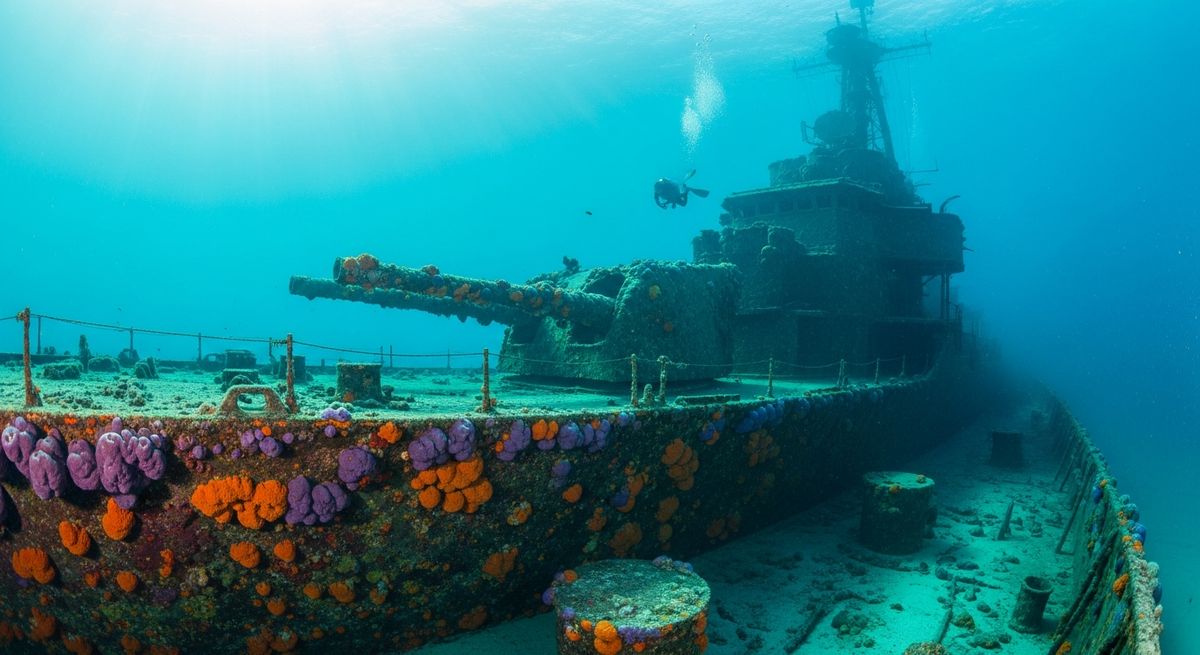
The Baron Ardrossan is a proper beast of a wreck, even at just 4m. We love a shallow wreck, especially one so chunky and accessible. You're looking at a huge steamship, 110m long, scattered across the seabed off Sandray Island. It ran aground back in 1940, and time, tide, and Scottish storms have really broken it up, but that's precisely its charm. Dropping down, you're immediately struck by the sheer scale of the twisted metal. Expect to see massive plates, beams, and machinery parts, all draped in kelp and alive with critters. We’ve spent ages just poking around the engine room area, which is pretty mangled but still offers a sense of its former life. Conger eels are always lurking in the darker crevices, and the kelp forests are thick with wrasse and velvet swimming crabs. It’s an easy, relaxed dive, perfect for photographers or anyone who wants to take their time exploring a substantial piece of maritime history without worrying about deco. Just watch the surge if there’s any swell; it can really move you around over the shallower sections.
Typical BARON ARDROSSAN Dive Profile
Illustrative profile based on site depth and type. Actual dive profiles vary - always follow your dive computer and training.
Safety Notes
Wreck site - avoid penetration without wreck diving certification. Watch for sharp metal and entanglement hazards.
BARON ARDROSSAN Wreck History
Year Sunk
1940
Vessel Type
cargo ship
Cause
grounding
The SS Baron Ardrossan was a steamship built in 1932 by the famed Harland & Wolff shipyard. As part of the H. Hogarth & Sons fleet, she plied the cargo routes, a workhorse of the British merchant navy. At 110 meters long, she was a substantial vessel designed for long-haul voyages, typical of the era's cargo ships.
Her career was cut short during the Second World War. On December 30, 1940, while on a passage destined for Calcutta and Table Bay, the Baron Ardrossan ran aground at Sandray Island, off the rugged west coast of Scotland. Wartime conditions, including navigational challenges and the constant threat of enemy action, made such accidents a grim reality for mariners.
Today, the wreck lies in just 4 meters of water, making it a highly accessible dive, though very exposed to the elements. Years of Scottish storms have broken the vessel apart, scattering its remains across the seabed. Divers can explore the ship's massive boilers, engine components, and sections of steel plating, now colonized by kelp and home to a variety of local marine life. It's an ideal site for novice wreck divers or as a scenic second dive, offering a tangible connection to WWII maritime history.
Reviews for BARON ARDROSSAN
Conditions
Ocean conditions, forecast and tides for BARON ARDROSSAN
Plan & book
Ways to dive Scottish West Coast, from day trips to liveaboards.
Day trips & courses
via GetYourGuideGuided dives, courses and snorkel trips with instant booking.
Find dive trips in Scottish West CoastPlaces to stay
via Booking.comHotels and dive resorts near Scottish West Coast.
Search stays in Scottish West CoastDive insurance
Most travel insurance excludes or limits scuba. Check what you need before you go.
Dive insurance explainedPartner links: we may earn a commission if you book, at no extra cost to you. How we make money
Where to Stay near BARON ARDROSSAN
Prices from Booking.com. We may earn a commission at no extra cost to you.