BELFORD
Protected Area
Gruinart Flats, Islay
Why dive here
With 112+ marine species recorded in the area - including blue whales, dolphins, dwarf minke whales, humpback whales and ocean sunfish (mola mola) - BELFORD offers some of Scottish West Coast's richest wreck diving.
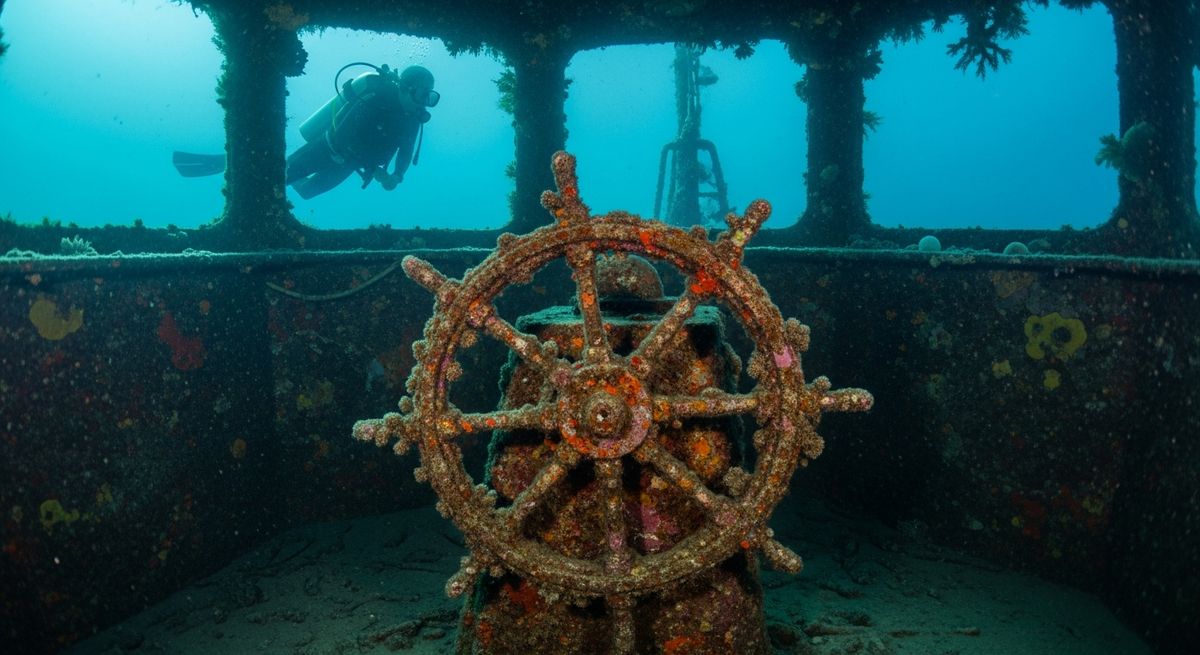
The Belford, a steamship that went down in 1916, sits surprisingly intact at just 6 metres. We love a shallow wreck, especially one with this kind of history, and she’s our pick for anyone exploring the Scottish West Coast. The bow points west, high and proud, covered in plumose anemones, their white tentacles swaying with the gentle surge. Visibility can be a bit hit-or-miss here; aim for a calm day after a few days of settled weather, otherwise, it can be a dark dive even at this depth. You can swim over her entire length, a good 99 metres of structure now home to a surprising amount of life. Look for juvenile pollack darting amongst the broken plates, and we often spot velvet swimming crabs scuttling over the bulkheads. The two boilers are particularly impressive, a stark reminder of her working life, and they’ve become great homes for conger eels. It’s a site that really makes you feel the history, a proper piece of maritime heritage that’s accessible to almost any diver.
Typical BELFORD Dive Profile
Illustrative profile based on site depth and type. Actual dive profiles vary - always follow your dive computer and training.
Safety Notes
Wreck site - avoid penetration without wreck diving certification. Watch for sharp metal and entanglement hazards.
BELFORD Wreck History
Year Sunk
1916
Vessel Type
cargo ship
Cause
grounding
The SS Belford was a steamship built in 1901 in Sunderland. Her career was cut short on February 9, 1916, when she fell victim to the notoriously harsh weather of the Scottish West Coast. While navigating in a fierce blizzard, the vessel ran hard aground and was lost. The crew managed to escape, but the ship itself was abandoned to the sea.
Today, the wreck of the Belford is a fantastic and highly accessible dive. Lying in just 6 meters of water, it is perfect for novice divers, photographers, and those looking for a long, relaxed exploration. The vessel is well broken up, but key features like her two large boilers and the triple-expansion engine are still clearly identifiable. The shallow depth allows for excellent light penetration on a clear day, illuminating the wreckage which has become a thriving artificial reef, teeming with local marine life. It's a superb introduction to wreck diving in a scenic and sheltered location.
Reviews for BELFORD
Conditions
Ocean conditions, forecast and tides for BELFORD
Plan & book
Ways to dive Scottish West Coast, from day trips to liveaboards.
Day trips & courses
via GetYourGuideGuided dives, courses and snorkel trips with instant booking.
Find dive trips in Scottish West CoastPlaces to stay
via Booking.comHotels and dive resorts near Scottish West Coast.
Search stays in Scottish West CoastDive insurance
Most travel insurance excludes or limits scuba. Check what you need before you go.
Dive insurance explainedPartner links: we may earn a commission if you book, at no extra cost to you. How we make money
Where to Stay near BELFORD
Prices from Booking.com. We may earn a commission at no extra cost to you.