BOUNCER
Protected Area
Rathlin Island
Why dive here
With 112+ marine species recorded in the area - including blue whales, dolphins, dwarf minke whales, humpback whales and ocean sunfish (mola mola) - BOUNCER offers some of Scottish West Coast's richest wreck diving.
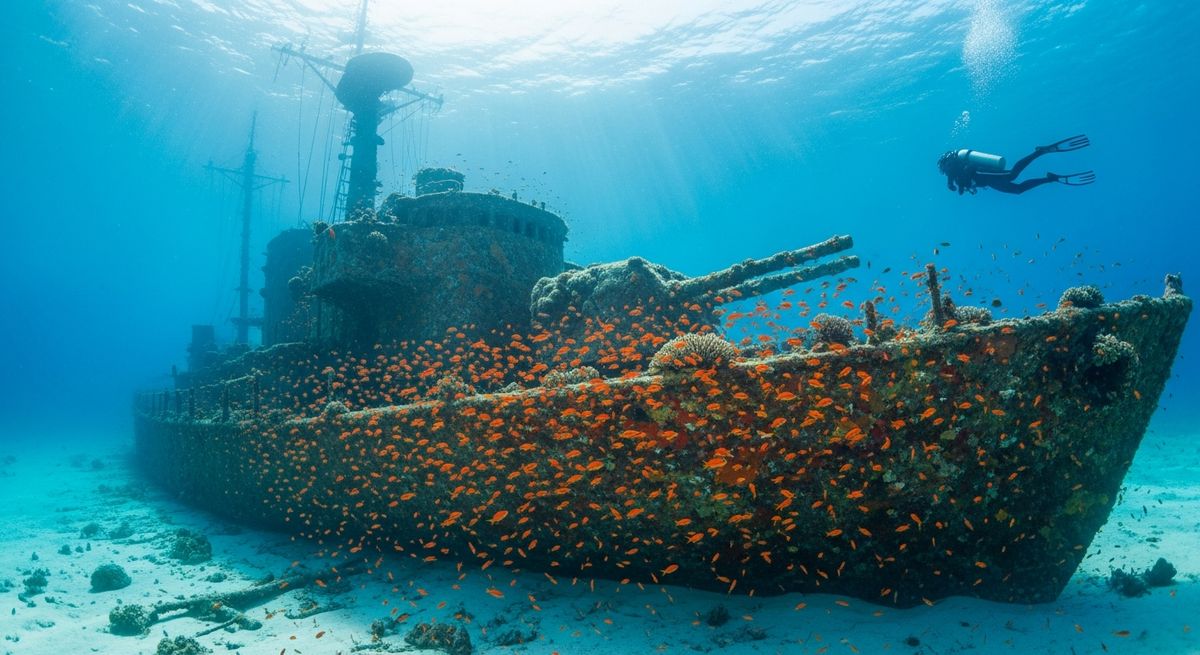
The Bouncer, resting in a shallow bay on the Scottish West Coast, is a proper character. This old gunboat, converted to a salvage vessel before she sank in 1921, now lies completely broken up in just six metres of water. We love a shallow wreck where you can really take your time and soak it all in. You won't find an intact hull here, but rather a fascinating jumble of metal ribs, plates, and machinery strewn across the seabed. It’s less about penetration and more about exploration. We spend ages picking through the wreckage, spotting the twin shafts and parts of her old horizontal engine, imagining her working life. The site is absolutely brilliant for macro life, often thick with tiny nudibranchs, crabs scuttling between the plates, and the occasional inquisitive wrasse. Visibility can be a bit variable, especially after a storm, so we always check conditions before heading out. It's a site that rewards patience and a keen eye, perfect for a long, relaxed dive, especially on a sunny day when the light dances through the kelp.
Typical BOUNCER Dive Profile
Illustrative profile based on site depth and type. Actual dive profiles vary - always follow your dive computer and training.
Safety Notes
Wreck site - avoid penetration without wreck diving certification. Watch for sharp metal and entanglement hazards.
BOUNCER Wreck History
Year Sunk
1921
Vessel Type
warship
Cause
unknown
The Bouncer has a fascinating history, beginning her life not as a civilian workhorse but as a Victorian-era gunboat. Built in 1879 at the renowned HM Dockyard in Pembroke, she was a product of British naval engineering, equipped with a 36-horsepower engine built by Penn of London. After a long military career, she was sold into private service and was operating as a salvage vessel at the time of her loss in 1921.
The exact circumstances of her sinking are not recorded, adding a layer of mystery to the dive. Today, the Bouncer rests in just 6 meters of water off the Scottish West Coast, making her an ideal and intriguing site for divers of all levels. Exploring the remains offers a unique glimpse into a vessel that served two very different purposes. Divers can trace the strong lines of her original gunboat hull while searching for clues to her later life in salvage, all in a shallow, sheltered location.
Nearest Dive Centres to BOUNCER
Dive shops near BOUNCER
View all dive centres in Scottish West CoastReviews for BOUNCER
Conditions
Ocean conditions, forecast and tides for BOUNCER
Plan & book
Ways to dive Scottish West Coast, from day trips to liveaboards.
Day trips & courses
via GetYourGuideGuided dives, courses and snorkel trips with instant booking.
Find dive trips in Scottish West CoastPlaces to stay
via Booking.comHotels and dive resorts near Scottish West Coast.
Search stays in Scottish West CoastDive insurance
Most travel insurance excludes or limits scuba. Check what you need before you go.
Dive insurance explainedPartner links: we may earn a commission if you book, at no extra cost to you. How we make money
Where to Stay near BOUNCER
Prices from Booking.com. We may earn a commission at no extra cost to you.