BRUCE (POSSIBLY)
Protected Area
Stevenston Beach
Why dive here
With 112+ marine species recorded in the area - including blue whales, dolphins, dwarf minke whales, humpback whales and ocean sunfish (mola mola) - BRUCE (POSSIBLY) offers some of Scottish West Coast's richest wreck diving.
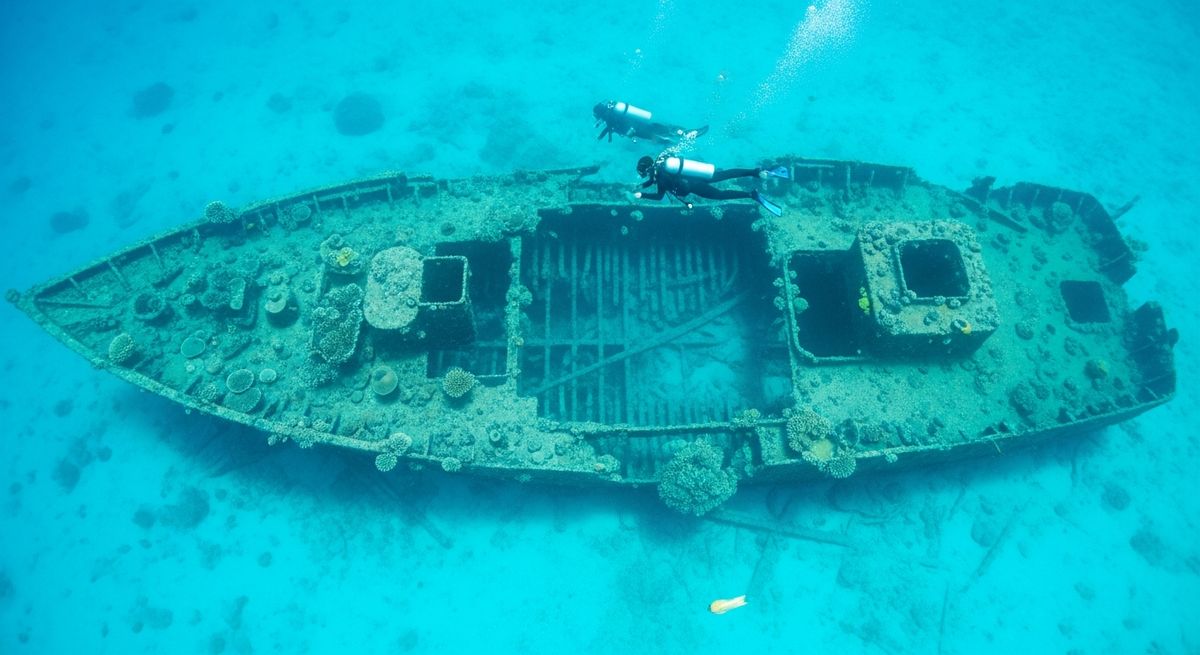
The Bruce, or what we strongly suspect is the Bruce, is a fantastic peek into maritime history, lying perfectly upright on the seabed. It’s not a huge wreck, about 20m long, but for a ship that went down in 1881, she’s remarkably intact. We love how the bow points north, still looking like it’s ready to make passage for Glasgow, just as it was when it sank. When you drop down, you’ll first hit the stern. We’ve found the prop still there, usually covered in anemones, and you can swim right over the deck, which is starting to collapse in places. The single boiler is a real landmark, a big, cylindrical drum often surrounded by squat lobsters. Our favourite bit is the midships, where the engine room structure is still clear, drawing in plenty of conger eels and curious wrasse. Visibility on the west coast can be a bit variable, but on a good day, the light filtering through the kelp forest that has grown over parts of the wreck is magical, creating an eerie, historical atmosphere. It’s a great site for divers who appreciate a bit of history and enjoy exploring smaller, characterful wrecks.
Typical BRUCE (POSSIBLY) Dive Profile
Illustrative profile based on site depth and type. Actual dive profiles vary - always follow your dive computer and training.
Safety Notes
Depth of 20m - Advanced Open Water certification recommended.
Wreck site - avoid penetration without wreck diving certification. Watch for sharp metal and entanglement hazards.
Always perform a 3-minute safety stop at 5m before surfacing.
BRUCE (POSSIBLY) Wreck History
Year Sunk
1881
Vessel Type
cargo ship
Cause
storm
Tonnage
69 GRT
The Bruce was a small steamship built in 1875, typical of the coastal 'puffers' that were the lifeblood of trade and transport along the Scottish coast in the late Victorian era. Owned by a Glasgow firm, this 69-ton vessel would have spent its career shuttling cargo between the small harbours and sea lochs of Western Scotland.
The ship's working life was cut short by the notoriously fierce Scottish weather. On January 27, 1881, while on a passage from Irvine, the Bruce was caught in a severe storm. The small vessel was no match for the power of the sea and foundered, sinking to the seabed and becoming another victim of the unforgiving North Atlantic.
Today, the wreck of the Bruce rests at a depth of 20 metres, making it an excellent and accessible dive for a wide range of certified divers. Exploring this site is like diving into a piece of 19th-century maritime history. While the wooden hull has long since rotted away, the most resilient parts of the ship remain. Divers can easily identify the prominent boiler and the compound steam engine, which stand as skeletal monuments on the seafloor. The wreckage has become a well-established artificial reef, providing a perfect habitat for conger eels, lobsters, and the vibrant fish and invertebrate life of the Scottish West Coast.
Nearest Dive Centres to BRUCE (POSSIBLY)
Dive shops near BRUCE (POSSIBLY)
Field Studies Council Millport
C&C MARINE SERVICES
Just Dive In CIC
Splashsports Services
Scuba Diving Scotland
Reviews for BRUCE (POSSIBLY)
Conditions
Ocean conditions, forecast and tides for BRUCE (POSSIBLY)
Plan & book
Ways to dive Scottish West Coast, from day trips to liveaboards.
Day trips & courses
via GetYourGuideGuided dives, courses and snorkel trips with instant booking.
Find dive trips in Scottish West CoastPlaces to stay
via Booking.comHotels and dive resorts near Scottish West Coast.
Search stays in Scottish West CoastDive insurance
Most travel insurance excludes or limits scuba. Check what you need before you go.
Dive insurance explainedPartner links: we may earn a commission if you book, at no extra cost to you. How we make money
Where to Stay near BRUCE (POSSIBLY)
Prices from Booking.com. We may earn a commission at no extra cost to you.