BUTE FERRY
Protected Area
Kyles of Bute
Why dive here
With 112+ marine species recorded in the area - including blue whales, dolphins, dwarf minke whales, humpback whales and ocean sunfish (mola mola) - BUTE FERRY offers some of Scottish West Coast's richest wreck diving.
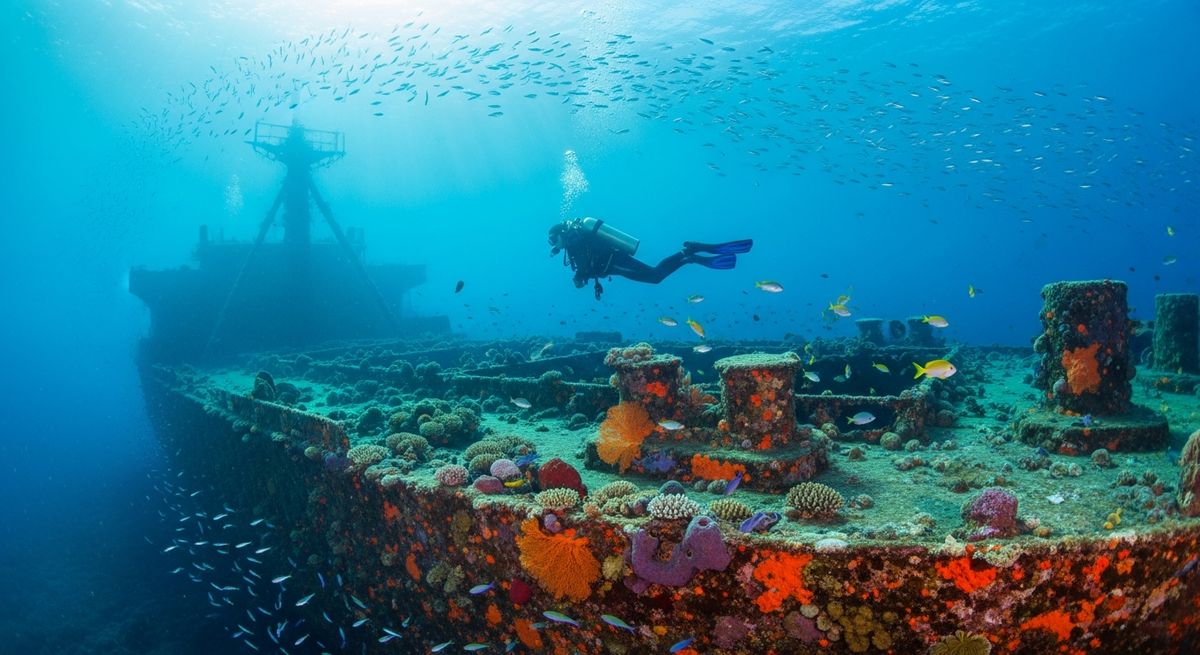
The Bute Ferry isn't about deep blue seas, it’s about a piece of history resting in the murky green embrace of the Clyde. We’ve always found a certain charm in these colder water wrecks. She went down in '56, a relatively shallow dive, making her perfect for newer wreck divers or those wanting a longer bottom time without pushing deco limits. Visibility can be a real mixed bag here, sometimes you're lucky with a good ten metres, other times it’s more like an arm’s length. Embrace the gloom; it adds to the atmosphere as the ferry slowly emerges. The wreck itself is pretty broken up, but you can still make out her general shape – the bow, the stern, and parts of the superstructure. Ling, cod, and wrasse are often found lurking in the shadows of the twisted metal, and we've even spotted the occasional lobster tucked away in a crevice. It’s a proper rummage, a chance to connect with a simpler time in maritime history. We’d suggest going at slack water to avoid any strong currents sweeping through.
Safety Notes
Wreck site - avoid penetration without wreck diving certification. Watch for sharp metal and entanglement hazards.
BUTE FERRY Wreck History
Year Sunk
1956
Vessel Type
ferry
Cause
unknown
In the mid-20th century, local ferries were the lifelines of the remote communities along Scotland's stunning west coast. The Bute Ferry was likely one such vessel, dutifully plying the waters and connecting the Isle of Bute to the mainland. Its career came to an end on May 23, 1956, when it sank in the beautiful but often treacherous waters of the Firth of Clyde. The specific cause of its sinking has been lost to time, but its name remains a marker in the region's maritime history.
Resting at a depth of 0 meters, the Bute Ferry is a visible wreck, its skeletal remains breaking the surface as a permanent feature of the coastline. This makes it an excellent site for snorkelers and a very shallow, easy dive. Exploring the wreck offers a tangible connection to the area's past, a chance to witness how the sea has claimed a piece of local heritage. The shallow waters allow for long bottom times and excellent light, illuminating the marine life that has now made this former island lifeline its home.
Nearest Dive Centres to BUTE FERRY
Dive shops near BUTE FERRY
Field Studies Council Millport
C&C MARINE SERVICES
Fyne Diving
Just Dive In CIC
Reviews for BUTE FERRY
Conditions
Ocean conditions, forecast and tides for BUTE FERRY
Plan & book
Ways to dive Scottish West Coast, from day trips to liveaboards.
Day trips & courses
via GetYourGuideGuided dives, courses and snorkel trips with instant booking.
Find dive trips in Scottish West CoastPlaces to stay
via Booking.comHotels and dive resorts near Scottish West Coast.
Search stays in Scottish West CoastDive insurance
Most travel insurance excludes or limits scuba. Check what you need before you go.
Dive insurance explainedPartner links: we may earn a commission if you book, at no extra cost to you. How we make money
Where to Stay near BUTE FERRY
Prices from Booking.com. We may earn a commission at no extra cost to you.