BYRON DARNTON
Protected Area
Sanda Islands
Why dive here
With 112+ marine species recorded in the area - including blue whales, dolphins, dwarf minke whales, humpback whales and ocean sunfish (mola mola) - BYRON DARNTON offers some of Scottish West Coast's richest wreck diving.
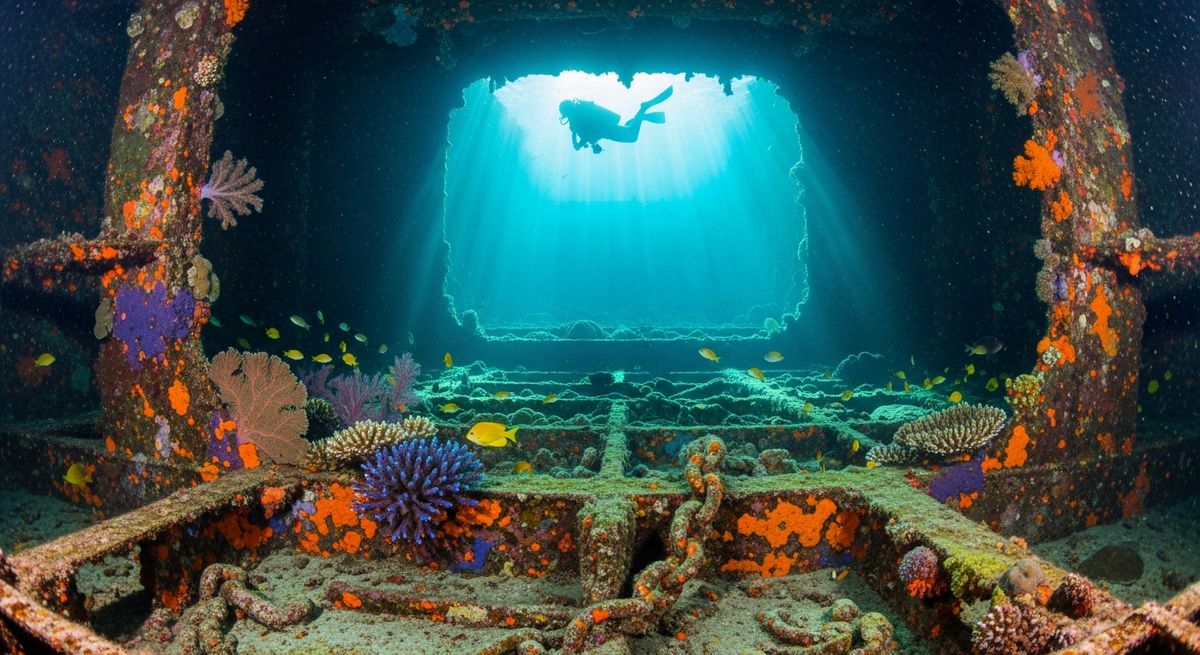
The Byron Darnton, off the Scottish West Coast, isn't your typical upright wreck, but we love it for its spread-out character. This isn't a penetration dive; it's more about exploring the scattered remains of a big steamship that ran aground in 1946 and then broke apart. You're looking at a huge debris field, mostly flattened by time and salvage, but it’s still fascinating. We often find ourselves drawn to the larger plates of steel, now heavily encrusted with dead man’s fingers, their orange and white polyps swaying gently in the subtle surge. Look closer amongst the beams and plating, and you’ll spot feathery hydroids, nudibranchs, and often some decent-sized crabs scuttling for cover. It’s shallow, only 7 metres, so your bottom time is generous, which is a real bonus for picking through the details. Visibility can be a bit variable here, but on a good day, with a bit of sunlight filtering through, the colours of the anemones and sponges are genuinely striking against the dark metal. It suits divers who enjoy a relaxed search, a bit of history, and the simple beauty of an artificial reef reclaiming its own. We’d suggest going at slack tide to really enjoy the finer details without fighting any current.
Typical BYRON DARNTON Dive Profile
Illustrative profile based on site depth and type. Actual dive profiles vary - always follow your dive computer and training.
Safety Notes
Wreck site - avoid penetration without wreck diving certification. Watch for sharp metal and entanglement hazards.
BYRON DARNTON Wreck History
Year Sunk
1946
Vessel Type
cargo ship
Cause
grounding
The steamship BYRON DARNTON was on a transatlantic voyage from Copenhagen to the USA in the spring of 1946 when its journey came to an abrupt end. On March 16th, the 134-meter vessel ran aground on the treacherous shores near Sanda Island, off the Kintyre peninsula on Scotland's rugged west coast. The powerful forces of the sea proved too much for the stranded ship, and it tragically broke in two.
For seven years, the two halves of the BYRON DARNTON remained a landmark on the coast before being commercially scrapped in situ in 1953. Today, the wreck lies in a shallow 7 meters of water, making it a highly accessible dive for all levels. Divers exploring the site will not find an intact vessel, but rather the distributed remains of a once-great steamship. The experience is akin to an underwater archaeological exploration, searching for scattered steel plates, sections of the hull, and machinery reclaimed by the Scottish marine environment.
Reviews for BYRON DARNTON
Conditions
Ocean conditions, forecast and tides for BYRON DARNTON
Plan & book
Ways to dive Scottish West Coast, from day trips to liveaboards.
Day trips & courses
via GetYourGuideGuided dives, courses and snorkel trips with instant booking.
Find dive trips in Scottish West CoastPlaces to stay
via Booking.comHotels and dive resorts near Scottish West Coast.
Search stays in Scottish West CoastDive insurance
Most travel insurance excludes or limits scuba. Check what you need before you go.
Dive insurance explainedPartner links: we may earn a commission if you book, at no extra cost to you. How we make money
Where to Stay near BYRON DARNTON
Prices from Booking.com. We may earn a commission at no extra cost to you.