CAPTAYANNIS
Protected Area
Inner Clyde Estuary
Why dive here
With 112+ marine species recorded in the area - including blue whales, dolphins, dwarf minke whales, humpback whales and ocean sunfish (mola mola) - CAPTAYANNIS offers some of Scottish West Coast's richest wreck diving.
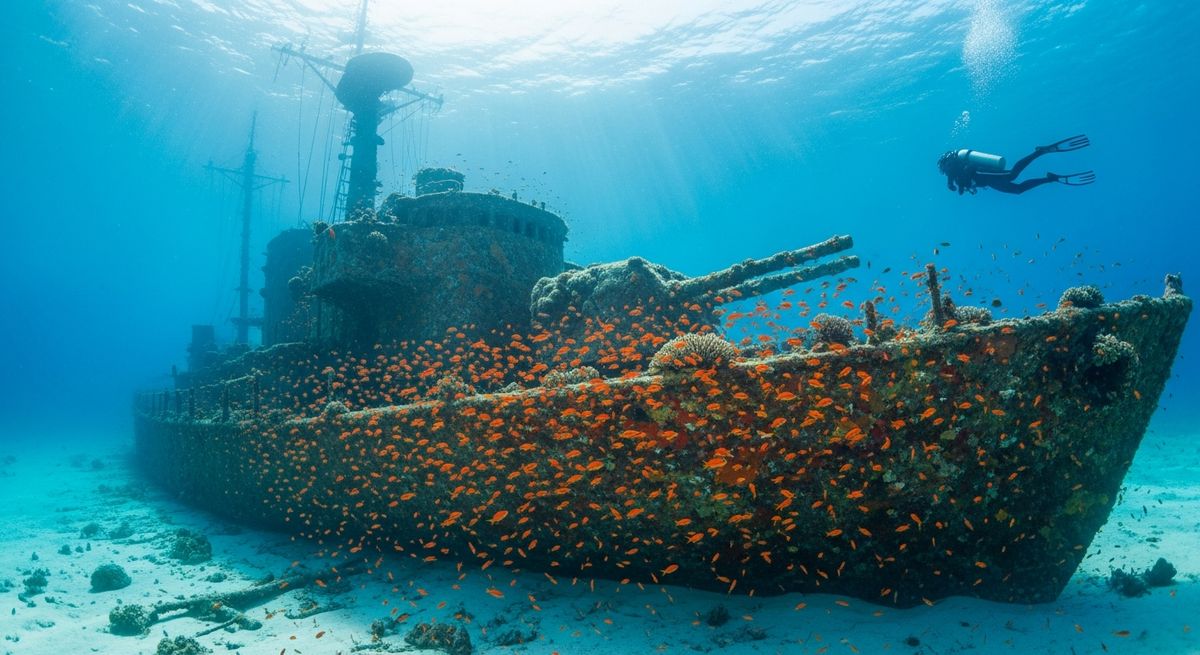
The Captayannis, a bulk carrier that ran aground in 1974, is probably our favourite shallow wreck on the Scottish West Coast. It's a proper wreck dive, even at just 7m. You can spend a good hour exploring the bow and stern sections, which are still remarkably intact. We love how light filters through the skeletal remains of the superstructure, creating these shafts of green light in the gloom. Visibility here can be a bit moody, often around 5-10m, but it only adds to the atmosphere. You’ll find plenty of inquisitive pollack darting between the girders and schools of juvenile saithe swirling around the propeller. Keep an eye out for velvet crabs tucked into crevices and the occasional dogfish cruising by. It’s an ideal spot for newer drysuit divers or anyone wanting a relaxed dive with a real sense of history, without the depth challenges. Go on a slack tide for the easiest conditions, and aim for a sunny day if you can, it really makes a difference to the light.
Typical CAPTAYANNIS Dive Profile
Illustrative profile based on site depth and type. Actual dive profiles vary - always follow your dive computer and training.
Safety Notes
Wreck site - avoid penetration without wreck diving certification. Watch for sharp metal and entanglement hazards.
CAPTAYANNIS Wreck History
Year Sunk
1974
Vessel Type
cargo ship
Cause
collision
Tonnage
4,576 GRT
Known affectionately by locals as the 'Sugar Boat', the Captayannis was a Greek-registered cargo vessel whose final voyage ended dramatically in the Firth of Clyde. In late January 1974, she was anchored and waiting to deliver a full load of raw sugar to the James Watt Dock in Greenock. A severe gale, one of the worst in recent memory, battered the Scottish coast, creating treacherous conditions for all shipping in the area.
During the height of the storm on the night of January 27th, the anchor of the massive BP tanker 'British Light' began to drag. Helpless against the wind and waves, the tanker collided with the smaller Captayannis, tearing a hole in her hull. Realizing his vessel was doomed, the captain of the Captayannis skillfully navigated his sinking ship toward the shallow sandbanks. His quick thinking prevented the ship from sinking in the deep channel and becoming a major hazard to navigation. The vessel eventually rolled onto its port side in the shallow water, and thankfully, the entire crew was safely rescued.
For nearly half a century, the Captayannis has remained in the same spot, its hull and superstructure breaking the surface as a permanent, rusting landmark. It has become one of the most well-known and accessible wreck dives in Scotland. Lying in just 7 meters of water, the wreck is a haven for marine life, with its steel plates now covered in kelp and anemones. It's an ideal site for novice wreck divers, snorkelers, and photographers, offering a glimpse into a dramatic moment in the Clyde's maritime history.
Nearest Dive Centres to CAPTAYANNIS
Dive shops near CAPTAYANNIS
Just Dive In CIC
C&C MARINE SERVICES
Fyne Diving
Field Studies Council Millport
Splashsports Services
Scuba Diving Scotland
Reviews for CAPTAYANNIS
Conditions
Ocean conditions, forecast and tides for CAPTAYANNIS
Plan & book
Ways to dive Scottish West Coast, from day trips to liveaboards.
Day trips & courses
via GetYourGuideGuided dives, courses and snorkel trips with instant booking.
Find dive trips in Scottish West CoastPlaces to stay
via Booking.comHotels and dive resorts near Scottish West Coast.
Search stays in Scottish West CoastDive insurance
Most travel insurance excludes or limits scuba. Check what you need before you go.
Dive insurance explainedPartner links: we may earn a commission if you book, at no extra cost to you. How we make money
Where to Stay near CAPTAYANNIS
Prices from Booking.com. We may earn a commission at no extra cost to you.