CARRICK
Protected Area
Sgavoch
Why dive here
With 112+ marine species recorded in the area - including blue whales, dolphins, dwarf minke whales, humpback whales and ocean sunfish (mola mola) - CARRICK offers some of Scottish West Coast's richest wreck diving.
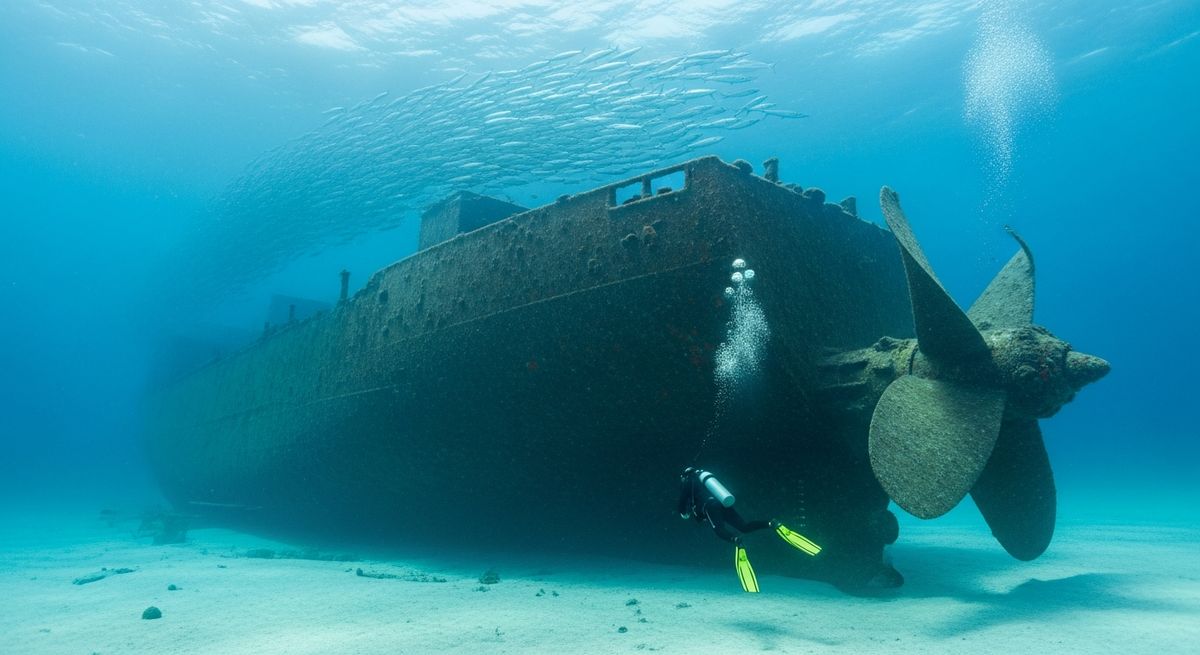
The Carrick isn't just another lump of metal on the seabed, it’s a proper dive into history. This steamship met its end in thick fog back in 1906, a collision with the SS Duke of Gordon sealing its fate. Now, she lies upright and surprisingly intact at 44 metres, making her a brilliant deep wreck for those with the right training. Dropping down, the bow is often the first thing to loom out of the gloom, and from there you can trace her length. We love how much is still recognisable, from the masts – now draped in dead man’s fingers – to the distinctive triple expansion engine, a really impressive piece of engineering. It’s a dark dive, even on a sunny day, so good lights are essential. Look out for the resident conger eels, they’ve made a home in the deeper recesses, and the sheer number of squat lobsters clinging to every surface is always a pleasant surprise. This isn't a dive for beginners; the depth means careful planning and execution are key. But for experienced cold-water wreck divers, the Carrick offers a genuinely atmospheric journey into the past.
Typical CARRICK Dive Profile
Illustrative profile based on site depth and type. Actual dive profiles vary - always follow your dive computer and training.
Safety Notes
Maximum depth 44m exceeds recreational limits (40m). Technical diving certification and equipment required.
Wreck site - avoid penetration without wreck diving certification. Watch for sharp metal and entanglement hazards.
Always perform a 3-minute safety stop at 5m before surfacing.
CARRICK Wreck History
Year Sunk
1906
Vessel Type
cargo ship
Cause
collision
Tonnage
531 GRT
The SS Carrick was a hardworking coastal steamship that plied the busy route across the Irish Sea between Belfast and Ayr, Scotland. On the night of May 26, 1906, the 56-meter vessel was enveloped in a thick fog, a common and dangerous hazard in these waters. Suddenly, the liner SS Duke of Gordon loomed out of the mist, and despite frantic efforts, a collision was unavoidable. The Carrick was struck hard and sank quickly, settling on the seabed of the Firth of Clyde. It's important for divers to note that this wreck is the 1906 steamship, and not to be confused with the famous clipper ship HMS Carrick (formerly the City of Adelaide), which is now a museum piece.
Today, the SS Carrick rests upright at a depth of 44 meters, making it an excellent dive for advanced and technical divers. The wreck is largely intact, with its boilers, engine, and deck features still recognizable. Its location in the nutrient-rich waters of the Scottish west coast means it is often covered in a spectacular profusion of marine life, including plumose anemones, dead man's fingers, and shoals of fish. Exploring the Carrick is to dive into a perfectly preserved moment of Edwardian maritime history.
Reviews for CARRICK
Conditions
Ocean conditions, forecast and tides for CARRICK
Plan & book
Ways to dive Scottish West Coast, from day trips to liveaboards.
Day trips & courses
via GetYourGuideGuided dives, courses and snorkel trips with instant booking.
Find dive trips in Scottish West CoastPlaces to stay
via Booking.comHotels and dive resorts near Scottish West Coast.
Search stays in Scottish West CoastDive insurance
Most travel insurance excludes or limits scuba. Check what you need before you go.
Dive insurance explainedPartner links: we may earn a commission if you book, at no extra cost to you. How we make money
Where to Stay near CARRICK
Prices from Booking.com. We may earn a commission at no extra cost to you.