CASTLE EDEN
Protected Area
Magilligan Point
Why dive here
With 112+ marine species recorded in the area - including blue whales, dolphins, dwarf minke whales, humpback whales and ocean sunfish (mola mola) - CASTLE EDEN offers some of Scottish West Coast's richest wreck diving.
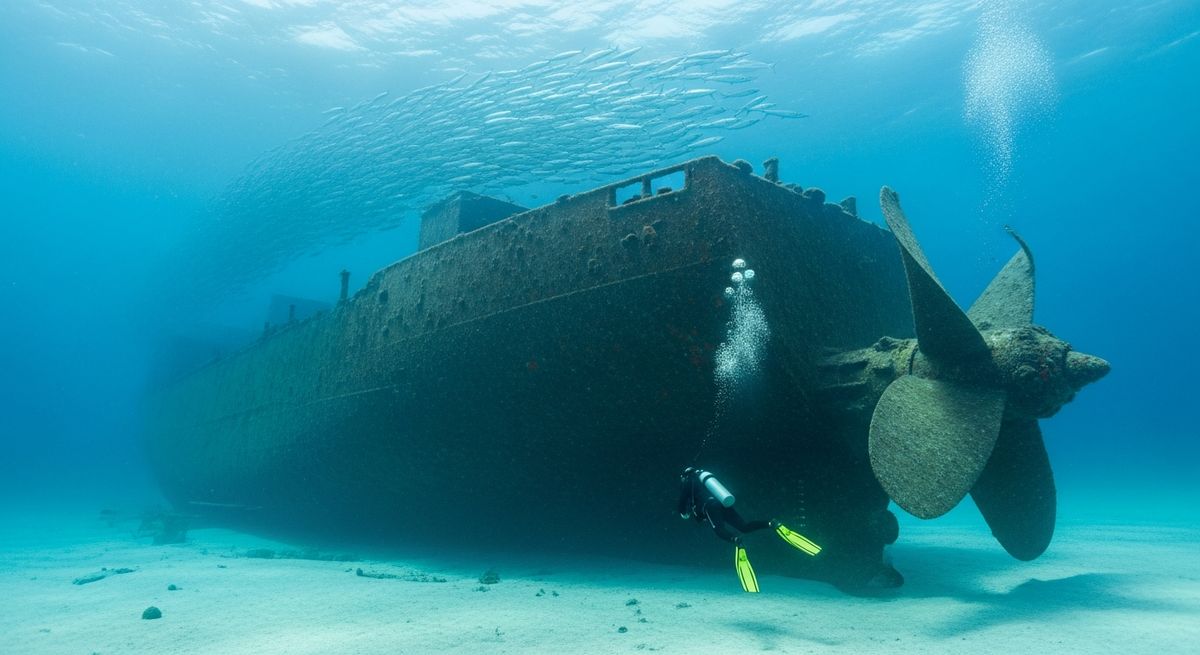
The *Castle Eden* is exactly what we picture when someone talks about a classic Scottish wreck dive. This steamship went down in 1918 and now sits upright, mostly intact, at 30 metres. We love diving her because of how much there is to explore – the stern is particularly fascinating with its massive propeller and rudder still in place. Dropping down onto the main deck, the sheer scale of the ship hits you. You can peer into open holds, follow the line of the deck, and even spot the remains of her triple-expansion engine. It feels like a proper journey back in time. The metalwork is completely encrusted, a patchwork quilt of plumose anemones, dead man's fingers, and colourful hydroids. Ling, conger eels, and wrasse have made themselves at home, poking out from every nook and cranny. We’d suggest saving this one for a calmer day; the Scottish West Coast can be feisty, and you want to truly appreciate the detail here. This is a dive for experienced wreck enthusiasts who appreciate the history and character of a grand old lady of the sea, not just the critters.
Typical CASTLE EDEN Dive Profile
Illustrative profile based on site depth and type. Actual dive profiles vary - always follow your dive computer and training.
Safety Notes
Depth of 30m - Advanced Open Water certification recommended.
Wreck site - avoid penetration without wreck diving certification. Watch for sharp metal and entanglement hazards.
Always perform a 3-minute safety stop at 5m before surfacing.
Nearest Dive Centres to CASTLE EDEN
Dive shops near CASTLE EDEN
View all dive centres in Scottish West CoastReviews for CASTLE EDEN
Conditions
Ocean conditions, forecast and tides for CASTLE EDEN
Plan & book
Ways to dive Scottish West Coast, from day trips to liveaboards.
Day trips & courses
via GetYourGuideGuided dives, courses and snorkel trips with instant booking.
Find dive trips in Scottish West CoastPlaces to stay
via Booking.comHotels and dive resorts near Scottish West Coast.
Search stays in Scottish West CoastDive insurance
Most travel insurance excludes or limits scuba. Check what you need before you go.
Dive insurance explainedPartner links: we may earn a commission if you book, at no extra cost to you. How we make money
Where to Stay near CASTLE EDEN
Prices from Booking.com. We may earn a commission at no extra cost to you.