CHADWICK
Protected Area
Ascrib, Isay and Dunvegan
Why dive here
With 112+ marine species recorded in the area - including blue whales, dolphins, dwarf minke whales, humpback whales and ocean sunfish (mola mola) - CHADWICK offers some of Scottish West Coast's richest wreck diving.
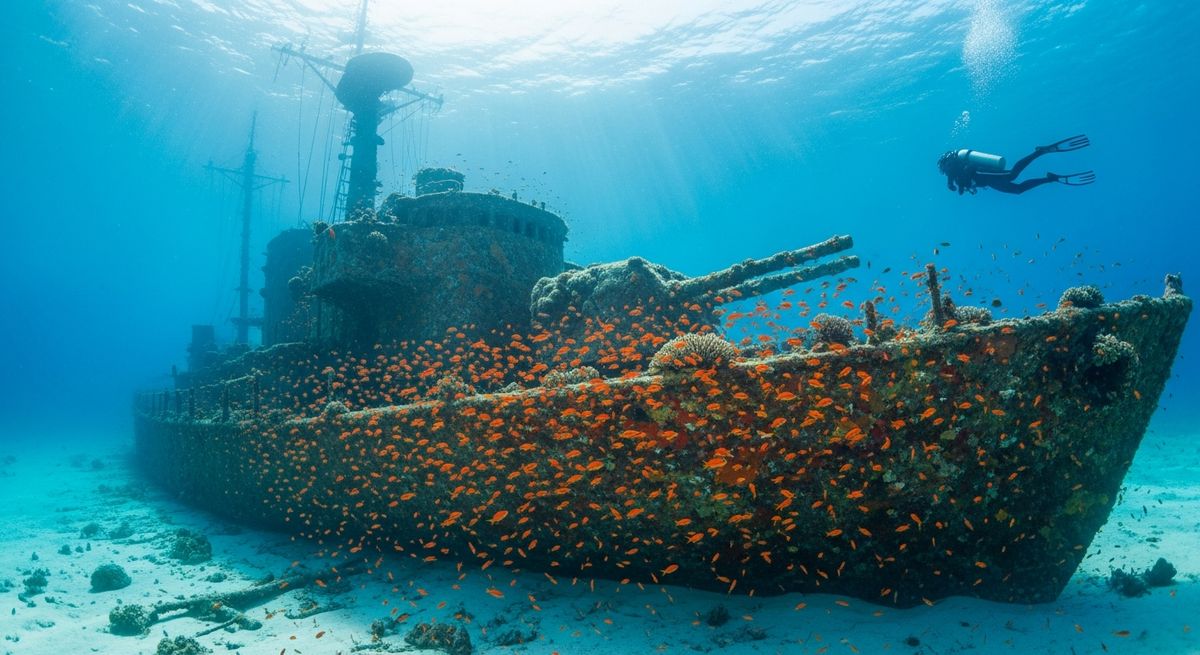
The Chadwick, resting in Oisgill Bay, isn't about deep exploration. This is a five-metre dive, pure and simple, but don't let the shallowness fool you. We love it for those days when the weather's a bit frisky but you still want to get wet. The stern of this 76-metre steamship, which ran aground in thick fog back in 1892, lies broken but still recognisable. You can trace the deck plating and see where the superstructure once stood proud. Our favourite part is the way the light filters through the kelp, illuminating patches of the wreck. It's an atmospheric dive, with green light dappling across the barnacle-encrusted metal. We’ve found plumose anemones clinging to every surface, and the occasional inquisitive wrasse will dart out from under a twisted plate. It’s not a site for spotting big pelagics, but for macro life and just soaking in the history, it’s spot on. Best dived at slack water, it’s a tranquil spot, perfect for an extended rummage around for anyone who appreciates a well-aged wreck without the nitrogen narcosis.
Typical CHADWICK Dive Profile
Illustrative profile based on site depth and type. Actual dive profiles vary - always follow your dive computer and training.
Safety Notes
Wreck site - avoid penetration without wreck diving certification. Watch for sharp metal and entanglement hazards.
Reviews for CHADWICK
Conditions
Ocean conditions, forecast and tides for CHADWICK
Plan & book
Ways to dive Scottish West Coast, from day trips to liveaboards.
Day trips & courses
via GetYourGuideGuided dives, courses and snorkel trips with instant booking.
Find dive trips in Scottish West CoastPlaces to stay
via Booking.comHotels and dive resorts near Scottish West Coast.
Search stays in Scottish West CoastDive insurance
Most travel insurance excludes or limits scuba. Check what you need before you go.
Dive insurance explainedPartner links: we may earn a commission if you book, at no extra cost to you. How we make money
Where to Stay near CHADWICK
Prices from Booking.com. We may earn a commission at no extra cost to you.