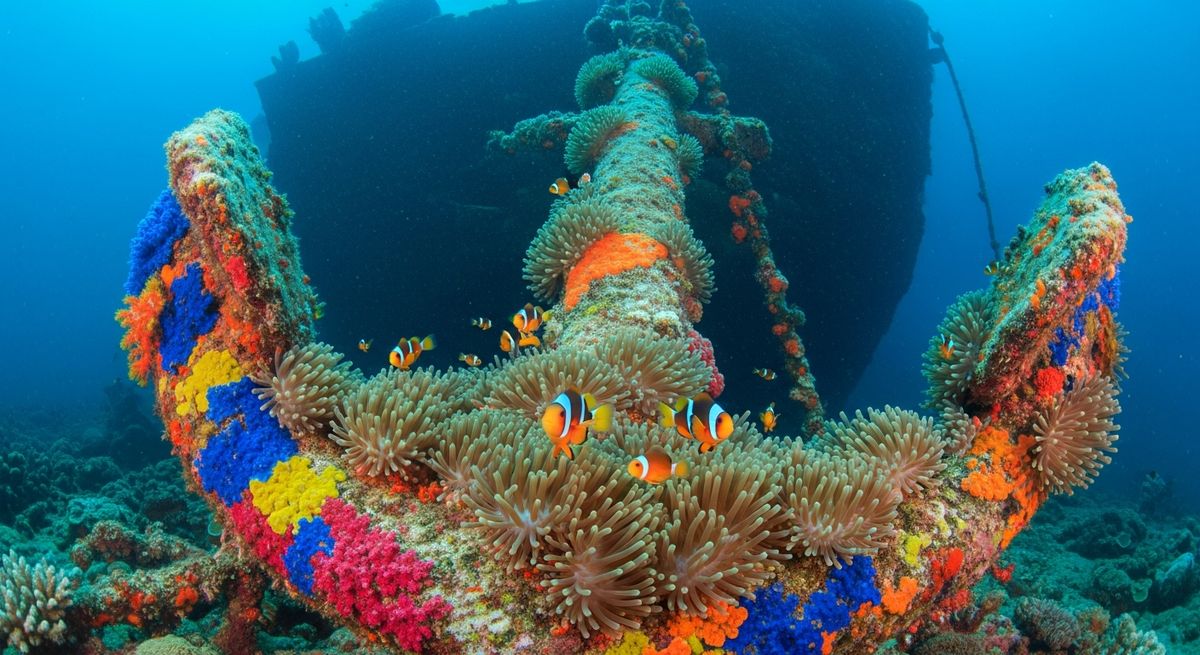
COMET (Bow Section)
Protected Area
Moine Mhor
Why dive here
With 112+ marine species recorded in the area - including blue whales, dolphins, dwarf minke whales, humpback whales and ocean sunfish (mola mola) - COMET (Bow Section) offers some of Scottish West Coast's richest wreck diving.
Diving the Comet’s bow section is less about depth and more about history. At a mere 7 metres, it’s an easy, relaxed dive, perfect for a surface interval or when the weather has other plans for deeper sites. We love nosing around the exposed timbers, the way the light filters through the kelp, illuminating the ribs of the old steamship. You can really get a sense of its age here, imagining it cutting through these same waters over two centuries ago. The wreck itself isn't huge, just 13.4m by 3.4m, but it’s remarkably intact for something that sank in 1820. We always spend time looking for the engine, although it’s now more a jumble of metal than a discernible machine. What really brings the wreck to life are the nudibranchs – we’ve seen some spectacular ones here, clinging to the rust-coloured plates, along with plenty of wrasse darting in and out of the crevices. It’s a gentle exploration, ideal for newer divers or photographers who appreciate the subtle beauty of a shallow, historic wreck. Try to time your dive for slack water; the currents in Dorus Mor can be fierce.
Typical COMET (Bow Section) Dive Profile
Illustrative profile based on site depth and type. Actual dive profiles vary - always follow your dive computer and training.
Safety Notes
Wreck site - avoid penetration without wreck diving certification. Watch for sharp metal and entanglement hazards.
Nearest Dive Centres to COMET (Bow Section)
Dive shops near COMET (Bow Section)
View all dive centres in Scottish West CoastReviews for COMET (Bow Section)
Conditions
Ocean conditions, forecast and tides for COMET (Bow Section)
Plan & book
Ways to dive Scottish West Coast, from day trips to liveaboards.
Day trips & courses
via GetYourGuideGuided dives, courses and snorkel trips with instant booking.
Find dive trips in Scottish West CoastPlaces to stay
via Booking.comHotels and dive resorts near Scottish West Coast.
Search stays in Scottish West CoastDive insurance
Most travel insurance excludes or limits scuba. Check what you need before you go.
Dive insurance explainedPartner links: we may earn a commission if you book, at no extra cost to you. How we make money
Where to Stay near COMET (Bow Section)
Prices from Booking.com. We may earn a commission at no extra cost to you.