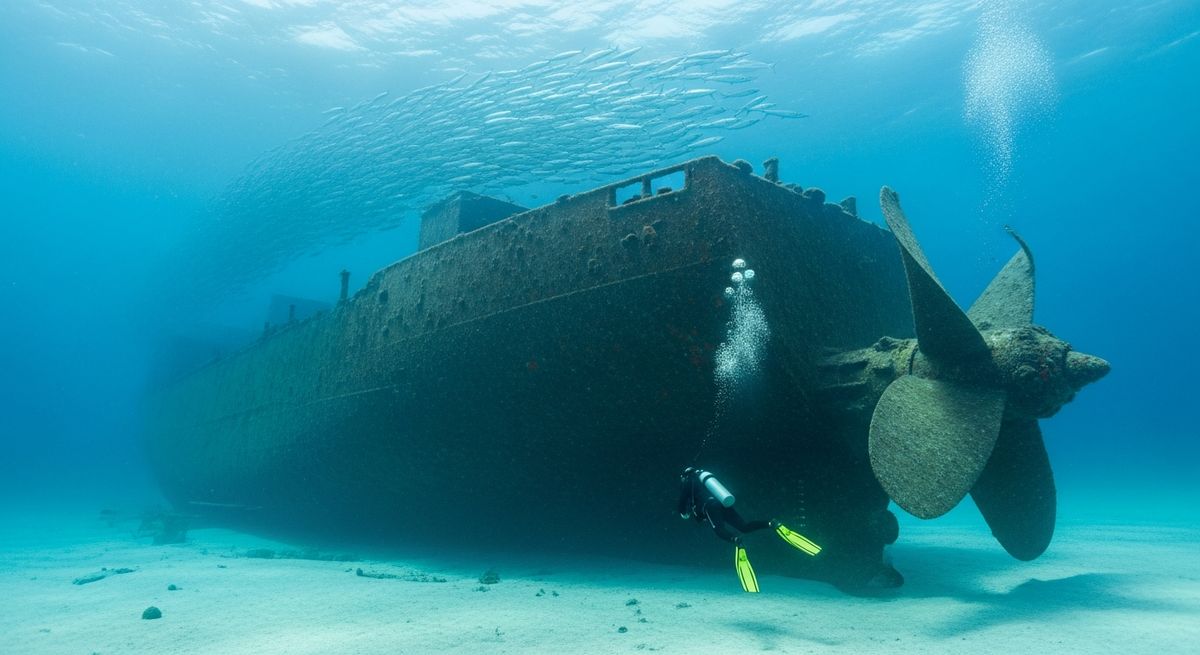
COMET (Stern Section)
Protected Area
Moine Mhor
Why dive here
With 112+ marine species recorded in the area - including blue whales, dolphins, dwarf minke whales, humpback whales and ocean sunfish (mola mola) - COMET (Stern Section) offers some of Scottish West Coast's richest wreck diving.
The Comet’s stern section, resting at a mere 6m, is less about grand structure and more about a vivid historical whisper. We love how accessible this wreck is, making it a fantastic shallow exploration even when the weather pushes you out of deeper plans. You're not looking at a vast hull here; instead, the scattered remains of the Comet’s stern, including what we believe are bits of her paddle steamer engine, offer a tangible connection to early steam navigation. Visibility can swing wildly with the tides, but when it's good, you’ll find the metalwork draped in colourful anemones and the occasional feisty velvet crab scuttling between the plates. Our favourite spot is looking closely at the machinery, imagining the sheer innovation it represented in 1812. It’s a site for those who appreciate history and enjoy the hunt for detail, rather than dramatic swim-throughs. Come prepared for brisk Scottish water and bring a good torch; even at 6m, the kelp can make things dim.
Typical COMET (Stern Section) Dive Profile
Illustrative profile based on site depth and type. Actual dive profiles vary - always follow your dive computer and training.
Safety Notes
Wreck site - avoid penetration without wreck diving certification. Watch for sharp metal and entanglement hazards.
Nearest Dive Centres to COMET (Stern Section)
Dive shops near COMET (Stern Section)
View all dive centres in Scottish West CoastReviews for COMET (Stern Section)
Conditions
Ocean conditions, forecast and tides for COMET (Stern Section)
Plan & book
Ways to dive Scottish West Coast, from day trips to liveaboards.
Day trips & courses
via GetYourGuideGuided dives, courses and snorkel trips with instant booking.
Find dive trips in Scottish West CoastPlaces to stay
via Booking.comHotels and dive resorts near Scottish West Coast.
Search stays in Scottish West CoastDive insurance
Most travel insurance excludes or limits scuba. Check what you need before you go.
Dive insurance explainedPartner links: we may earn a commission if you book, at no extra cost to you. How we make money
Where to Stay near COMET (Stern Section)
Prices from Booking.com. We may earn a commission at no extra cost to you.