CRISSILA (POSSIBLY)
Protected Area
Bridgend Flats, Islay
Why dive here
With 112+ marine species recorded in the area - including blue whales, dolphins, dwarf minke whales, humpback whales and ocean sunfish (mola mola) - CRISSILA (POSSIBLY) offers some of Scottish West Coast's richest wreck diving.
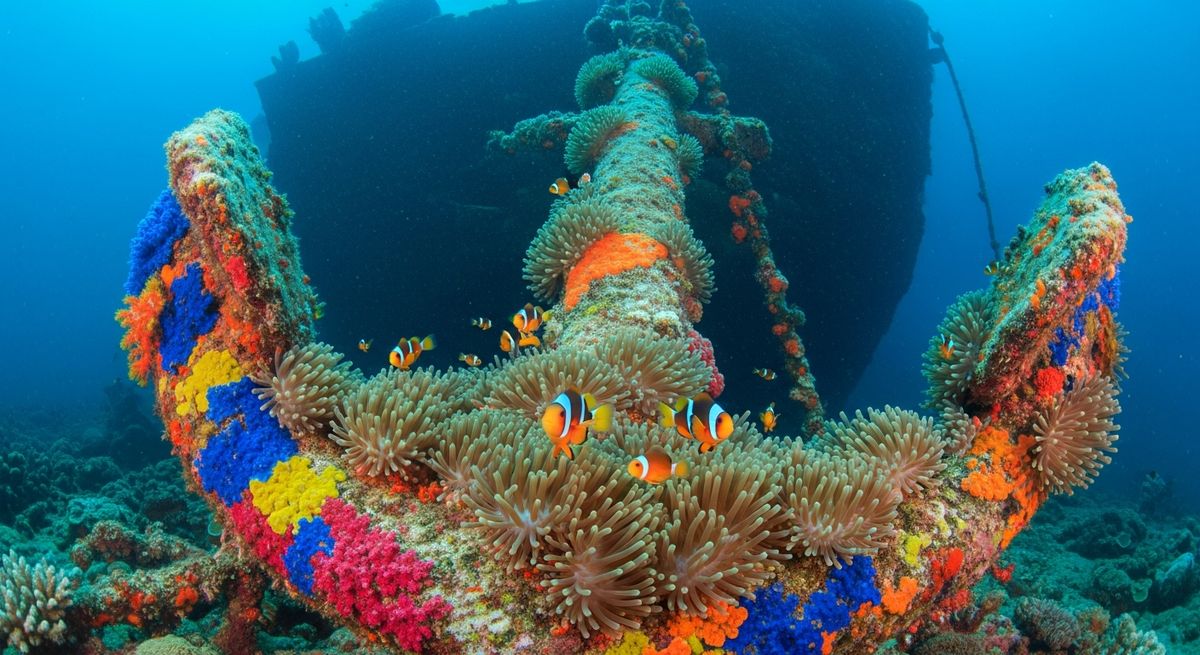
The Crissila, or what's left of her, offers a fascinating glimpse into history, even if she's now more a memory than a clear-cut wreck. We've always found this site a moody, atmospheric dive, perfect for those who appreciate the subtle beauty of a wreck reclaiming the seabed. She went down in 1931, breaking apart on rocks near the Black Rock buoy, and time has definitely taken its toll. You'll find her scattered, a broken hull at around 12 meters, rather than an intact vessel. This isn't a penetration dive; it’s more about exploring the debris field. We love picking through the twisted metal, imagining the efforts to salvage her, and watching how the current has sculpted the remains. The structure provides great shelter, attracting squat lobsters and crabs that peek out from every crevice. Visibility can be a bit hit-or-miss, typical for the West Coast, so picking a day with slack tide and settled weather is key. When it’s good, the light filtering through the kelp can be quite stunning. This is a dive for those who enjoy the hunt, piecing together a story from fragments, rather than ticking off a pristine wreck.
Typical CRISSILA (POSSIBLY) Dive Profile
Illustrative profile based on site depth and type. Actual dive profiles vary - always follow your dive computer and training.
Safety Notes
Wreck site - avoid penetration without wreck diving certification. Watch for sharp metal and entanglement hazards.
Always perform a 3-minute safety stop at 5m before surfacing.
Reviews for CRISSILA (POSSIBLY)
Conditions
Ocean conditions, forecast and tides for CRISSILA (POSSIBLY)
Plan & book
Ways to dive Scottish West Coast, from day trips to liveaboards.
Day trips & courses
via GetYourGuideGuided dives, courses and snorkel trips with instant booking.
Find dive trips in Scottish West CoastPlaces to stay
via Booking.comHotels and dive resorts near Scottish West Coast.
Search stays in Scottish West CoastDive insurance
Most travel insurance excludes or limits scuba. Check what you need before you go.
Dive insurance explainedPartner links: we may earn a commission if you book, at no extra cost to you. How we make money
Where to Stay near CRISSILA (POSSIBLY)
Prices from Booking.com. We may earn a commission at no extra cost to you.