ECLIPSE (AND OTHER WRECKS)
Protected Area
Largs Coast Section
Why dive here
With 112+ marine species recorded in the area - including blue whales, dolphins, dwarf minke whales, humpback whales and ocean sunfish (mola mola) - ECLIPSE (AND OTHER WRECKS) offers some of Scottish West Coast's richest wreck diving.
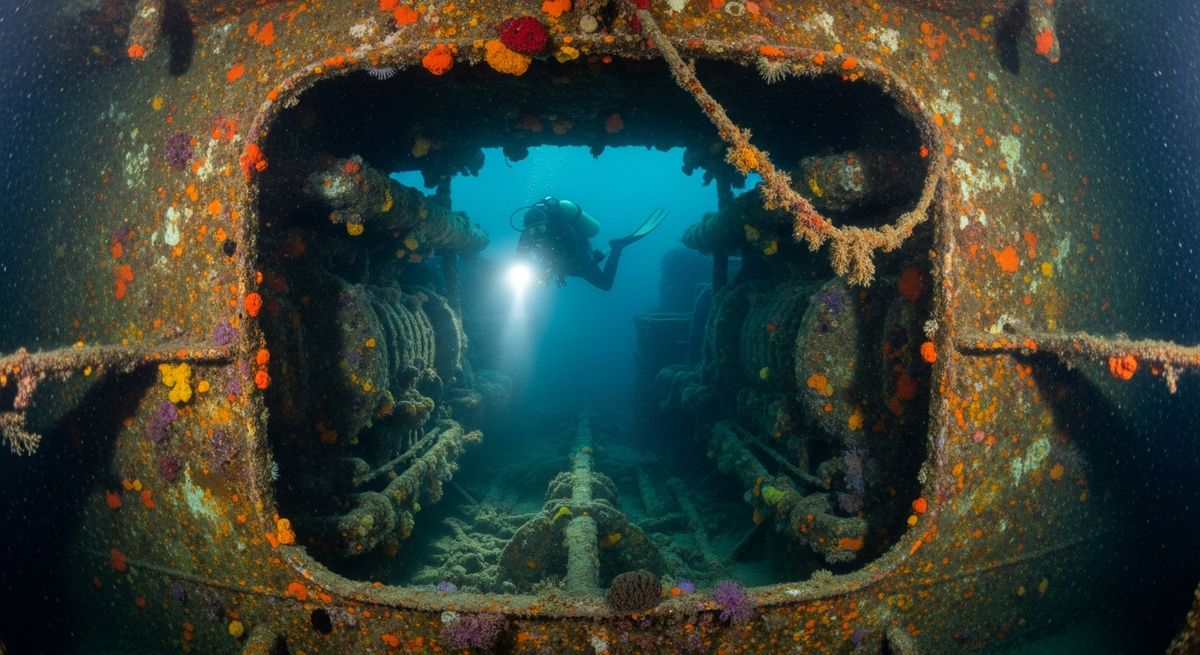
The Eclipse, and the other scattered wrecks around it, feels like a proper piece of history right there on the seabed. We love it because it’s so accessible, sitting in just 9 metres, meaning you get a really good bottom time to explore. The main draw is the wooden steamship, Eclipse, which ran aground back in 1854. You can still make out the ribs of the hull, some decking, and the large boiler is a definite focal point, encrusted with dead man’s fingers that pulse softly in the gentle surge. It’s not a dramatic upright wreck, more of a sprawling debris field, but that’s its charm. We’ve spent hours poking around the smaller, unidentified bits of wreckage nearby, wondering about their stories. Look closely and you’ll find plenty of squat lobsters tucked into crevices, and often a grumpy conger eel peering out from under a plate. Visibility here can be a bit variable; we’d suggest going on a calm day with a rising tide for the best light and less suspended sediment. It’s ideal for newer wreck divers or photographers wanting to practice their skills in benign conditions.
Typical ECLIPSE (AND OTHER WRECKS) Dive Profile
Illustrative profile based on site depth and type. Actual dive profiles vary - always follow your dive computer and training.
Safety Notes
Wreck site - avoid penetration without wreck diving certification. Watch for sharp metal and entanglement hazards.
Nearest Dive Centres to ECLIPSE (AND OTHER WRECKS)
Dive shops near ECLIPSE (AND OTHER WRECKS)
C&C MARINE SERVICES
Field Studies Council Millport
Fyne Diving
Just Dive In CIC
Splashsports Services
Scuba Diving Scotland
Reviews for ECLIPSE (AND OTHER WRECKS)
Conditions
Ocean conditions, forecast and tides for ECLIPSE (AND OTHER WRECKS)
Plan & book
Ways to dive Scottish West Coast, from day trips to liveaboards.
Day trips & courses
via GetYourGuideGuided dives, courses and snorkel trips with instant booking.
Find dive trips in Scottish West CoastPlaces to stay
via Booking.comHotels and dive resorts near Scottish West Coast.
Search stays in Scottish West CoastDive insurance
Most travel insurance excludes or limits scuba. Check what you need before you go.
Dive insurance explainedPartner links: we may earn a commission if you book, at no extra cost to you. How we make money
Where to Stay near ECLIPSE (AND OTHER WRECKS)
Prices from Booking.com. We may earn a commission at no extra cost to you.