EMPIRE ACE
Protected Area
Sanda Islands
Why dive here
With 112+ marine species recorded in the area - including blue whales, dolphins, dwarf minke whales, humpback whales and ocean sunfish (mola mola) - EMPIRE ACE offers some of Scottish West Coast's richest wreck diving.
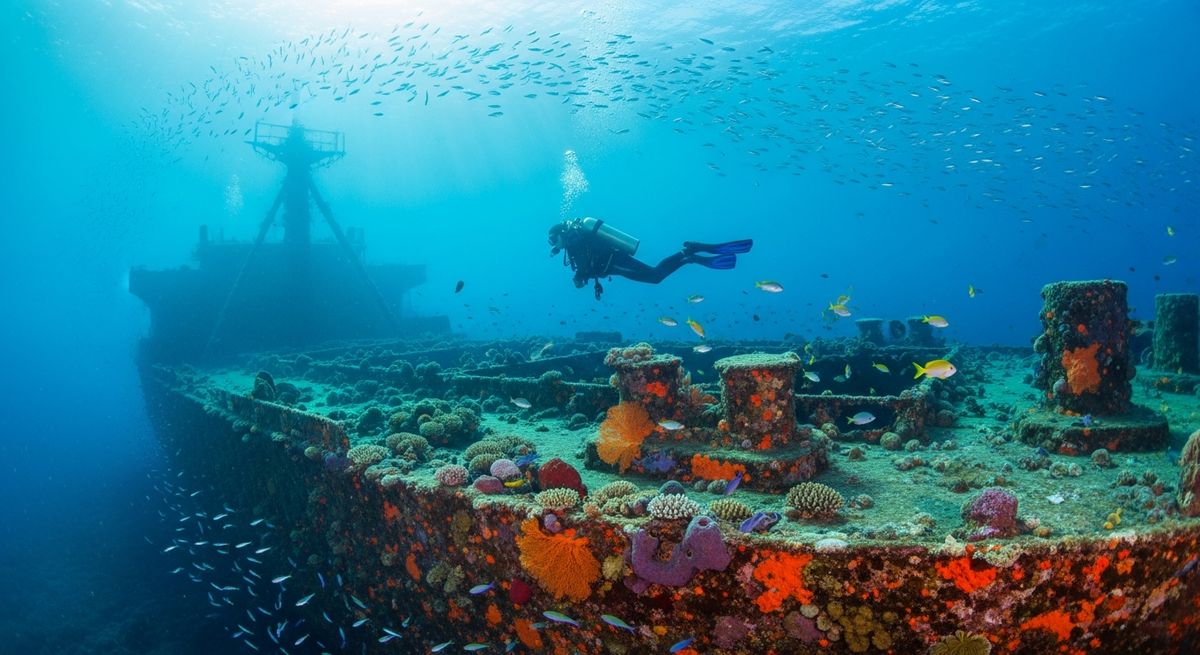
The Empire Ace, now a resident of Glenharvie Beach, isn't your usual deep-water wreck. We're talking 1 meter max depth here, sometimes less. It’s an unusual dive, more of a snorkel or wade for most, but don't let the shallows fool you. This ex-MOD tug, driven onto the rocks by high winds back in '68, offers a surprisingly intimate look at a wreck. What we love about the Empire Ace is how the sea has truly claimed it. You can see the ribs of the hull, parts of the superstructure, all exposed to the elements and coated in a tapestry of green and brown algae, barnacles, and mussels. It’s a photographer's dream on a calm, sunny day, with the light playing off the metal and the surface. Look closely in the crevices and you'll spot small crabs scuttling, sometimes a blenny peering out. It suits those who appreciate the raw power of the sea and the history etched into a wreck, rather than deep exploration. Our favourite time to visit is on a falling tide, when more of the wreck becomes visible and you can really get a sense of its scale. It’s less about swim-throughs and more about observation, a gentle exploration of a wreck caught between land and sea.
Typical EMPIRE ACE Dive Profile
Illustrative profile based on site depth and type. Actual dive profiles vary - always follow your dive computer and training.
Safety Notes
Wreck site - avoid penetration without wreck diving certification. Watch for sharp metal and entanglement hazards.
Reviews for EMPIRE ACE
Conditions
Ocean conditions, forecast and tides for EMPIRE ACE
Plan & book
Ways to dive Scottish West Coast, from day trips to liveaboards.
Day trips & courses
via GetYourGuideGuided dives, courses and snorkel trips with instant booking.
Find dive trips in Scottish West CoastPlaces to stay
via Booking.comHotels and dive resorts near Scottish West Coast.
Search stays in Scottish West CoastDive insurance
Most travel insurance excludes or limits scuba. Check what you need before you go.
Dive insurance explainedPartner links: we may earn a commission if you book, at no extra cost to you. How we make money
Where to Stay near EMPIRE ACE
Prices from Booking.com. We may earn a commission at no extra cost to you.