HEREFORD EXPRESS
Protected Area
Sanda Islands
Why dive here
With 112+ marine species recorded in the area - including blue whales, dolphins, dwarf minke whales, humpback whales and ocean sunfish (mola mola) - HEREFORD EXPRESS offers some of Scottish West Coast's richest wreck diving.
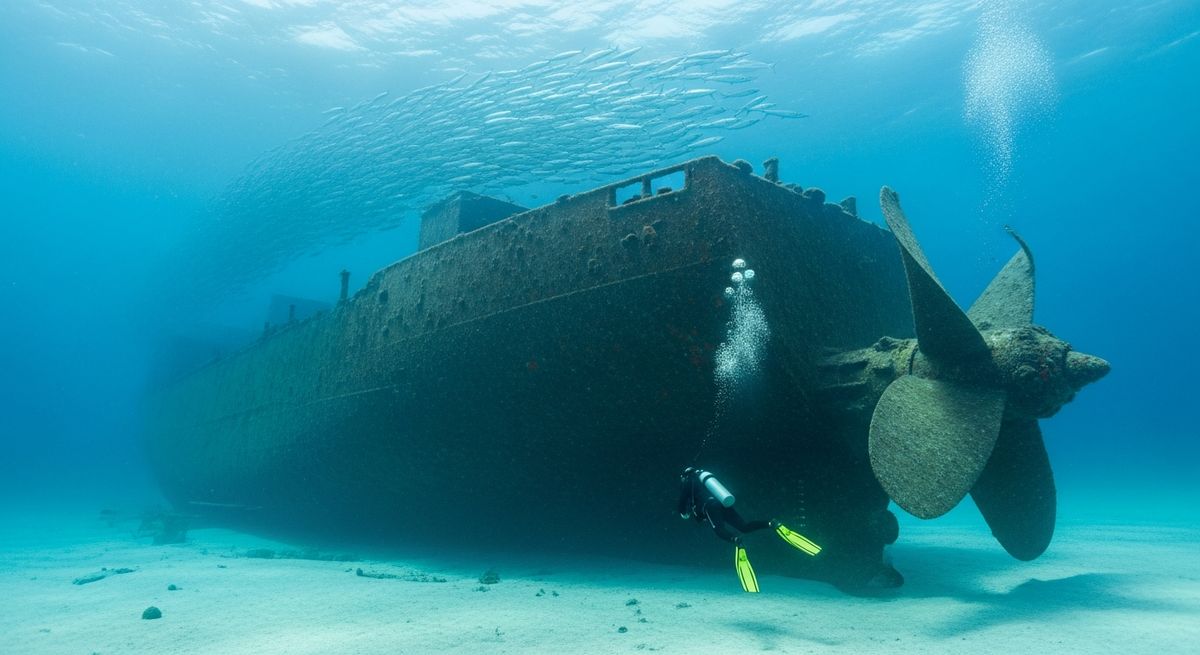
The Hereford Express is a peculiar dive, not for its depth, but for its story and accessibility. We’re talking about a bulk carrier that tried its best to stay afloat, ran aground twice, and ended up scattered in four metres of water near Sanda Island. It’s a proper historical wreck, and you can practically touch the surface as you explore. What you find here are the distributed remains of a good-sized vessel, now colonised by the resident crabs and anenomes. You’ll weave between large plates of metal, some surprisingly intact, others folded like tin foil. Sunlight penetrates easily, making it feel less like a dark wreck dive and more like an archaeological treasure hunt in a very shallow aquarium. We often see dogfish hiding amongst the debris, and the sheer number of small wrasse darting in and out of crevices is always entertaining. It’s the kind of site where you can spend an hour just poking around, imagining the ship's last moments. Perfect for photographers, or anyone who just loves a good wreck without the usual depth and current challenges. Our favourite time to dive it is on a calm, sunny day – the visibility really pops then.
Typical HEREFORD EXPRESS Dive Profile
Illustrative profile based on site depth and type. Actual dive profiles vary - always follow your dive computer and training.
Safety Notes
Wreck site - avoid penetration without wreck diving certification. Watch for sharp metal and entanglement hazards.
Reviews for HEREFORD EXPRESS
Conditions
Ocean conditions, forecast and tides for HEREFORD EXPRESS
Plan & book
Ways to dive Scottish West Coast, from day trips to liveaboards.
Day trips & courses
via GetYourGuideGuided dives, courses and snorkel trips with instant booking.
Find dive trips in Scottish West CoastPlaces to stay
via Booking.comHotels and dive resorts near Scottish West Coast.
Search stays in Scottish West CoastDive insurance
Most travel insurance excludes or limits scuba. Check what you need before you go.
Dive insurance explainedPartner links: we may earn a commission if you book, at no extra cost to you. How we make money
Where to Stay near HEREFORD EXPRESS
Prices from Booking.com. We may earn a commission at no extra cost to you.