HISPANIA
Protected Area
Loch Sunart
Why dive here
With 112+ marine species recorded in the area - including blue whales, dolphins, dwarf minke whales, humpback whales and ocean sunfish (mola mola) - HISPANIA offers some of Scottish West Coast's richest wreck diving.
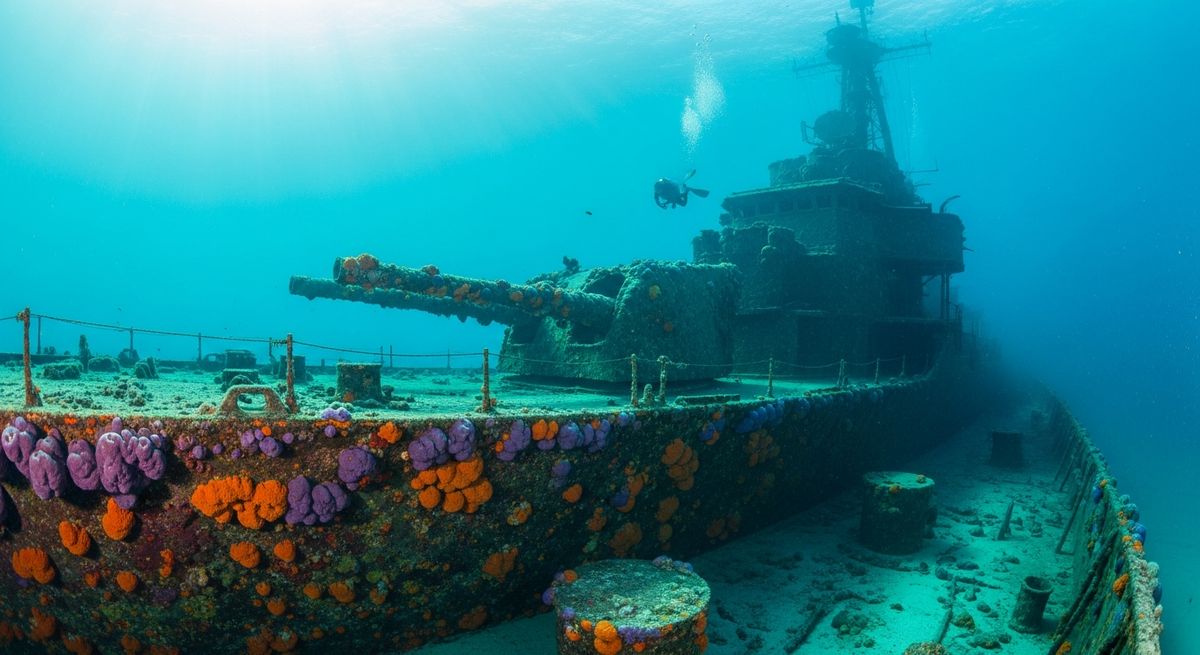
The Hispania, lying on its starboard side in the Sound of Mull, is one of our absolute favourite Scottish wrecks. We love how intact it is, despite resting here since 1954. You descend onto the hull, often through a green twilight, and the sheer scale of the ship hits you immediately. We always make a point of peering into the open holds, imagining the cargo, now just empty spaces home to conger eels. What truly makes the Hispania special is the way the wreck has become a living reef. Dead man’s fingers coral grow in thick, vibrant clusters, particularly around the stern and superstructure. Ling often patrol the deeper parts of the wreck, and you’ll spot wrasse darting between plates. The visibility here can be temperamental – it's Scotland, after all – but even on a murkier day, the Hispania's silhouette emerging from the gloom is genuinely atmospheric. We'd suggest timing your dive for slack water; the currents in the Sound can be lively. This site is a fantastic dive for anyone who appreciates a well-preserved piece of maritime history and enjoys exploring an artificial reef.
Typical HISPANIA Dive Profile
Illustrative profile based on site depth and type. Actual dive profiles vary - always follow your dive computer and training.
Safety Notes
Depth of 24m - Advanced Open Water certification recommended.
Wreck site - avoid penetration without wreck diving certification. Watch for sharp metal and entanglement hazards.
Always perform a 3-minute safety stop at 5m before surfacing.
Nearest Dive Centres to HISPANIA
Dive shops near HISPANIA
View all dive centres in Scottish West CoastReviews for HISPANIA
Conditions
Ocean conditions, forecast and tides for HISPANIA
Plan & book
Ways to dive Scottish West Coast, from day trips to liveaboards.
Day trips & courses
via GetYourGuideGuided dives, courses and snorkel trips with instant booking.
Find dive trips in Scottish West CoastPlaces to stay
via Booking.comHotels and dive resorts near Scottish West Coast.
Search stays in Scottish West CoastDive insurance
Most travel insurance excludes or limits scuba. Check what you need before you go.
Dive insurance explainedPartner links: we may earn a commission if you book, at no extra cost to you. How we make money
Where to Stay near HISPANIA
Prices from Booking.com. We may earn a commission at no extra cost to you.