HMS CHARLES ASTIE (POSSIBLY)
Why dive here
With 112+ marine species recorded in the area - including blue whales, dolphins, dwarf minke whales, humpback whales and ocean sunfish (mola mola) - HMS CHARLES ASTIE (POSSIBLY) offers some of Scottish West Coast's richest wreck diving.
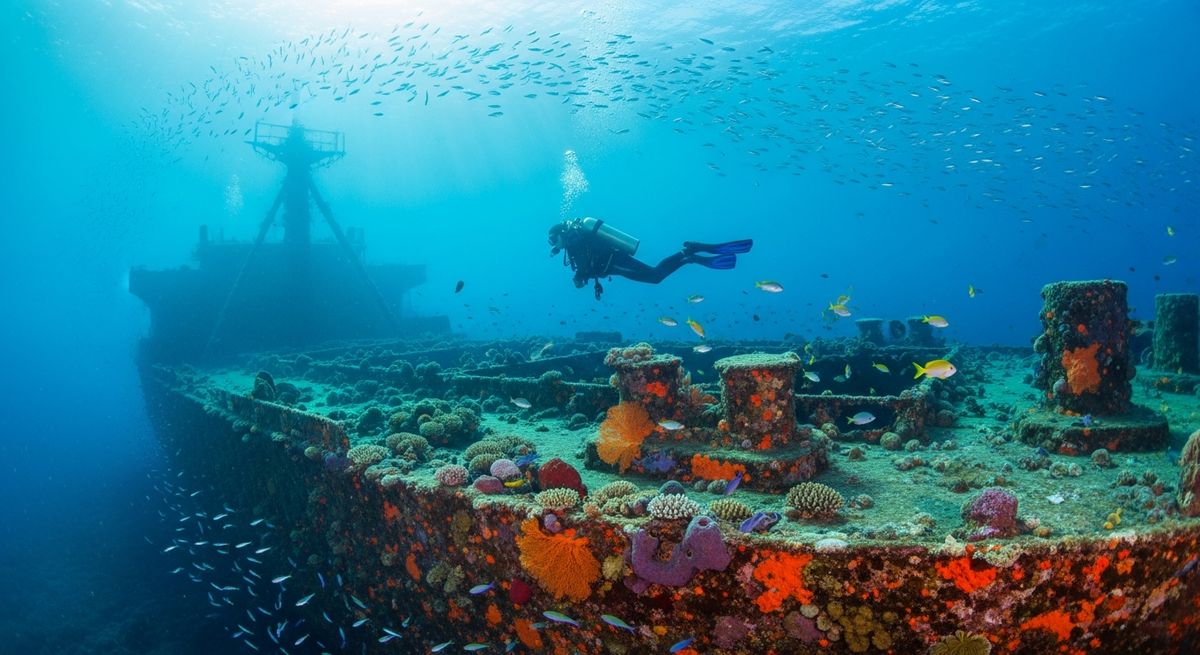
The HMS *Charles Astie* (probably) is one of those wrecks that really gets under your skin. Lying at 53m on the Scottish West Coast, this non-standard Mersey-type trawler, purpose-built for the Admiralty in 1917, is a proper technical dive. We’re talking about a cold, dark plunge into history, a stark contrast to any blue-water site. It’s definitely not one for the faint-hearted. You’re descending into deep, often gloomy water, where the ambient light barely penetrates. But what you find down there is exceptional: an upright, intact steamship, 42.2m long, with its triple-expansion engine still largely in place. The whole ship is covered in a thick carpet of plumose anemones, their white tentacles waving gently in the faint currents, almost glowing in your torch beam. We love tracing the deck, navigating through the superstructure, and peering into the holds. The bridge area is a particular favourite, offering a real sense of the ship’s operational layout. Visibility here can be a bit of a lottery, but on a good day, after a stretch of settled weather, it can open up to 10-15 metres. We’d suggest a sidemount configuration for easier access into some of the tighter spots. Keep an eye out for conger eels lurking in shadowed compartments and various crabs scuttling across the deck plates. This dive offers a serious challenge and a deep connection to wartime history for experienced wreck divers.
Typical HMS CHARLES ASTIE (POSSIBLY) Dive Profile
Illustrative profile based on site depth and type. Actual dive profiles vary - always follow your dive computer and training.
Safety Notes
Maximum depth 53m exceeds recreational limits (40m). Technical diving certification and equipment required.
Wreck site - avoid penetration without wreck diving certification. Watch for sharp metal and entanglement hazards.
Always perform a 3-minute safety stop at 5m before surfacing.
Nearest Dive Centres to HMS CHARLES ASTIE (POSSIBLY)
Dive shops near HMS CHARLES ASTIE (POSSIBLY)
View all dive centres in Scottish West CoastReviews for HMS CHARLES ASTIE (POSSIBLY)
Conditions
Ocean conditions, forecast and tides for HMS CHARLES ASTIE (POSSIBLY)
Plan & book
Ways to dive Scottish West Coast, from day trips to liveaboards.
Day trips & courses
via GetYourGuideGuided dives, courses and snorkel trips with instant booking.
Find dive trips in Scottish West CoastPlaces to stay
via Booking.comHotels and dive resorts near Scottish West Coast.
Search stays in Scottish West CoastDive insurance
Most travel insurance excludes or limits scuba. Check what you need before you go.
Dive insurance explainedPartner links: we may earn a commission if you book, at no extra cost to you. How we make money
Where to Stay near HMS CHARLES ASTIE (POSSIBLY)
Prices from Booking.com. We may earn a commission at no extra cost to you.