HMS LAURENTIC
Protected Area
Lough Foyle
Why dive here
With 112+ marine species recorded in the area - including blue whales, dolphins, dwarf minke whales, humpback whales and ocean sunfish (mola mola) - HMS LAURENTIC offers some of Scottish West Coast's richest wreck diving.
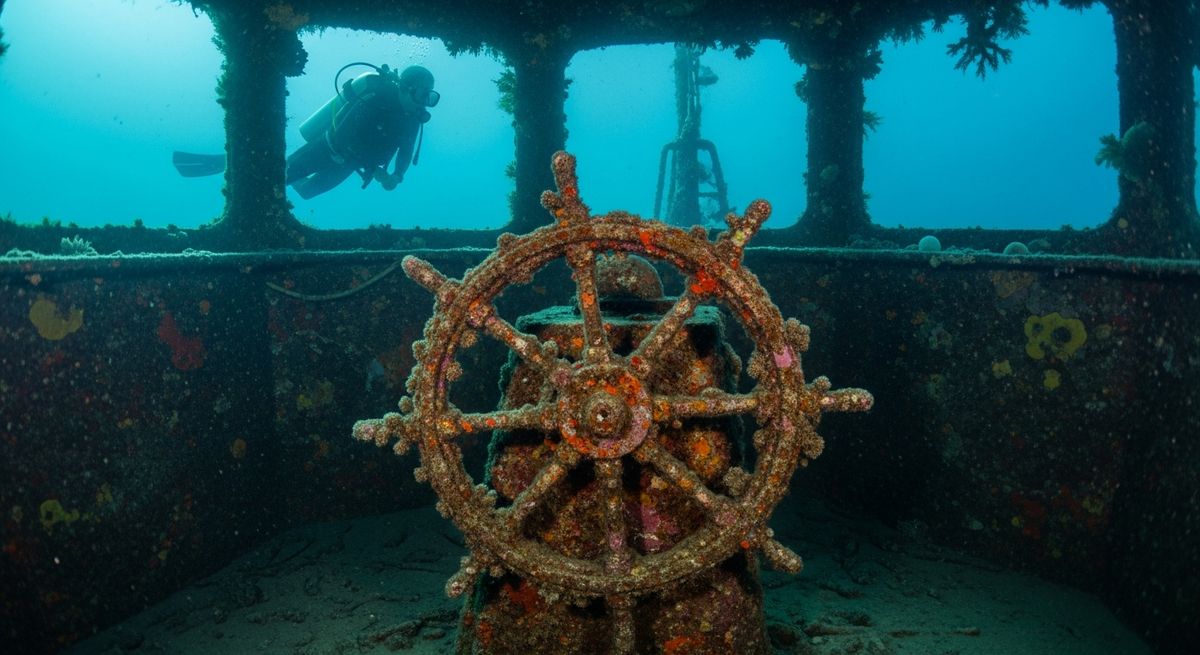
The HMS Laurentic is one of those wrecks we return to, time and again, when we’re in Scotland. It’s a beast of a ship, 167 metres of history, lying upright on the seabed at 36 metres. Dropping down, you feel the sheer scale of it; the stern is often the most intact, with huge propellers still in place, encrusted with dead man’s fingers and anemones. We love picking our way through the more open sections of the hull, where the light shafts down, illuminating schools of saithe that swirl like liquid silver. Yes, it’s cold, and yes, the visibility can be moody, but when it’s good, it’s spectacular. The Laurentic was carrying gold when she went down in 1917, and while the gold is long gone, the wreck itself holds a different kind of treasure. Keep an eye out for conger eels peering from every dark hole and the occasional inquisitive ling. It’s a dive for experienced wreck lovers, comfortable with depth and sometimes challenging conditions, but the rewards are immense. Our favourite time to dive it is on a slack tide, giving you maximum bottom time to appreciate the sheer size and presence of this old cruiser.
Typical HMS LAURENTIC Dive Profile
Illustrative profile based on site depth and type. Actual dive profiles vary - always follow your dive computer and training.
Safety Notes
Deep dive (36m) - monitor air consumption closely. Advanced certification recommended.
Wreck site - avoid penetration without wreck diving certification. Watch for sharp metal and entanglement hazards.
Always perform a 3-minute safety stop at 5m before surfacing.
Nearest Dive Centres to HMS LAURENTIC
Dive shops near HMS LAURENTIC
View all dive centres in Scottish West CoastReviews for HMS LAURENTIC
Conditions
Ocean conditions, forecast and tides for HMS LAURENTIC
Plan & book
Ways to dive Scottish West Coast, from day trips to liveaboards.
Day trips & courses
via GetYourGuideGuided dives, courses and snorkel trips with instant booking.
Find dive trips in Scottish West CoastPlaces to stay
via Booking.comHotels and dive resorts near Scottish West Coast.
Search stays in Scottish West CoastDive insurance
Most travel insurance excludes or limits scuba. Check what you need before you go.
Dive insurance explainedPartner links: we may earn a commission if you book, at no extra cost to you. How we make money
Where to Stay near HMS LAURENTIC
Prices from Booking.com. We may earn a commission at no extra cost to you.