HYACINTH (POSSIBLY)
Protected Area
Lynn of Lorn
Why dive here
With 112+ marine species recorded in the area - including blue whales, dolphins, dwarf minke whales, humpback whales and ocean sunfish (mola mola) - HYACINTH (POSSIBLY) offers some of Scottish West Coast's richest wreck diving.
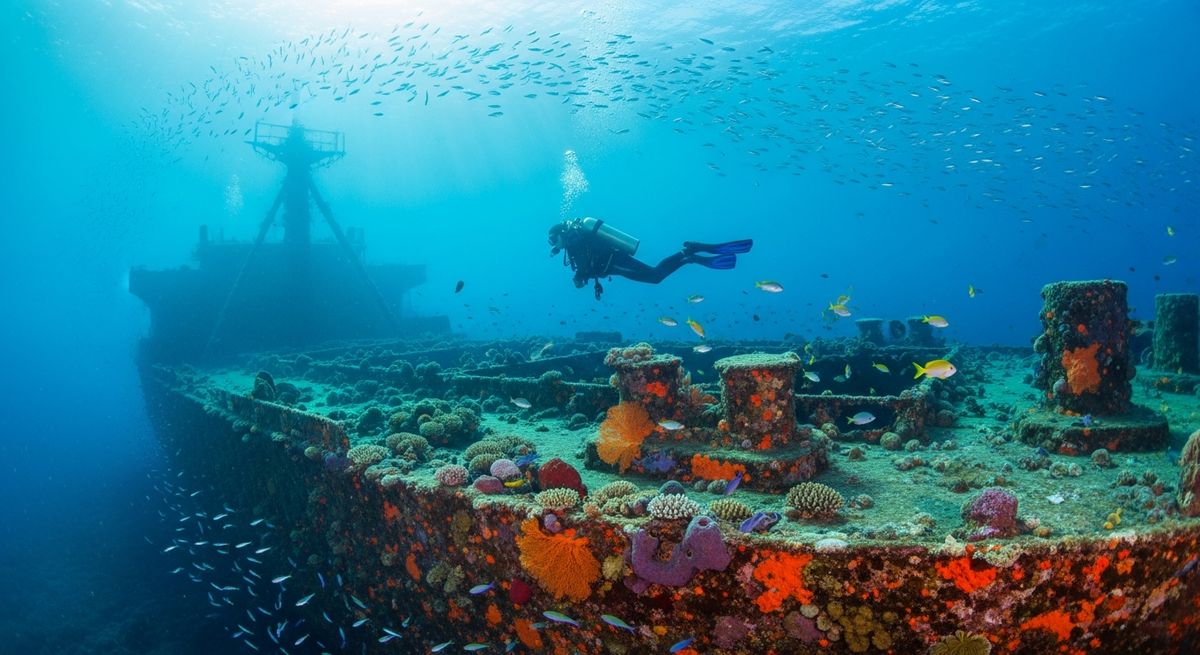
The Hyacinth, or what we think is the Hyacinth, sits in the shallows just off Kerrera, a stone's throw from Oban Bay. This isn't a deep dive, only three metres, which makes it perfect for a long, slow exploration. Built of iron in 1901, she caught fire in 1920, the engine room blaze spreading fast before the crew got rescued. They towed her hull here, and now she’s a scattering of ribs and plates on the silty bottom. We love Hyacinth for its accessibility and the way the light filters through the kelp, dappling the wreck. Look for the distinct bow section, surprisingly intact, with plates still holding. Shoals of juvenile coalfish often swarm through the wreckage, and we’ve seen plenty of velvet swimming crabs scuttling between the ironwork. It’s an ideal site for macro photography, or just an easy second dive, perfect for stretching out your bottom time. Dive this one on a calm day; the bay can get choppy with boat traffic.
Typical HYACINTH (POSSIBLY) Dive Profile
Illustrative profile based on site depth and type. Actual dive profiles vary - always follow your dive computer and training.
Safety Notes
Wreck site - avoid penetration without wreck diving certification. Watch for sharp metal and entanglement hazards.
Nearest Dive Centres to HYACINTH (POSSIBLY)
Dive shops near HYACINTH (POSSIBLY)
View all dive centres in Scottish West CoastReviews for HYACINTH (POSSIBLY)
Conditions
Ocean conditions, forecast and tides for HYACINTH (POSSIBLY)
Plan & book
Ways to dive Scottish West Coast, from day trips to liveaboards.
Day trips & courses
via GetYourGuideGuided dives, courses and snorkel trips with instant booking.
Find dive trips in Scottish West CoastPlaces to stay
via Booking.comHotels and dive resorts near Scottish West Coast.
Search stays in Scottish West CoastDive insurance
Most travel insurance excludes or limits scuba. Check what you need before you go.
Dive insurance explainedPartner links: we may earn a commission if you book, at no extra cost to you. How we make money
Where to Stay near HYACINTH (POSSIBLY)
Prices from Booking.com. We may earn a commission at no extra cost to you.