JANET MCNICOL
Protected Area
Lamlash Bay
Why dive here
With 112+ marine species recorded in the area - including blue whales, dolphins, dwarf minke whales, humpback whales and ocean sunfish (mola mola) - JANET MCNICOL offers some of Scottish West Coast's richest wreck diving.
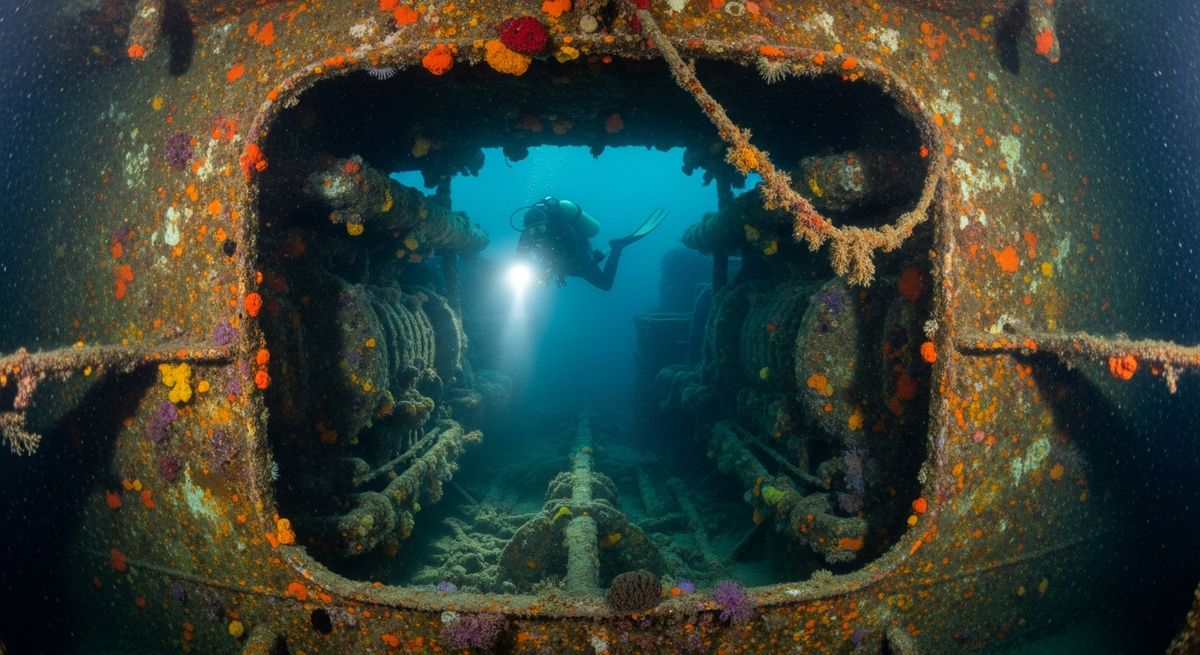
The Janet McNicol is a proper dive, a proper piece of history right there in Lamlash Bay. She’s an old wooden fishing vessel, sunk back in 1907 after bad weather took its toll. You’re not getting huge structural integrity here, obviously, but what we love is how the bones of her have settled into the seabed. You can still make out the ribs, the curve of the hull, and it gives you a real sense of her original form. It’s not a deep dive, around 16 metres, which makes it perfect for a relaxed exploration. We’ve found this wreck to be surprisingly lively. Even without being able to list specific species, we always see plenty of crabs scuttling amongst the timbers and plump wrasse nosing into the crevices. The visibility can be hit-and-miss, it’s Scotland after all, but on a good day, the light filtering down onto that dark wood is just beautiful. It feels like stepping back in time. For anyone who appreciates the history in a wreck, rather than just the steel, this is our pick. Just be mindful of the silty bottom; buoyancy control is your friend here to keep that historical view clear.
Typical JANET MCNICOL Dive Profile
Illustrative profile based on site depth and type. Actual dive profiles vary - always follow your dive computer and training.
Safety Notes
Wreck site - avoid penetration without wreck diving certification. Watch for sharp metal and entanglement hazards.
Always perform a 3-minute safety stop at 5m before surfacing.
Nearest Dive Centres to JANET MCNICOL
Dive shops near JANET MCNICOL
Field Studies Council Millport
C&C MARINE SERVICES
Reviews for JANET MCNICOL
Conditions
Ocean conditions, forecast and tides for JANET MCNICOL
Plan & book
Ways to dive Scottish West Coast, from day trips to liveaboards.
Day trips & courses
via GetYourGuideGuided dives, courses and snorkel trips with instant booking.
Find dive trips in Scottish West CoastPlaces to stay
via Booking.comHotels and dive resorts near Scottish West Coast.
Search stays in Scottish West CoastDive insurance
Most travel insurance excludes or limits scuba. Check what you need before you go.
Dive insurance explainedPartner links: we may earn a commission if you book, at no extra cost to you. How we make money
Where to Stay near JANET MCNICOL
Prices from Booking.com. We may earn a commission at no extra cost to you.