KARTLI
Protected Area
Sound of Gigha
Why dive here
With 112+ marine species recorded in the area - including blue whales, dolphins, dwarf minke whales, humpback whales and ocean sunfish (mola mola) - KARTLI offers some of Scottish West Coast's richest wreck diving.
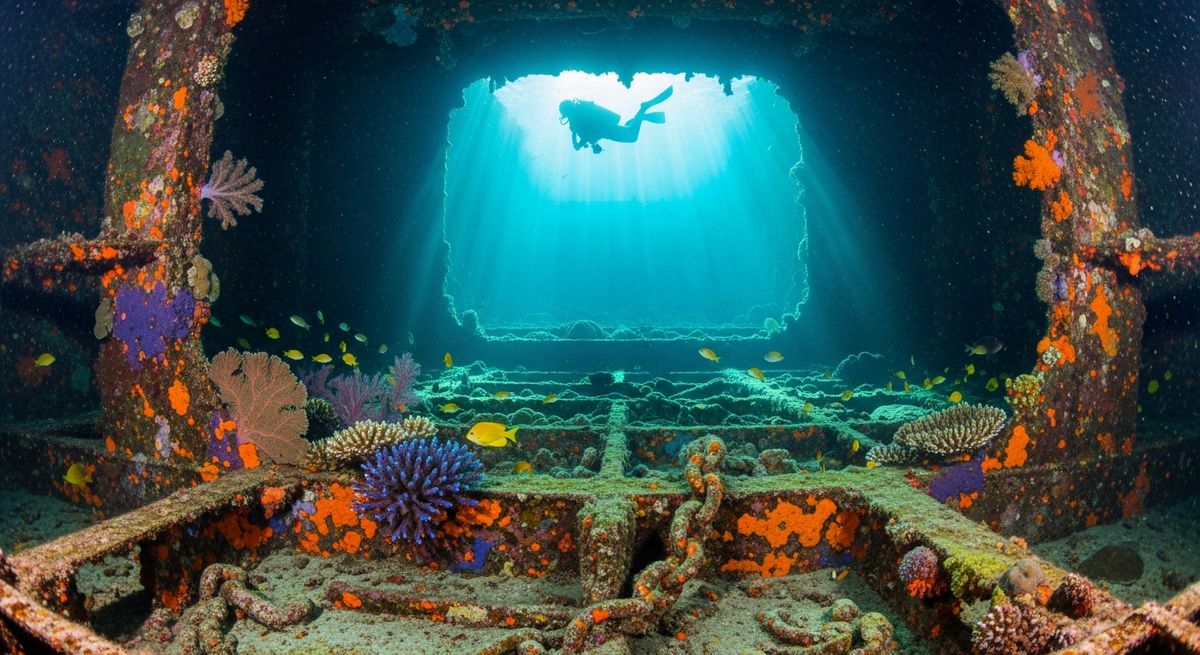
The Kartli, a hulking stern trawler, isn't just a wreck; it’s a proper metal playground. She ran aground in a gale back in '91, and now sits almost upright, her bow nudging the shore. We love that you can dive this one at pretty much any tide, though slack water makes exploring the deeper sections a bit less work. Dropping onto her deck, you’re met with a riot of life. Anemones in every shade – orange, white, pink – cling to every surface, swaying gently in the surge. Schools of wrasse dart in and out of the broken superstructure, and if you’re patient, you might spot a territorial ballan wrasse eyeing you from a porthole. We’d suggest exploring the stern first, where the prop is still visible, encrusted with dead man's fingers. Penetration into the wheelhouse is straightforward for experienced wreckies, offering glimpses into a past life, though some of the interior has collapsed. It’s a great dive for photographers, especially when the sun filters through the shallow water, illuminating the vibrant colours that have colonised this steel behemoth. Just keep an eye on your depth here, it's easy to get absorbed.
Typical KARTLI Dive Profile
Illustrative profile based on site depth and type. Actual dive profiles vary - always follow your dive computer and training.
Safety Notes
Wreck site - avoid penetration without wreck diving certification. Watch for sharp metal and entanglement hazards.
Reviews for KARTLI
Conditions
Ocean conditions, forecast and tides for KARTLI
Plan & book
Ways to dive Scottish West Coast, from day trips to liveaboards.
Day trips & courses
via GetYourGuideGuided dives, courses and snorkel trips with instant booking.
Find dive trips in Scottish West CoastPlaces to stay
via Booking.comHotels and dive resorts near Scottish West Coast.
Search stays in Scottish West CoastDive insurance
Most travel insurance excludes or limits scuba. Check what you need before you go.
Dive insurance explainedPartner links: we may earn a commission if you book, at no extra cost to you. How we make money
Where to Stay near KARTLI
Prices from Booking.com. We may earn a commission at no extra cost to you.