LABRADOR
Protected Area
South Uist Machair
Why dive here
With 112+ marine species recorded in the area - including blue whales, dolphins, dwarf minke whales, humpback whales and ocean sunfish (mola mola) - LABRADOR offers some of Scottish West Coast's richest wreck diving.
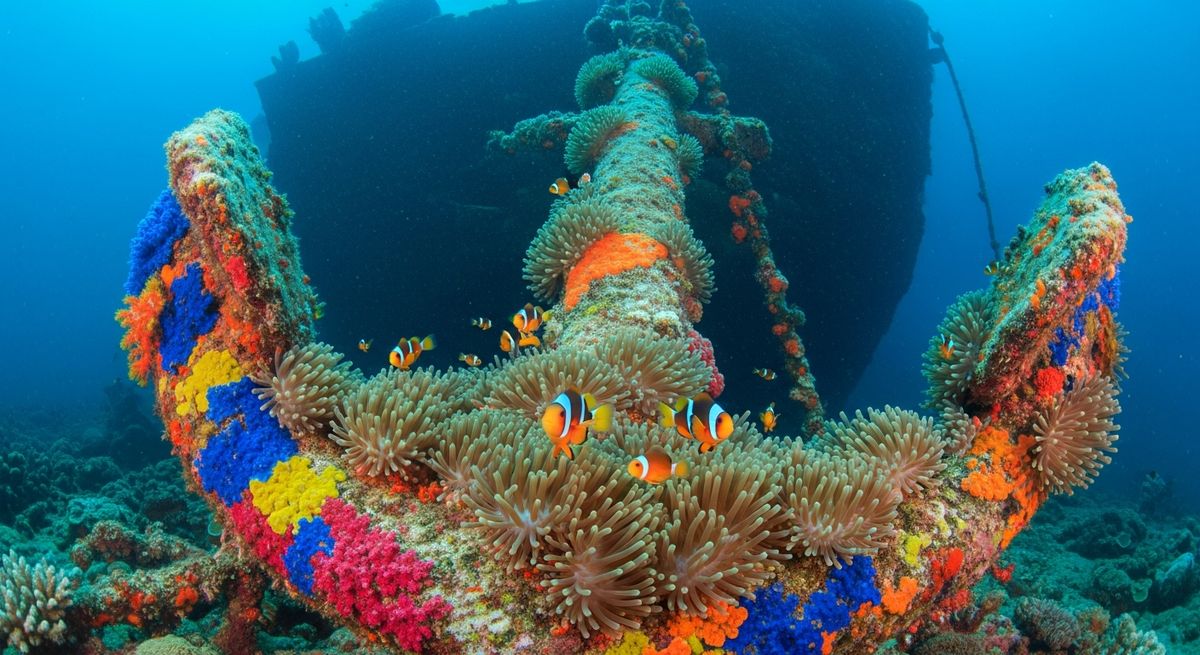
The Labrador, now that’s a site we always remember, though not for its depth. It’s barely a five-metre dive, but what a five metres it is. This massive steamship, built by Harland & Wolff, lies just beneath the surface, a sprawling skeletal remains from 1899. You’ll spend most of your dive just finning across its length, trying to take in the sheer scale. We love how the light plays on the twisted metal, filtering through the kelp, giving everything an eerie, green glow. Don't expect pristine cabins; this is a seriously broken-up wreck, a testament to the wild Atlantic. What you get instead are dramatic, industrial shapes, huge chunks of plating, and massive frames, all wonderfully colonised by life. Look closely in the gaps and you’ll find nudibranchs, often some vibrant colours, and crabs scuttling amongst the debris. The Labrador is a fantastic spot for photographers who appreciate atmospheric wide-angle shots of history reclaimed by the sea. Our best advice? Go on a calm day; even at five metres, surge can make things tricky.
Typical LABRADOR Dive Profile
Illustrative profile based on site depth and type. Actual dive profiles vary - always follow your dive computer and training.
Safety Notes
Wreck site - avoid penetration without wreck diving certification. Watch for sharp metal and entanglement hazards.
Reviews for LABRADOR
Conditions
Ocean conditions, forecast and tides for LABRADOR
Plan & book
Ways to dive Scottish West Coast, from day trips to liveaboards.
Day trips & courses
via GetYourGuideGuided dives, courses and snorkel trips with instant booking.
Find dive trips in Scottish West CoastPlaces to stay
via Booking.comHotels and dive resorts near Scottish West Coast.
Search stays in Scottish West CoastDive insurance
Most travel insurance excludes or limits scuba. Check what you need before you go.
Dive insurance explainedPartner links: we may earn a commission if you book, at no extra cost to you. How we make money
Where to Stay near LABRADOR
Prices from Booking.com. We may earn a commission at no extra cost to you.