MOUNTAIN LAUREL (POSSIBLY)
Protected Area
Magilligan Point
Why dive here
With 112+ marine species recorded in the area - including blue whales, dolphins, dwarf minke whales, humpback whales and ocean sunfish (mola mola) - MOUNTAIN LAUREL (POSSIBLY) offers some of Scottish West Coast's richest wreck diving.
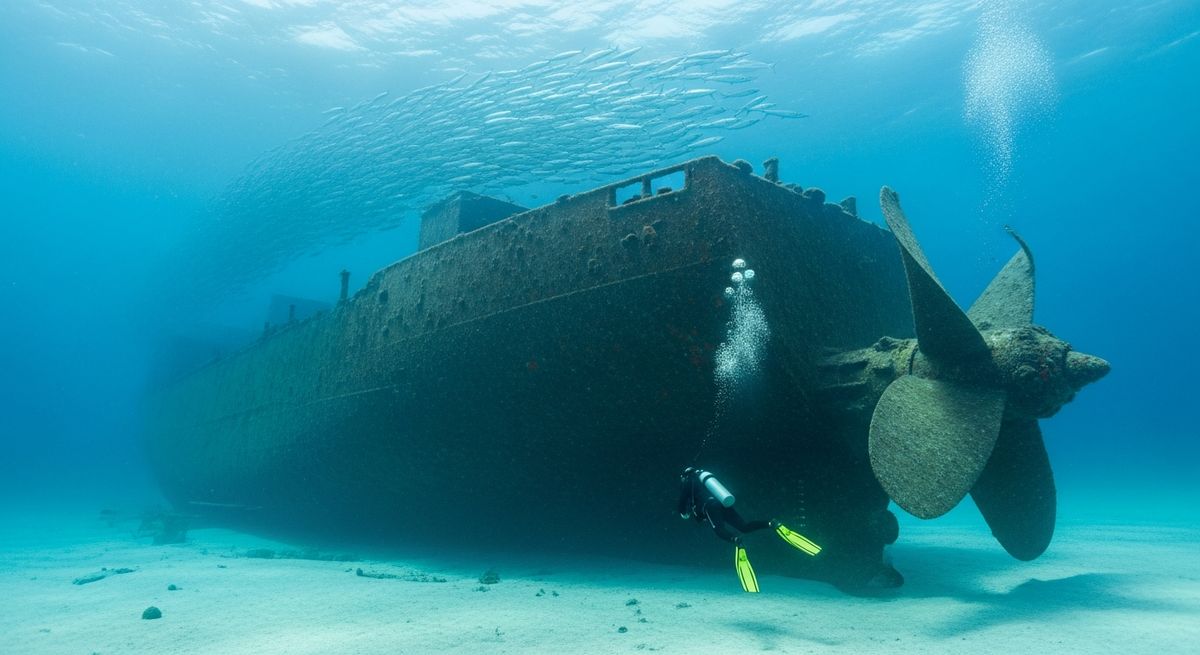
The Mountain Laurel is one of those deeper West Coast wrecks we really love. She’s an iron sailing vessel, sitting upright, and remarkably intact considering she was scuttled by a U-boat back in 1918. Dropping down, you’ll often find the visibility surprisingly good, sometimes pushing 15 metres, which really lets you appreciate her full length, all 53 metres of her. We usually start our exploration around the stern, where the rudder and propeller are still clearly defined, then work our way forward along the deck. The hull plates are draped in dead man's fingers and colourful jewel anemones, with conger eels peering from every dark recess. It’s a proper historical dive, a real journey back in time, and while her depth at 60 metres means this is one for the technical divers, the rewards are absolutely worth the effort. There’s something special about seeing a wreck from this era so well preserved, a silent testament to a bygone age.
Typical MOUNTAIN LAUREL (POSSIBLY) Dive Profile
Illustrative profile based on site depth and type. Actual dive profiles vary - always follow your dive computer and training.
Safety Notes
Maximum depth 60m exceeds recreational limits (40m). Technical diving certification and equipment required.
Wreck site - avoid penetration without wreck diving certification. Watch for sharp metal and entanglement hazards.
Always perform a 3-minute safety stop at 5m before surfacing.
Nearest Dive Centres to MOUNTAIN LAUREL (POSSIBLY)
Dive shops near MOUNTAIN LAUREL (POSSIBLY)
View all dive centres in Scottish West CoastReviews for MOUNTAIN LAUREL (POSSIBLY)
Conditions
Ocean conditions, forecast and tides for MOUNTAIN LAUREL (POSSIBLY)
Plan & book
Ways to dive Scottish West Coast, from day trips to liveaboards.
Day trips & courses
via GetYourGuideGuided dives, courses and snorkel trips with instant booking.
Find dive trips in Scottish West CoastPlaces to stay
via Booking.comHotels and dive resorts near Scottish West Coast.
Search stays in Scottish West CoastDive insurance
Most travel insurance excludes or limits scuba. Check what you need before you go.
Dive insurance explainedPartner links: we may earn a commission if you book, at no extra cost to you. How we make money
Where to Stay near MOUNTAIN LAUREL (POSSIBLY)
Prices from Booking.com. We may earn a commission at no extra cost to you.