NYLAND
Protected Area
Ardalanish Bay
Why dive here
With 112+ marine species recorded in the area - including blue whales, dolphins, dwarf minke whales, humpback whales and ocean sunfish (mola mola) - NYLAND offers some of Scottish West Coast's richest wreck diving.
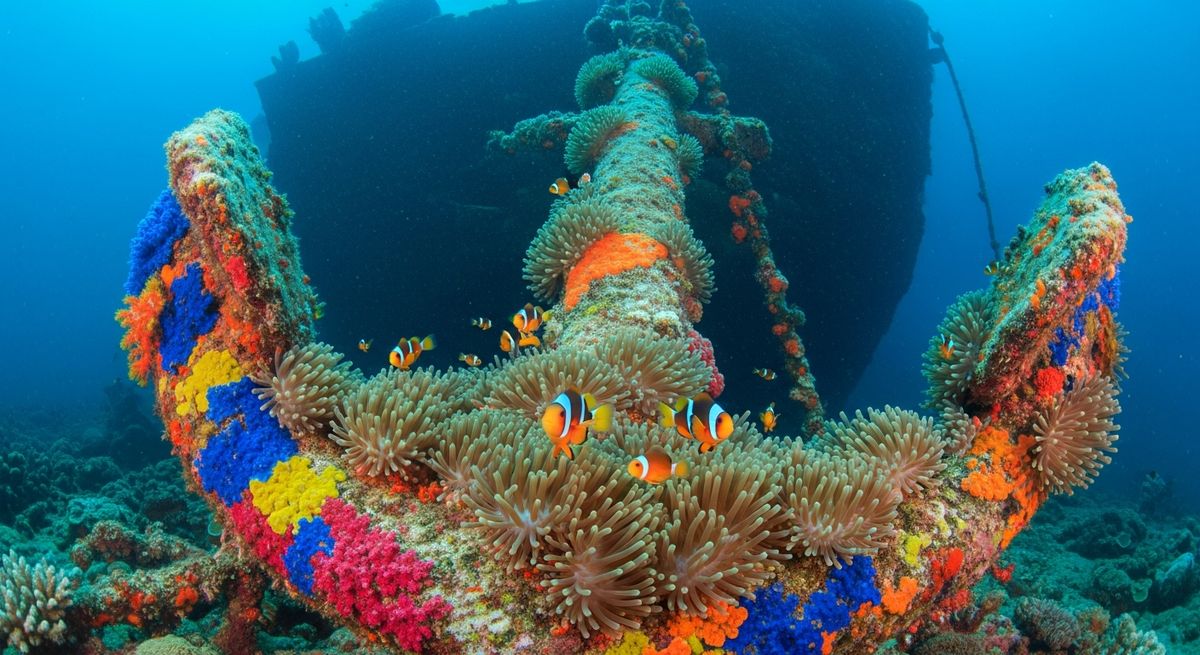
The *Nyland* is a proper wreck dive, a steamship that went down in 1940. She’s not just a collection of scattered parts; you can still make out her shape, two boilers prominent, and the triple expansion engine. We love how the metal has softened with time, now a textured canvas for anemones and hydroids, blurring the line between ship and reef. Swimming through the remains, you get a real sense of her scale, all 76.5 metres of her. Visibility can swing a bit here, as with many Scottish dives, so we always check the local reports before heading out. Our favourite way to dive the *Nyland* is on a calm day when the light penetrates just enough to highlight the details of the wreck, often revealing squat lobsters tucked into crevices or a curious conger eel peering from a pipe. It's a dive that rewards slow exploration, looking for those smaller creatures that have made her their home. This site is definitely one for divers who appreciate the history and character of a wreck, especially those who enjoy the cooler water challenges of the UK.
Safety Notes
Wreck site - avoid penetration without wreck diving certification. Watch for sharp metal and entanglement hazards.
Reviews for NYLAND
Conditions
Ocean conditions, forecast and tides for NYLAND
Plan & book
Ways to dive Scottish West Coast, from day trips to liveaboards.
Day trips & courses
via GetYourGuideGuided dives, courses and snorkel trips with instant booking.
Find dive trips in Scottish West CoastPlaces to stay
via Booking.comHotels and dive resorts near Scottish West Coast.
Search stays in Scottish West CoastDive insurance
Most travel insurance excludes or limits scuba. Check what you need before you go.
Dive insurance explainedPartner links: we may earn a commission if you book, at no extra cost to you. How we make money
Where to Stay near NYLAND
Prices from Booking.com. We may earn a commission at no extra cost to you.