OSPRAY II
Protected Area
South-East Islay Skerries
Why dive here
With 112+ marine species recorded in the area - including blue whales, dolphins, dwarf minke whales, humpback whales and ocean sunfish (mola mola) - OSPRAY II offers some of Scottish West Coast's richest wreck diving.
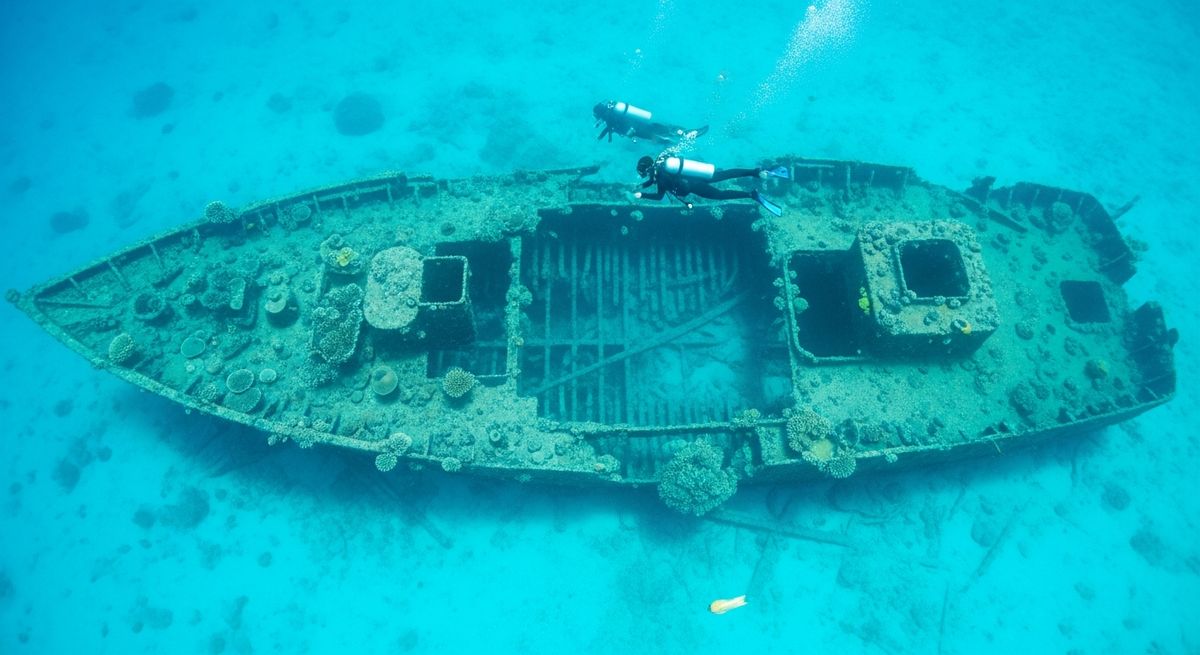
The *Ospray II* is a dive that sticks with you, one of our favourites on the Scottish West Coast. Dropping down, you feel the chill of the Atlantic, but the wreck quickly captures your focus. This old trawler, built in 1911 and sunk in 1935 after an unexpected collision, sits upright at 32 metres, remarkably intact despite the years. We love how much of the original structure remains – the bow is particularly impressive, rising from the seabed, often shrouded in a hazy cloud of small shoaling fish. You can fin along the deck, peer into the holds, and imagine the working life of the vessel. The prop is still there, a massive, dark silhouette against the murkier depths. It's an atmospheric dive, often feeling very remote, with light filtering down to just kiss the superstructure. Keep an eye out for conger eels nestled in the deeper nooks and crannies, and we’ve often spotted larger wrasse patrolling the perimeter. It’s a dive for those who appreciate history and the quiet solitude of a deep, undisturbed wreck.
Typical OSPRAY II Dive Profile
Illustrative profile based on site depth and type. Actual dive profiles vary - always follow your dive computer and training.
Safety Notes
Deep dive (32m) - monitor air consumption closely. Advanced certification recommended.
Wreck site - avoid penetration without wreck diving certification. Watch for sharp metal and entanglement hazards.
Always perform a 3-minute safety stop at 5m before surfacing.
Reviews for OSPRAY II
Conditions
Ocean conditions, forecast and tides for OSPRAY II
Plan & book
Ways to dive Scottish West Coast, from day trips to liveaboards.
Day trips & courses
via GetYourGuideGuided dives, courses and snorkel trips with instant booking.
Find dive trips in Scottish West CoastPlaces to stay
via Booking.comHotels and dive resorts near Scottish West Coast.
Search stays in Scottish West CoastDive insurance
Most travel insurance excludes or limits scuba. Check what you need before you go.
Dive insurance explainedPartner links: we may earn a commission if you book, at no extra cost to you. How we make money
Where to Stay near OSPRAY II
Prices from Booking.com. We may earn a commission at no extra cost to you.