OTRANTO
Protected Area
Bridgend Flats, Islay
Why dive here
With 112+ marine species recorded in the area - including blue whales, dolphins, dwarf minke whales, humpback whales and ocean sunfish (mola mola) - OTRANTO offers some of Scottish West Coast's richest wreck diving.
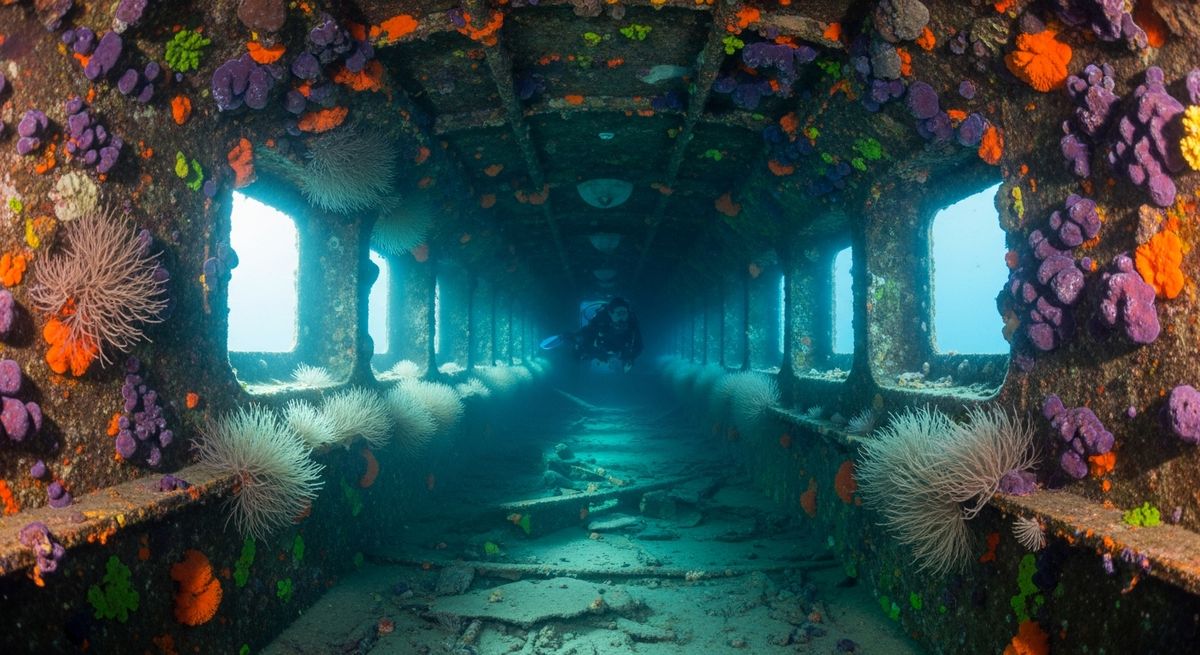
The Otranto, a massive liner turned auxiliary cruiser, lies broken and scattered across the seabed at just 16 metres. We love this site for its sheer scale and the raw power of its demise, especially when the light filters down through the green Scottish water. You’ll find twisted metal plates, huge sections of hull, and propulsion gear spread over a wide area, remnants of its collision with the Kashmir in 1918. It’s a site that suits divers who appreciate history and the skeletal beauty of a century-old wreck. Exploring the Otranto feels like stepping onto an archaeological dig. Look for the huge, steam-powered winches, now heavily encrusted with dead man's fingers and anemones, creating a vibrant, living carpet over the machinery. We always find conger eels peering from the darker recesses, and the cracks in the plating are often home to squat lobsters. It's not a wreck you 'penetrate' in the traditional sense, but rather a vast field of debris to survey, each piece telling a story. Our favourite time to dive it is on a slack tide, when the visibility often improves, letting you take in the impressive scope of the wreckage. Just be mindful of snagging your gear on the rough edges – it’s an old wreck with plenty of sharp bits.
Typical OTRANTO Dive Profile
Illustrative profile based on site depth and type. Actual dive profiles vary - always follow your dive computer and training.
Safety Notes
Wreck site - avoid penetration without wreck diving certification. Watch for sharp metal and entanglement hazards.
Always perform a 3-minute safety stop at 5m before surfacing.
Reviews for OTRANTO
Conditions
Ocean conditions, forecast and tides for OTRANTO
Plan & book
Ways to dive Scottish West Coast, from day trips to liveaboards.
Day trips & courses
via GetYourGuideGuided dives, courses and snorkel trips with instant booking.
Find dive trips in Scottish West CoastPlaces to stay
via Booking.comHotels and dive resorts near Scottish West Coast.
Search stays in Scottish West CoastDive insurance
Most travel insurance excludes or limits scuba. Check what you need before you go.
Dive insurance explainedPartner links: we may earn a commission if you book, at no extra cost to you. How we make money
Where to Stay near OTRANTO
Prices from Booking.com. We may earn a commission at no extra cost to you.