R J CULLEN
Protected Area
Eoligarry
Why dive here
With 112+ marine species recorded in the area - including blue whales, dolphins, dwarf minke whales, humpback whales and ocean sunfish (mola mola) - R J CULLEN offers some of Scottish West Coast's richest wreck diving.
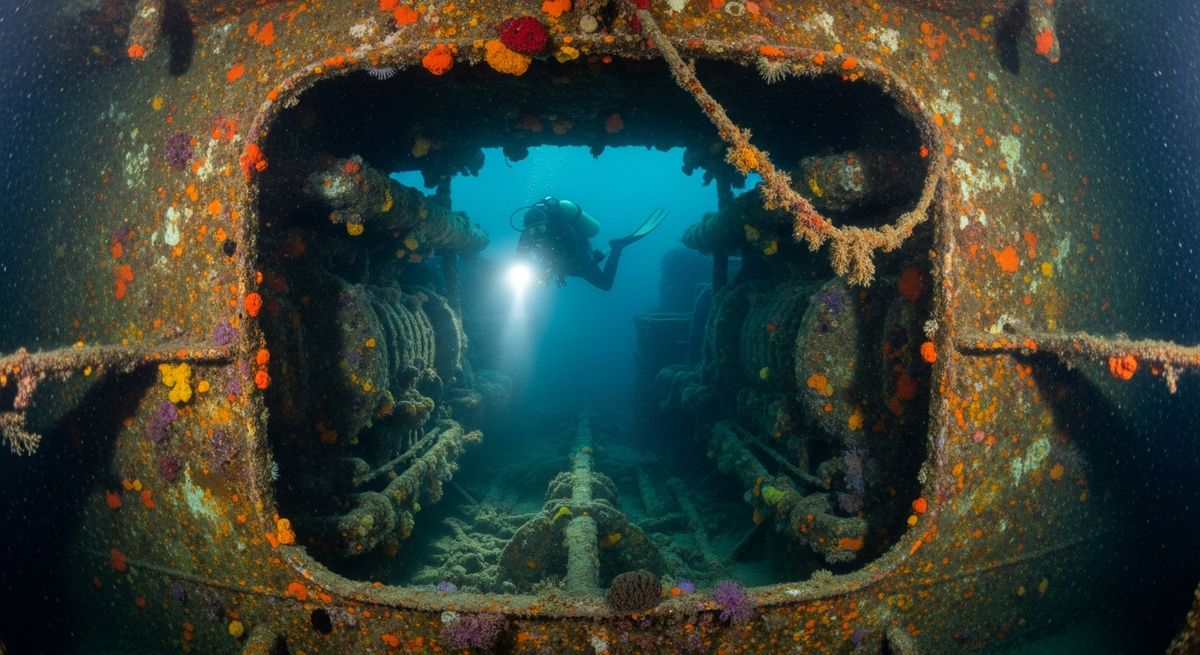
The R J Cullen is one of our favourite shallow wrecks on the Scottish West Coast, though 'shallow' sometimes feels like a misnomer when you're battling a stiff breeze and driving rain topside. Don't let the 6m max depth fool you; this is no kiddie pool. We love that it’s essentially an accessible dive for most, meaning you can spend ages exploring without racking up deco time. What you'll find is a steamship that met its end in 1942, now well broken up but still very much a ship. You’ll be finning over boilers, sections of hull, and bits of machinery scattered across the seabed. The visibility can swing wildly, but when it’s good, the light penetration at 6m is fantastic, illuminating the kelp forests that have taken root. It’s home to cod, pollock, and plenty of wrasse darting between the metal plates. Our top tip: aim for a neap tide for the calmest conditions; the currents here can be surprisingly brisk on springs. It suits divers who appreciate historical context and don't mind a bit of a scramble to find the best bits of wreckage.
Typical R J CULLEN Dive Profile
Illustrative profile based on site depth and type. Actual dive profiles vary - always follow your dive computer and training.
Safety Notes
Wreck site - avoid penetration without wreck diving certification. Watch for sharp metal and entanglement hazards.
Reviews for R J CULLEN
Conditions
Ocean conditions, forecast and tides for R J CULLEN
Plan & book
Ways to dive Scottish West Coast, from day trips to liveaboards.
Day trips & courses
via GetYourGuideGuided dives, courses and snorkel trips with instant booking.
Find dive trips in Scottish West CoastPlaces to stay
via Booking.comHotels and dive resorts near Scottish West Coast.
Search stays in Scottish West CoastDive insurance
Most travel insurance excludes or limits scuba. Check what you need before you go.
Dive insurance explainedPartner links: we may earn a commission if you book, at no extra cost to you. How we make money
Where to Stay near R J CULLEN
Prices from Booking.com. We may earn a commission at no extra cost to you.