RAVENSHEUGH
Protected Area
Hough Bay and Balevullin Machair
Why dive here
With 112+ marine species recorded in the area - including blue whales, dolphins, dwarf minke whales, humpback whales and ocean sunfish (mola mola) - RAVENSHEUGH offers some of Scottish West Coast's richest wreck diving.
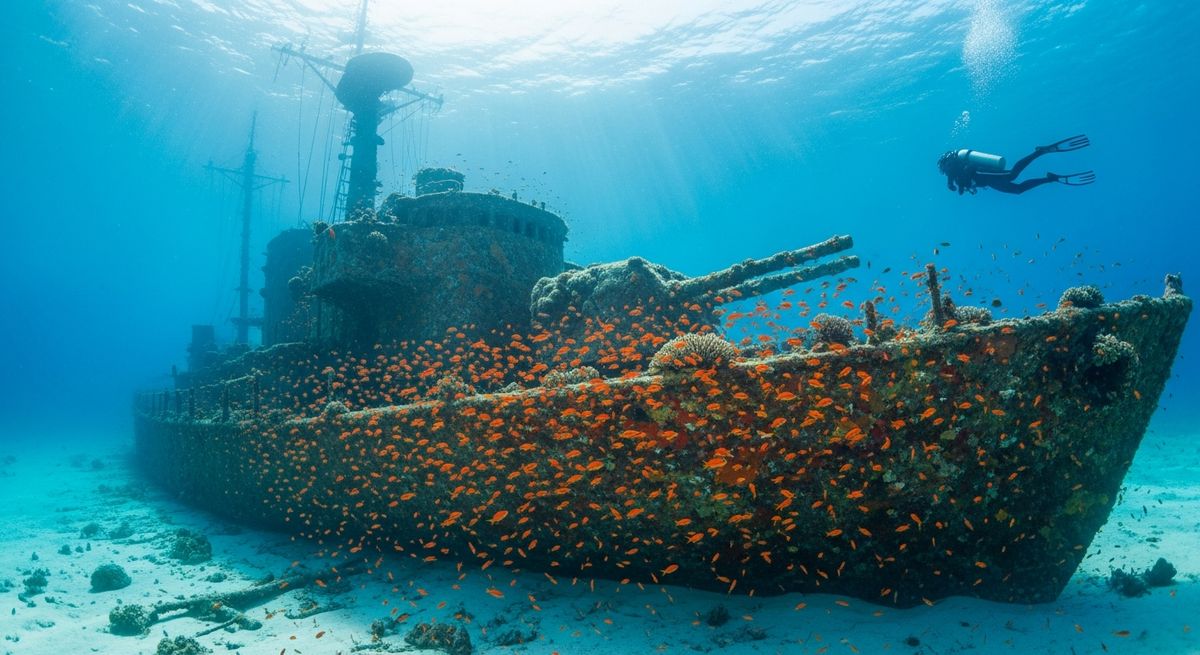
Ravensheugh is a cracking shallow wreck, surprisingly good for a Scottish coastal dive. She went down in 1911, and while a "dangerous wreck" designation might sound off-putting, it really just means you need to be careful with the bits poking out. The best part? She’s right there at 2m. We love being able to spend a full dive exploring her without any NDL concerns. Being so shallow, Ravensheugh gets plenty of light, even on a cloudy day. You can trace the lines of her iron plates, now draped in green kelp and orange dead man's fingers. Crabs scuttle in the darker corners of the collapsed hull sections, and we’ve often seen blennies peering out from crevices. Our favourite find here is always the conger eels, tucked into the bigger openings, sometimes with just their heads poking out, watching you pass. It’s an easy shore entry, making it perfect for newer wreck divers or photographers wanting to play with ambient light and long bottom times. Just be mindful of local boat traffic; a surface marker buoy is a must.
Typical RAVENSHEUGH Dive Profile
Illustrative profile based on site depth and type. Actual dive profiles vary - always follow your dive computer and training.
Safety Notes
Wreck site - avoid penetration without wreck diving certification. Watch for sharp metal and entanglement hazards.
Reviews for RAVENSHEUGH
Conditions
Ocean conditions, forecast and tides for RAVENSHEUGH
Plan & book
Ways to dive Scottish West Coast, from day trips to liveaboards.
Day trips & courses
via GetYourGuideGuided dives, courses and snorkel trips with instant booking.
Find dive trips in Scottish West CoastPlaces to stay
via Booking.comHotels and dive resorts near Scottish West Coast.
Search stays in Scottish West CoastDive insurance
Most travel insurance excludes or limits scuba. Check what you need before you go.
Dive insurance explainedPartner links: we may earn a commission if you book, at no extra cost to you. How we make money
Where to Stay near RAVENSHEUGH
Prices from Booking.com. We may earn a commission at no extra cost to you.